

Over half of eco-conscious shoppers believe that sustainable beauty goes deeper than organic labels or recyclable jars. As American and global millennials and Gen Z consumers raise the bar, luxury self-care now demands transparency, ethical ingredient sourcing, and a positive planetary impact. This article clarifies what truly defines sustainable beauty while breaking down stubborn myths, guiding you toward informed choices that align with your values and passion for natural, responsible self-care.
Table of Contents
- Defining Sustainable Beauty and Common Myths
- Types of Sustainable Beauty Products Explained
- Key Ingredients and Ethical Sourcing Approaches
- Technology Innovations and Personalization Trends
- Circularity, Packaging, and Industry Certifications
- Challenges, Costs, and Common Mistakes to Avoid
Key Takeaways
| Point | Details |
|---|---|
| Sustainable Beauty Definition | It integrates environmental consciousness, ethical production, and personal wellness beyond traditional cosmetics. |
| Common Myths | Effective sustainable products are often misconceived as less efficient or more costly; consumers should research beyond marketing claims. |
| Importance of Transparency | Brands must provide clear information about ingredient sourcing and production to build consumer trust. |
| Technological Innovations | Advances in AI and machine learning offer personalized beauty solutions while enhancing sustainability efforts. |
Defining Sustainable Beauty and Common Myths
Sustainable beauty represents a holistic approach that goes far beyond traditional cosmetic practices. At its core, this philosophy integrates environmental consciousness, ethical production, and personal wellness into every aspect of beauty and self-care. Emerging beauty industry trends demonstrate a critical shift towards practices that balance consumer needs with planetary preservation.
Consumers today are increasingly recognizing that sustainable beauty isn’t just about organic ingredients or recyclable packaging. It encompasses a broader spectrum of considerations including fair labor practices, reduced carbon footprints, transparent supply chains, and responsible resource management. The movement challenges traditional beauty paradigms by prioritizing long-term environmental impact over short-term aesthetic gains.
Despite growing awareness, several persistent myths continue to cloud understanding of sustainable beauty. Many people mistakenly believe that sustainable products are inherently less effective or significantly more expensive. In reality, consumer perceptions of sustainability reveal a nuanced landscape where price, performance, and ethical considerations intersect. Some consumers conflate ‘clean’ with ‘natural’, not understanding that these terms have distinct meanings within the beauty industry.
Pro Tip: When evaluating sustainable beauty products, look beyond marketing claims and research the brand’s actual environmental and ethical commitments.
Types of Sustainable Beauty Products Explained
Sustainable beauty products represent a revolutionary approach to personal care that prioritizes environmental responsibility and ethical production. Sustainable product categories encompass a wide range of innovative formulations designed to minimize ecological impact while delivering exceptional performance. These products go beyond traditional cosmetics by integrating eco-friendly ingredients, responsible sourcing, and advanced manufacturing techniques that respect both consumer needs and planetary health.
The landscape of sustainable beauty is diverse, featuring several key product types that address different aspects of environmental and ethical concerns. Biocosmetics leverage natural plant-based ingredients, while clean beauty products eliminate harmful synthetic chemicals. Cruelty-free items ensure no animal testing, and biodegradable formulations break down naturally without environmental harm. Other innovative categories include waterless products that reduce water consumption, refillable packaging systems, and items made from recycled or upcycled materials.
Consumer trends in sustainable beauty reveal a growing preference for products that demonstrate genuine environmental commitment. This means consumers are looking beyond surface-level marketing claims and seeking brands that provide transparency in ingredient sourcing, production processes, and overall environmental impact. Emerging product types like plastic-free packaging, organic skincare, and ethically certified cosmetics are gaining significant traction among environmentally conscious consumers who want to make responsible purchasing decisions.
Pro Tip: When selecting sustainable beauty products, examine the entire lifecycle of the product, from ingredient sourcing to packaging disposal, to ensure you’re making a truly eco-conscious choice.
Here’s a quick comparison of popular sustainable beauty product types:
| Product Type | Main Focus | Environmental Benefit | Consumer Appeal |
|---|---|---|---|
| Biocosmetics | Plant-based ingredients | Low toxicity, renewable | Natural feel, wellness |
| Clean Beauty | No harmful synthetics | Prevents pollution | Sensitive skin suitability |
| Cruelty-Free | No animal testing | Ethical treatment of animals | Supports animal welfare |
| Biodegradable | Breaks down naturally | Reduces landfill impact | Eco-conscious consumers |
| Refillable/Upcycled | Reusable or recycled pkg. | Reduces packaging waste | Value and innovation |
Key Ingredients and Ethical Sourcing Approaches
Sustainable beauty demands a holistic approach to ingredient selection that goes beyond traditional cosmetic manufacturing. Sustainable ingredient sourcing represents a complex ecosystem of responsible practices that prioritize environmental preservation and social responsibility. This approach involves carefully selecting renewable resources, minimizing ecological impact, and ensuring transparent supply chains that support both planetary health and human communities.
The core of ethical ingredient sourcing revolves around several critical principles. Renewable resources like plant-based extracts, microbial derivatives, and regenerative agricultural products form the foundation of sustainable beauty ingredients. Manufacturers are increasingly turning to innovative approaches such as green chemistry, which develops ingredients through environmentally conscious processes that reduce waste, minimize toxic byproducts, and utilize renewable raw materials. Key sustainable ingredients include organic botanical extracts, marine algae, regeneratively farmed botanicals, and scientifically developed bio-engineered compounds that offer high performance with minimal environmental consequences.

Traceability and accountability have become paramount in modern sustainable beauty ingredient selection. Brands committed to ethical sourcing now implement rigorous verification processes that examine every stage of ingredient production. This includes evaluating labor practices, ensuring fair compensation for workers, protecting indigenous knowledge and rights, and maintaining strict environmental standards. Sustainable sourcing goes beyond simply selecting natural ingredients – it encompasses a comprehensive approach that considers social impact, biodiversity preservation, and long-term ecological sustainability.
Pro Tip: Research brands that provide complete transparency about their ingredient sourcing, including detailed information about origin, harvesting methods, and environmental certifications.
Technology Innovations and Personalization Trends
The sustainable beauty landscape is undergoing a radical transformation driven by cutting-edge technological innovations. Personalization technologies are revolutionizing how consumers interact with beauty and skincare products, creating unprecedented levels of customization and precision. Advanced artificial intelligence, machine learning algorithms, and sophisticated data analytics now enable brands to develop hyper-personalized solutions that address individual skin concerns with remarkable accuracy.
Artificial intelligence and machine learning are emerging as game-changing technologies in sustainable beauty personalization. These technologies analyze complex datasets including skin type, environmental factors, genetic predispositions, and lifestyle habits to generate highly targeted skincare recommendations. Innovative tools like AI-powered skin diagnostic platforms can now create custom formulations that adapt in real-time to changing skin conditions, offering unprecedented levels of personalization previously unimaginable in traditional beauty approaches.
The convergence of technology and sustainability is creating a new paradigm in beauty personalization. Emerging technologies such as DNA testing, advanced spectral imaging, and blockchain-enabled ingredient traceability are providing consumers with unprecedented transparency and control over their beauty choices. These innovations not only enhance product efficacy but also support ethical sourcing, environmental sustainability, and consumer empowerment by offering detailed insights into product origins, ingredient composition, and potential environmental impact.
Pro Tip: Explore beauty brands offering digital skin analysis tools that provide personalized recommendations based on your unique physiological characteristics and environmental conditions.
Circularity, Packaging, and Industry Certifications
The sustainable beauty industry is undergoing a profound transformation in packaging and environmental responsibility. Circular packaging strategies are revolutionizing how brands approach product design, manufacturing, and waste management. These innovative approaches prioritize efficiency, reusability, and minimal environmental impact, challenging traditional linear production models that have dominated the beauty sector for decades.
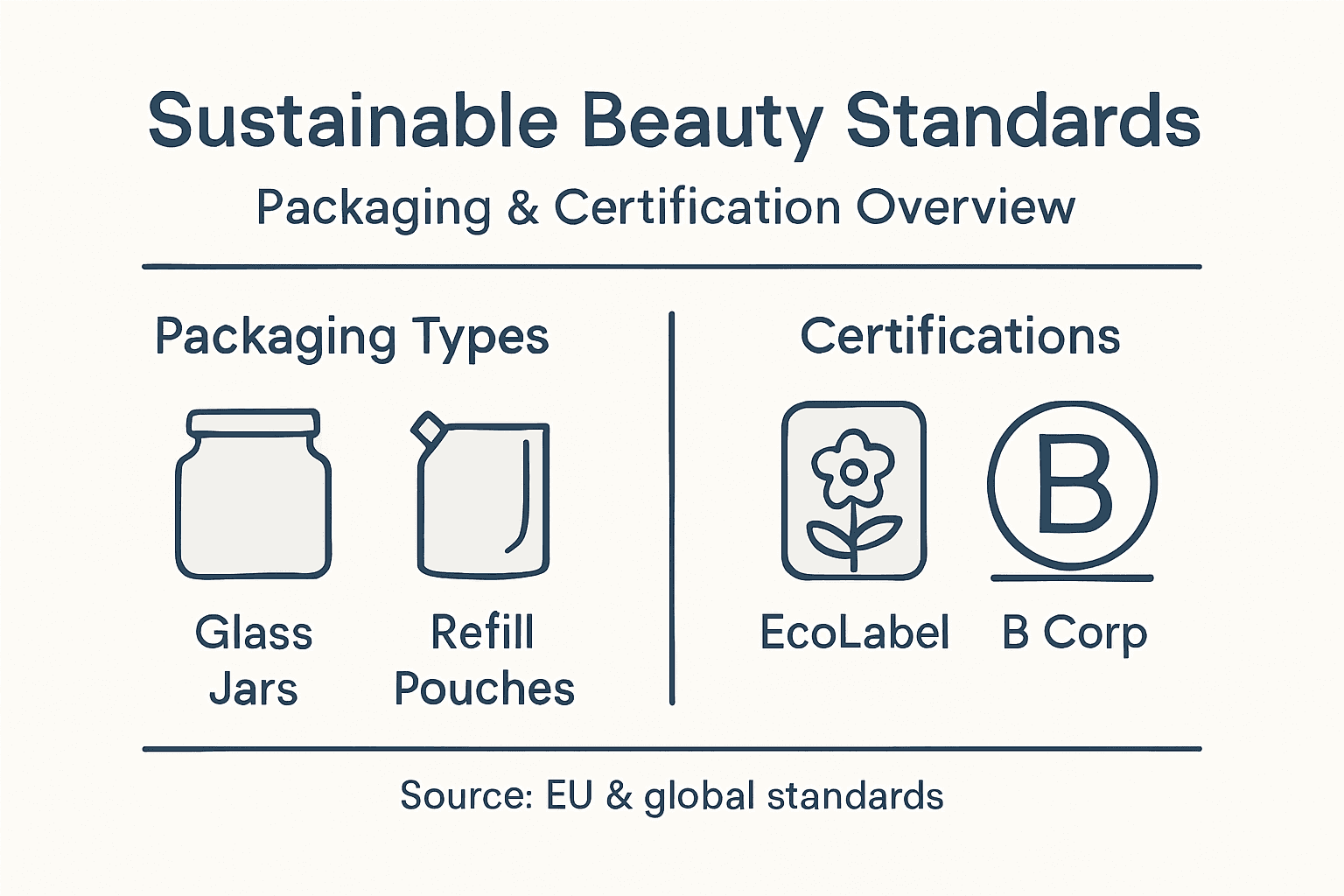
Industry certifications play a crucial role in validating sustainable packaging claims and driving transparency. Rigorous standards like FSC for responsibly sourced materials, RecyClass for plastic recyclability, and COSMOS for ecological cosmetic packaging provide consumers with reliable indicators of genuine environmental commitment. Brands are increasingly developing packaging solutions that incorporate mono-materials, biodegradable composites, and advanced refillable systems that dramatically reduce waste and support the circular economy.
Regulatory frameworks are accelerating the transition toward more sustainable packaging practices. The European Union’s Packaging and Packaging Waste Regulation mandates enhanced recyclability, minimum recycled content requirements, and digital traceability. These regulations are not just compliance measures but transformative tools that incentivize innovation, pushing beauty brands to rethink their entire approach to product packaging. Emerging technologies such as blockchain are being integrated to provide unprecedented transparency about a product’s environmental journey from production to disposal.
Pro Tip: Check product packaging for specific recycling instructions and look for internationally recognized sustainability certifications to make more informed environmental choices.
Below is a summary of major industry packaging certifications and what they validate:
| Certification | Focus Area | What It Verifies | Impact On Consumers |
|---|---|---|---|
| FSC | Materials sourcing | Responsibly sourced wood/paper | Forest conservation |
| RecyClass | Plastic recyclability | Pkg. compatibility with recycling | Sustainable disposal |
| COSMOS | Ecological packaging | Eco-friendly cosmetic packaging | Safety and transparency |
| EU Waste Regulation | Recycling standards | Minimum recycled content | Regional compliance |
Challenges, Costs, and Common Mistakes to Avoid
Navigating the sustainable beauty landscape requires understanding the complex challenges brands and consumers face. Sustainable practices in beauty reveal significant economic and operational obstacles that can hinder authentic environmental progress. Higher production costs for sustainable ingredients and eco-friendly packaging often create substantial financial barriers, requiring strategic investments and innovative approaches to remain competitive.
One of the most pervasive challenges is the prevalence of greenwashing, where brands make misleading environmental claims without substantive evidence. Consumers must become discerning, demanding transparency and verifiable sustainability credentials. Common mistakes include relying on vague marketing language, failing to consider full product lifecycle impacts, and overlooking the nuanced environmental implications of seemingly green products. Brands that genuinely commit to sustainability must provide comprehensive documentation about ingredient sourcing, manufacturing processes, and environmental certifications.
Economic considerations remain a critical factor in sustainable beauty adoption. Sustainable ingredients typically cost 20-50% more than conventional alternatives, creating pricing challenges for both manufacturers and consumers. This economic complexity requires a multifaceted approach involving consumer education, strategic pricing models, and demonstrating clear value beyond environmental credentials. Successful sustainable beauty brands will need to balance premium pricing with tangible benefits that resonate with environmentally conscious consumers who are willing to invest in responsible products.
Pro Tip: Develop a critical eye by researching brands’ actual sustainability practices beyond surface level marketing claims, and prioritize companies providing comprehensive environmental transparency.
Embrace Sustainable Beauty with GNS Beauty & Personal Care
Navigating the complex world of sustainable beauty can be challenging with issues like greenwashing and confusing product claims. If you are committed to making truly eco-conscious choices that honor ethical sourcing, biodegradable packaging, and personalized self-care solutions, you are not alone. The pain points highlighted in the article underscore the need for transparency, verified sustainability certifications, and products that balance performance with environmental responsibility.
At GNS Beauty & Personal Care, we understand these challenges and offer a curated selection of premium, sustainable beauty and wellness products designed to empower your daily routine. Discover clean beauty essentials, cruelty-free skincare, and refillable packaging options that align with your values and support a healthier planet.
Start your journey to authentic sustainable beauty now. Explore our eco-conscious collections and find curated products that truly deliver on quality and ethics. Visit GNS Beauty & Personal Care to shop confidently and embrace self-care that transforms not only your wellbeing but also the world around you.
Frequently Asked Questions
What is sustainable beauty?
Sustainable beauty is a holistic approach that integrates environmental consciousness, ethical production, and personal wellness into beauty and self-care practices. It goes beyond organic ingredients and recyclable packaging to include fair labor practices, reduced carbon footprints, and responsible resource management.
How do I identify genuine sustainable beauty products?
To identify genuine sustainable beauty products, look for brands that provide transparency about their ingredient sourcing, manufacturing processes, and environmental certifications. Research the brand’s commitments to sustainability and consider the entire lifecycle of the product, from ingredient sourcing to packaging disposal.
What are the different types of sustainable beauty products?
Sustainable beauty products include categories such as biocosmetics (plant-based), clean beauty (no harmful synthetics), cruelty-free products (no animal testing), biodegradable items (break down naturally), and refillable or upcycled packaging options. Each type addresses specific environmental and ethical concerns.
What challenges do brands face in adopting sustainable beauty practices?
Brands face challenges like the higher production costs for sustainable ingredients and eco-friendly packaging, economic barriers for consumers, and the risk of greenwashing, where misleading claims may obscure actual sustainability practices. It’s crucial for consumers to demand transparency and verifiable sustainability credentials.







Leave a comment
All comments are moderated before being published.
This site is protected by hCaptcha and the hCaptcha Privacy Policy and Terms of Service apply.