
Nearly 60 percent of American Millennial women say ethical beauty influences their skincare choices. With luxury brands racing to prove genuine sustainability, finding products that nurture both your wellbeing and the planet has never felt more important. As global expectations shift, this guide reveals what modern ethical beauty truly means, helping you spot authentic eco-luxury and avoid the pitfalls of greenwashing.
Table of Contents
- What Ethical Beauty Means Today
- Variations: Clean, Sustainable, Cruelty-Free
- Core Features of Ethical Beauty Products
- Certifications and Global Industry Standards
- Benefits for Consumers and Communities
- Risks, Greenwashing, and What to Avoid
Key Takeaways
| Point | Details |
|---|---|
| Ethical Beauty Definition | Ethical beauty is a holistic movement focused on environmental sustainability, social responsibility, and personal wellness. It reflects consumers’ values beyond mere aesthetics. |
| Core Features | Ethical beauty products prioritize transparency, sustainable sourcing, and social responsibility, minimizing ecological impact and promoting positive contributions. |
| Certification Importance | Certifications validate ethical claims and ensure consumer trust, aiding in informed decision-making regarding product authenticity. |
| Consumer Impact | Choosing ethical beauty products fosters a sustainable economy, supports fair labor, and drives positive social change in communities worldwide. |
What Ethical Beauty Means Today
Ethical beauty has transformed from a niche concept into a powerful global movement that transcends traditional cosmetic boundaries. Today, it represents a holistic approach to personal care that considers environmental sustainability, social responsibility, and individual wellness simultaneously. Modern consumers recognize that beauty choices are no longer just about personal aesthetics but reflect broader ethical citizenship perspectives.
At its core, ethical beauty now encompasses multiple interconnected dimensions. This includes sustainable ingredient sourcing, cruelty-free production methods, transparent supply chains, fair labor practices, and minimizing environmental impact. Brands are increasingly expected to demonstrate genuine commitment to social and ecological principles rather than merely using these concepts as marketing strategies. Consumers want authenticity and measurable positive impact from their beauty purchases.
The philosophical underpinnings of ethical beauty have dramatically evolved. Where traditional beauty standards focused narrowly on physical appearance, contemporary interpretations integrate moral integrity, social consciousness, and personal empowerment. This shift reflects a deeper understanding that our beauty choices can be powerful statements about our values, supporting global sustainability efforts and promoting more equitable production systems.
Pro tip: When evaluating ethical beauty brands, look beyond marketing claims and research their actual sustainability certifications, ingredient transparency, and documented social responsibility practices.
Variations: Clean, Sustainable, Cruelty-Free
Ethical beauty encompasses multiple nuanced approaches, each with distinct priorities and principles. Clean beauty standards primarily focus on ingredient safety, emphasizing products free from potentially harmful chemicals and toxins. This approach prioritizes human health by carefully selecting non-toxic, transparent formulations that minimize potential risks associated with synthetic or controversial ingredients.
Sustainable beauty extends beyond individual product composition, taking a holistic view of environmental and social responsibility. This approach considers the entire product lifecycle, from raw material sourcing to manufacturing processes, packaging, and eventual disposal. Brands committed to sustainable beauty aim to reduce carbon footprints, support fair labor practices, minimize waste, and create products that have minimal negative impact on global ecosystems.
Cruelty-free beauty represents a fundamental ethical commitment to avoiding animal testing throughout product development and production. This approach ensures that no animal suffering is involved in creating beauty products, reflecting a growing consumer demand for compassionate and responsible manufacturing practices. Importantly, cruelty-free does not automatically mean vegan, as products might still contain animal-derived ingredients while avoiding animal testing.
Pro tip: When selecting ethical beauty products, look for comprehensive certifications that validate clean, sustainable, and cruelty-free claims, understanding that these categories often overlap but are not inherently synonymous.
Here’s how clean, sustainable, and cruelty-free beauty approaches differ and overlap:
| Approach | Primary Focus | Key Benefit | Notable Limitation |
|---|---|---|---|
| Clean Beauty | Ingredient safety | Reduces chemical exposure | May not ensure sustainability |
| Sustainable Beauty | Environmental & social impact | Minimizes ecological footprint | Complexity in tracking impact |
| Cruelty-Free | Animal testing exclusion | Promotes humane practices | May include animal-derived ingredients |
Core Features of Ethical Beauty Products
Ethical beauty products distinguish themselves through a comprehensive approach that goes far beyond traditional cosmetic considerations. Ethical beauty standards prioritize transparency, sustainability, and social responsibility as fundamental principles. These products are carefully designed to minimize environmental impact while maximizing positive social contributions, reflecting a holistic worldview that connects personal care with global consciousness.

Key features of ethical beauty products typically include extensive ingredient scrutiny, ensuring that each component meets stringent safety and sustainability criteria. This means avoiding harmful chemicals, prioritizing natural and organic ingredients, and maintaining complete transparency about sourcing and production processes. Brands committed to ethical beauty often conduct thorough research to select ingredients that are not only safe for human use but also responsibly harvested, with minimal ecological disruption and maximum respect for local communities.
Sustainability extends beyond ingredient selection to encompass packaging, manufacturing, and distribution practices. Ethical beauty brands invest in biodegradable packaging, implement carbon-neutral production methods, and support fair trade initiatives that ensure workers receive living wages and operate in safe working conditions. By creating products that represent a comprehensive commitment to environmental and social wellness, these brands transform beauty consumption from a personal choice into a meaningful act of global citizenship.
Pro tip: Always review product certifications and conduct quick research on a brand’s sustainability practices to ensure your beauty choices align with genuine ethical standards.
Certifications and Global Industry Standards
Ethical beauty products navigate a complex landscape of international certifications and standards that validate their claims and ensure consumer trust. These rigorous frameworks provide critical oversight, examining everything from ingredient sourcing to manufacturing processes, environmental impact, and social responsibility. Certifications serve as powerful indicators of a brand’s commitment to transparency, helping consumers make informed decisions about their personal care choices.
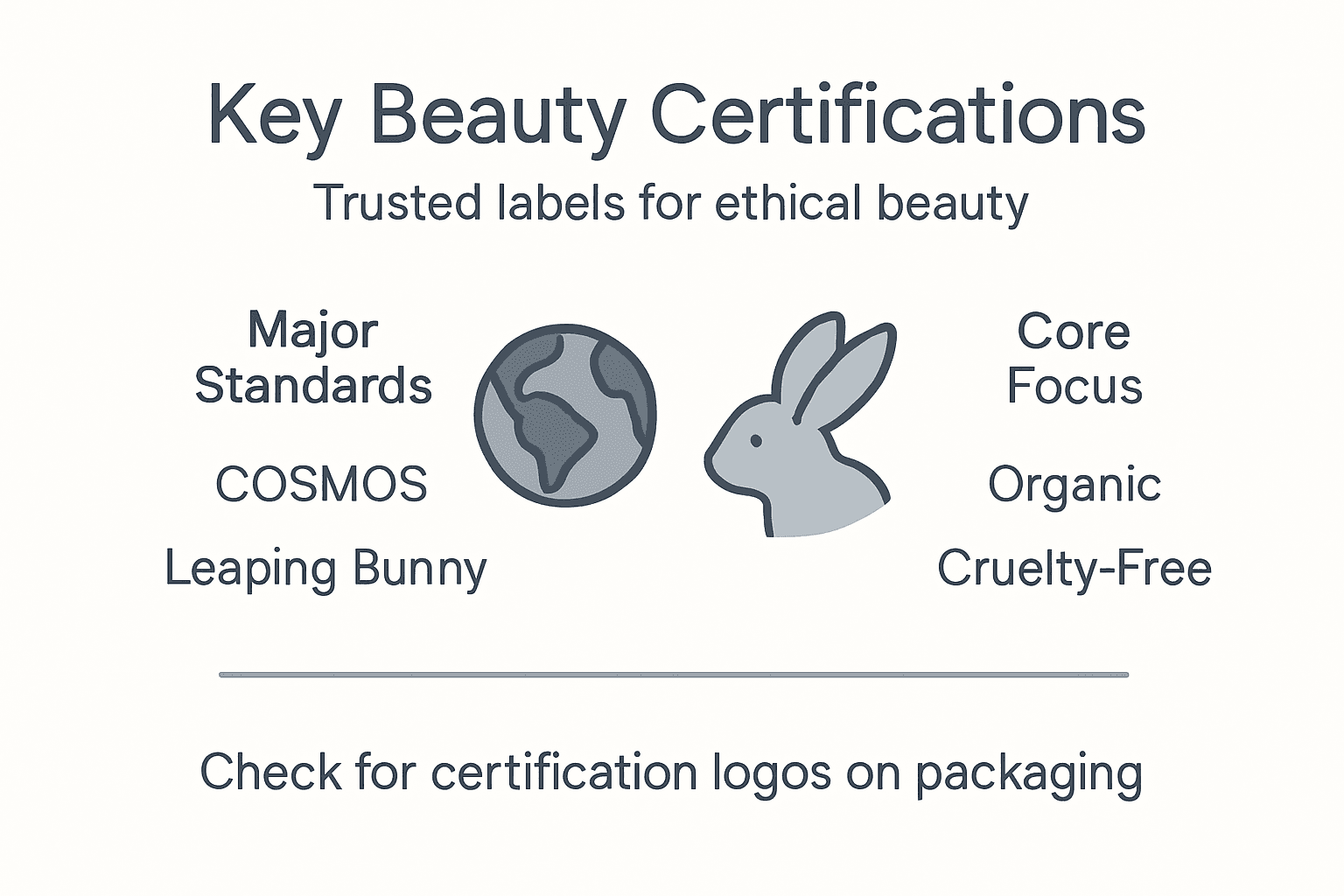
Key international certifications include comprehensive systems like COSMOS, which unifies European organic and natural cosmetic standards, and ISO guidelines such as ISO 16128 for quantifying natural ingredient origins. Other significant certifications focus on specific ethical dimensions, including cruelty-free verification, vegan product authentication, and environmental sustainability assessments. These standards require extensive documentation, regular audits, and stringent compliance checks that go far beyond surface-level marketing claims.
Global regulatory bodies like the FDA and international quality management systems play crucial roles in establishing manufacturing standards. Certifications such as Good Manufacturing Practices (GMP), ISO 22716, and ISO 9001 ensure that ethical beauty brands maintain exceptional quality control, safety protocols, and consistent production standards. These certifications represent more than bureaucratic checkboxes; they are tangible commitments to consumer well-being, environmental stewardship, and responsible business practices.
Pro tip: When evaluating beauty products, look for multiple certification logos and cross-reference them with official certification authority websites to confirm their authenticity and current validity.
Below is a quick reference to major ethical beauty certifications and their main requirements:
| Certification | Scope of Standards | Key Requirements | Typical Logo Appearance |
|---|---|---|---|
| COSMOS | Organic & natural cosmetics | Ingredient sourcing, eco-packaging | Green leaf, circle |
| Leaping Bunny | Cruelty-free | No animal testing, supply chain checks | Rabbit profile |
| ISO 16128 | Ingredient origins | Natural content calculation | ISO symbol, number |
| USDA Organic | Agricultural & ingredient quality | Minimum organic percentage | Green circular badge |
Benefits for Consumers and Communities
Ethical beauty represents a transformative approach that extends far beyond personal care, creating meaningful impact for both individual consumers and broader global communities. By choosing ethically produced beauty products, consumers actively participate in a more sustainable and socially responsible economic ecosystem. These choices generate ripple effects that support fair labor practices, environmental conservation, and economic opportunities for marginalized communities around the world.
For individual consumers, ethical beauty products offer profound personal benefits. These products prioritize human health by eliminating harmful chemicals, reducing potential long-term health risks associated with synthetic ingredients. The emphasis on natural, carefully sourced ingredients means consumers can feel confident about what they’re applying to their bodies. Moreover, the transparency inherent in ethical beauty brands empowers consumers with detailed information about product origins, manufacturing processes, and social impact, enabling more informed and conscious purchasing decisions.
At a community level, ethical beauty brands often engage in direct social impact initiatives. Many companies reinvest profits into local economies, support women’s entrepreneurship in developing regions, fund educational programs, and create sustainable employment opportunities. These efforts go beyond traditional corporate social responsibility, representing a holistic approach to business that recognizes the interconnectedness of global economic systems and the importance of equitable development.
Pro tip: Research brands that provide transparent impact reports and look for those demonstrating measurable social and environmental contributions beyond marketing claims.
Risks, Greenwashing, and What to Avoid
In the evolving landscape of ethical beauty, consumers must remain vigilant against greenwashing risks that can undermine genuine sustainability efforts. Greenwashing represents a deceptive marketing practice where brands exaggerate or fabricate environmental and ethical credentials, creating a false impression of social responsibility. These misleading claims not only deceive consumers but also potentially harm legitimate ethical businesses working to create meaningful change.
Key warning signs of greenwashing include vague environmental claims without substantive evidence, selective transparency, and marketing language that sounds impressive but lacks concrete backing. Brands might use terms like “natural” or “eco-friendly” without providing verifiable data about their production processes, ingredient sourcing, or actual environmental impact. Consumers should be particularly skeptical of products that use green imagery, earth-tone packaging, or emotional marketing without providing specific, measurable sustainability metrics.
To protect themselves, consumers must develop critical evaluation skills. This involves researching brand certifications, understanding the difference between marketing language and genuine sustainability commitments, and looking for transparent, third-party verified claims. Regulatory bodies are increasingly scrutinizing these practices, with emerging legal frameworks designed to hold companies accountable for their environmental and ethical marketing statements. By staying informed and demanding accountability, consumers can drive meaningful change in the beauty industry.
Pro tip: Always cross-reference sustainability claims with independent certification bodies and look for detailed, quantifiable environmental impact reports before making purchasing decisions.
Embrace Ethical Beauty for True Wellness and Global Impact
Choosing ethical beauty means prioritizing more than just appearance. It is about aligning your personal care routine with your values around sustainability, social responsibility, and health. If you want to avoid greenwashing and make confident choices that support cruelty-free, clean, and sustainable standards, then exploring products designed with transparency and integrity is essential.
Discover a curated selection of premium, eco-conscious solutions that empower your wellness journey at GNS Beauty & Personal Care. Our offerings help you reduce chemical exposure, support fair labor practices, and embrace beauty as a meaningful act of global citizenship. Start transforming your beauty routine today by visiting ethical personal care essentials and experience the confidence that comes from making informed, responsible decisions.
Frequently Asked Questions
What are the main benefits of choosing ethical beauty products?
Choosing ethical beauty products benefits consumers by ensuring safer, non-toxic ingredients, promoting environmental sustainability, and supporting fair labor practices. These products contribute to healthier skin and a better planet, while empowering communities.
How can I identify if a beauty brand is truly ethical?
To identify truly ethical beauty brands, look for certifications that validate claims, such as cruelty-free logos, organic certifications, and transparency reports. Conduct research on the brand’s ingredient sourcing, manufacturing processes, and social responsibility practices.
What is the difference between clean, sustainable, and cruelty-free beauty?
Clean beauty focuses on ingredient safety by avoiding harmful chemicals. Sustainable beauty considers the entire lifecycle of a product, including environmental and social impacts. Cruelty-free beauty ensures no animal testing is involved, although it may still contain animal-derived ingredients.
How can greenwashing affect my choices in beauty products?
Greenwashing can mislead consumers into believing a product is more environmentally friendly or ethical than it is. To avoid being misled, look for specific, verifiable claims and research the brand’s certifications and practices to ensure they align with genuine sustainability efforts.






Leave a comment
All comments are moderated before being published.
This site is protected by hCaptcha and the hCaptcha Privacy Policy and Terms of Service apply.