

Choosing skincare and personal care products that reflect your values can feel complicated when packaging claims are everywhere. Eco friendly packaging matters because it impacts more than just recycling. According to the United States Environmental Protection Agency, truly sustainable packaging reduces environmental harm across every stage—from sourcing to disposal. This guide reveals key features of authentic eco friendly packaging, highlights crucial material choices, and debunks greenwashing, helping you confidently select beauty products that align with environmental responsibility.
Table of Contents
- Eco Friendly Packaging Defined and Debunked
- Types of Sustainable Packaging Materials Explained
- Why Material Choice Matters for Beauty Brands
- Benefits and Impact on Beauty Consumers
- Common Mistakes with Eco Packaging Options
Key Takeaways
| Point | Details |
|---|---|
| Importance of Lifecycle Assessment | Brands should implement comprehensive life cycle assessments to reveal the true ecological impact of their packaging choices. |
| Material Selection Matters | Choosing sustainable materials influences brand reputation and consumer trust, making responsible sourcing essential. |
| Consumer Engagement through Transparency | Providing clear information on sustainability certifications and recycling practices boosts consumer confidence and loyalty. |
| Avoiding Greenwashing | Brands must avoid superficial claims and ensure their eco-friendly packaging choices align with rigorous environmental standards. |
Eco Friendly Packaging Defined and Debunked
Eco friendly packaging represents a transformative approach to product containment that prioritizes environmental sustainability throughout the entire product lifecycle. The United States Environmental Protection Agency defines sustainable packaging as a strategic method for reducing environmental impacts by optimizing material management across production, distribution, and disposal stages.
At its core, sustainable packaging goes beyond simple recycling. It encompasses a holistic approach that evaluates packaging materials and methods through multiple critical lenses: environmental impact, material sourcing, production efficiency, and end-of-life disposal potential. This comprehensive framework means beauty brands must consider not just what their packaging is made from, but how it’s produced, transported, used, and ultimately discarded.
Key characteristics of truly eco friendly packaging include renewable material sourcing, minimal carbon footprint, biodegradability, and the potential for multiple lifecycle uses. Brands committed to genuine sustainability must look beyond surface-level green marketing and implement comprehensive life cycle assessments that demonstrate meaningful environmental benefits. This requires rigorous analysis of each packaging component’s ecological footprint.
Pro tip: When evaluating beauty product packaging, always check for third-party environmental certifications that validate sustainable claims and provide transparent evidence of ecological commitment.
Types of Sustainable Packaging Materials Explained
Sustainable packaging materials represent a critical evolution in beauty product design, with various innovative solutions emerging to address environmental challenges. Paper-based packaging technologies stand at the forefront, offering renewable alternatives that significantly reduce ecological impact through recycled fiber and responsible forestry practices.

Beyond traditional paper materials, beauty brands are exploring advanced bioplastic and biodegradable polymer solutions. These cutting-edge materials include plant-derived polymers that maintain product integrity while minimizing environmental footprint. Biodegradable packaging innovations now provide beauty companies with sophisticated options that balance performance, aesthetics, and sustainability.
The sustainable packaging landscape encompasses several primary material categories: recycled paper products, bioplastics, plant-based polymers, mushroom-derived packaging, seaweed composites, and reclaimed ocean plastics. Each material offers unique advantages, from complete biodegradability to reduced carbon emissions, enabling beauty brands to make meaningful environmental commitments through thoughtful packaging choices.
Here’s a quick reference comparing major sustainable packaging materials used by beauty brands:
| Material Type | Environmental Benefit | Common Use Cases | Key Challenge |
|---|---|---|---|
| Recycled paper | Low energy, renewable resource | Cartons, boxes, sleeves | Moisture resistance |
| Bioplastics | Reduced fossil fuel reliance | Bottles, tubes, film wraps | Composting infrastructure |
| Plant-based polymers | Rapid growth, biodegradable | Jars, trays, flexible packs | Cost and availability |
| Mushroom packaging | Compostable, no toxins | Protective cushioning | Durability against humidity |
| Seaweed composites | Biodegradable, ocean safe | Pouch wraps, sachets | Scalability of production |
| Ocean plastics | Cleaned waste, upcycled | Caps, containers, labels | Collection consistency |
Pro tip: When selecting sustainable packaging, prioritize materials with clear recyclability, minimal processing requirements, and transparent environmental certifications to ensure genuine ecological benefits.
Why Material Choice Matters for Beauty Brands
Beauty brands today face unprecedented pressure to make responsible packaging decisions that align with growing environmental consciousness. Sustainable packaging design has become a critical strategy for brands seeking to demonstrate genuine ecological commitment, requiring careful evaluation of material sourcing, environmental impact, and long-term sustainability goals.
The implications of material selection extend far beyond simple environmental considerations. Reducing plastic waste represents a fundamental challenge for beauty brands, with consumer expectations and regulatory pressures driving significant transformations in packaging strategies. Modern consumers increasingly view packaging choices as a direct reflection of a brand’s values, making material selection a powerful tool for brand differentiation and market positioning.
Key factors in material selection include recyclability, carbon footprint, production efficiency, and potential for circular economy integration. Beauty brands must now balance aesthetic appeal with ecological responsibility, exploring innovative materials that minimize environmental impact while maintaining product protection, visual attractiveness, and functional performance. This holistic approach requires ongoing research, collaboration with sustainable material developers, and a commitment to continuous improvement in packaging technologies.
This table summarizes core business impacts of eco friendly beauty packaging choices:
| Packaging Feature | Business Impact | Consumer Perception |
|---|---|---|
| Third-party certification | Builds market trust | Viewed as credible sustainability |
| Reduced carbon footprint | Enhances brand responsibility | Attracts eco-conscious buyers |
| Smart recyclability | Lowers disposal costs | Convenience boosts loyalty |
| Transparency of sourcing | Improves brand reputation | Strengthens consumer confidence |
Pro tip: Conduct a comprehensive lifecycle assessment of your packaging materials, considering environmental impact from production through disposal to make truly informed sustainable choices.
Benefits and Impact on Beauty Consumers
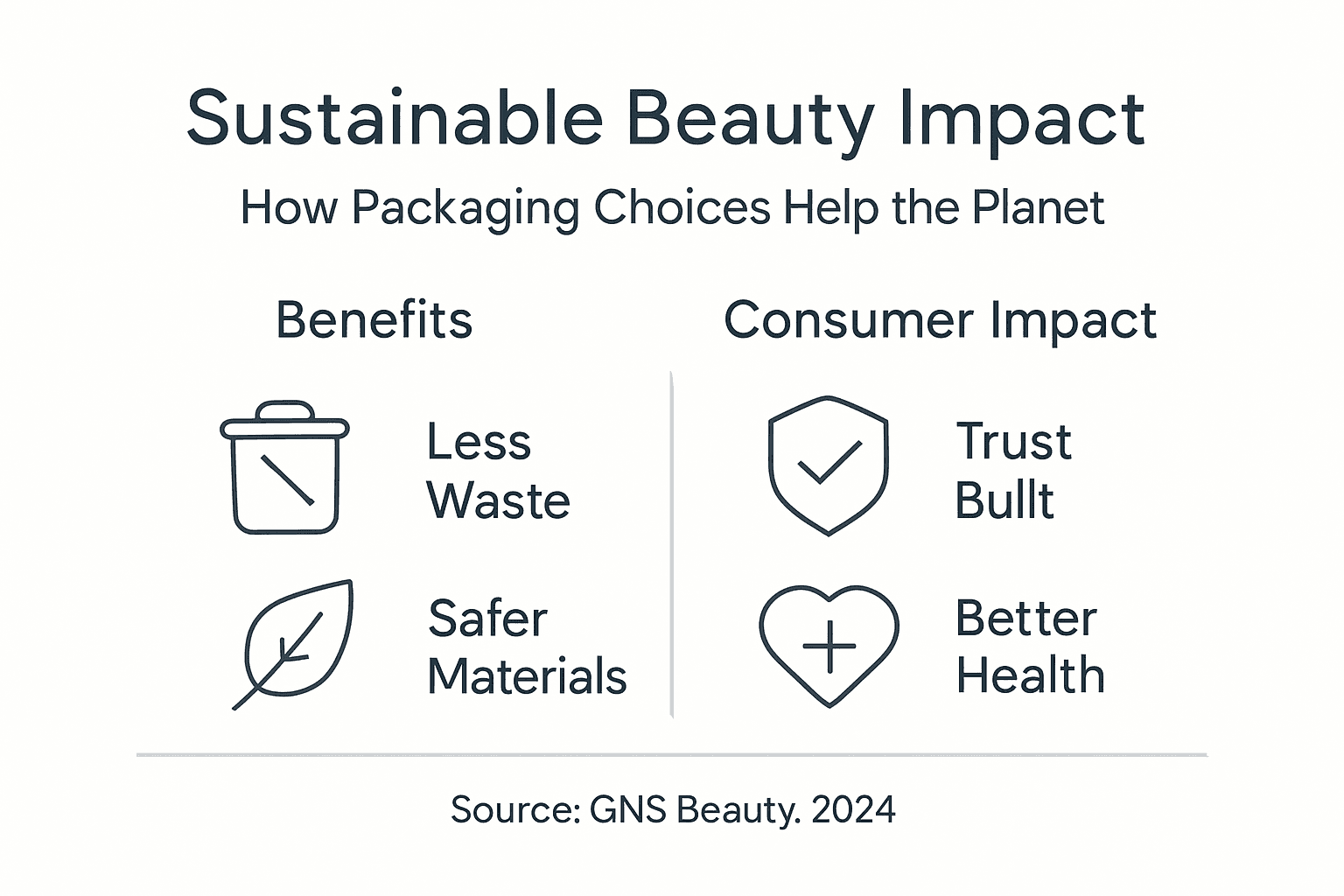
Sustainable packaging is transforming the beauty consumer experience, offering far more than environmental benefits. Eco-friendly packaging trends now provide innovative features that engage consumers while supporting waste reduction, including interactive elements like QR codes that guide proper recycling and demonstrate brand transparency.
Consumers are increasingly prioritizing health and environmental responsibility in their beauty choices. Sustainable packaging technologies help reduce exposure to harmful chemicals, ensuring product safety throughout the entire lifecycle. This shift reflects a broader awareness that packaging choices directly impact personal wellness and environmental health, empowering consumers to make more conscious purchasing decisions.
The impact of sustainable packaging extends beyond individual product choices, creating a ripple effect of environmental awareness. Beauty consumers now view packaging as a critical indicator of a brand’s commitment to social and ecological responsibility. By choosing brands with innovative, environmentally conscious packaging, consumers actively participate in a larger movement towards sustainability, transforming their personal care routines into meaningful environmental action.
Pro tip: Examine product packaging closely and look for clear sustainability certifications, recycling instructions, and transparent information about material sourcing to make truly informed beauty purchases.
Common Mistakes with Eco Packaging Options
Many beauty brands inadvertently fall into the trap of superficial eco-friendly packaging design, mistaking surface-level changes for genuine sustainability. The most prevalent error involves making environmental claims without conducting comprehensive life cycle assessments, which can lead to greenwashing and misleading consumer perceptions about a product’s true ecological impact.
The complexity of sustainable packaging extends far beyond simple recyclability. Brands often overlook critical aspects of material sourcing, production processes, and end-of-life disposal scenarios. Ecolabel and certification standards provide crucial guidance, helping companies navigate the intricate landscape of environmental responsibility and avoid common pitfalls that undermine genuine sustainability efforts.
Key mistakes in eco packaging include using non-recyclable materials marketed as environmentally friendly, failing to consider the entire supply chain’s carbon footprint, and prioritizing aesthetic appeal over actual environmental performance. These missteps not only compromise a brand’s ecological credibility but also erode consumer trust in sustainable packaging initiatives. Successful eco packaging requires a holistic approach that integrates scientific rigor, transparent communication, and a genuine commitment to environmental stewardship.
Pro tip: Always cross-reference packaging claims with independent environmental certifications and conduct thorough research to verify the actual sustainability of beauty product packaging.
Choose Truly Sustainable Beauty Packaging with GNS Beauty
Navigating the world of eco-friendly packaging can be challenging with all the greenwashing and superficial claims. The article highlights the crucial need for authentic sustainability backed by lifecycle assessments and third-party certifications. Many beauty brands struggle to balance environmental impact with product protection and consumer appeal. At GNS Beauty, we understand your desire to support brands that prioritize genuine eco-conscious packaging. We carefully curate products that meet high standards for sustainability, combining minimal environmental footprint with luxurious quality.
Explore our curated collection of beauty and personal care essentials that embody the principles of renewable materials, recyclability, and transparency. Don’t settle for packaging that only looks green. Visit GNS Beauty to shop sustainable choices that align with your values. Take action now to embrace environmentally responsible beauty products and enhance your self-care routine with confidence.
Discover how you can make a positive impact while enjoying premium, eco-conscious products at GNS Beauty. Learn more about the importance of sustainable packaging design and join a community committed to wellness and the planet.
Frequently Asked Questions
What materials are considered eco-friendly for beauty packaging?
Eco-friendly beauty packaging materials include recycled paper products, bioplastics, plant-based polymers, mushroom-derived packaging, seaweed composites, and reclaimed ocean plastics. Each offers unique environmental benefits like biodegradability and reduced carbon emissions.
How can consumers verify if beauty packaging is genuinely sustainable?
Consumers can look for third-party environmental certifications that validate sustainable claims, examine recycling instructions, and check for transparent information about material sourcing to ensure the packaging is genuinely eco-friendly.
What are the common mistakes brands make in eco-friendly packaging?
Common mistakes include making environmental claims without conducting comprehensive life cycle assessments, using non-recyclable materials marketed as eco-friendly, and prioritizing aesthetics over actual environmental performance, leading to greenwashing.
Why is the choice of packaging material important for beauty brands?
The choice of packaging material is crucial for beauty brands as it affects their environmental impact, consumer perception, and market positioning. Responsible material selection can enhance brand trust and attract environmentally conscious consumers.







Leave a comment
All comments are moderated before being published.
This site is protected by hCaptcha and the hCaptcha Privacy Policy and Terms of Service apply.