

Most American consumers now expect more from their beauty products than ever before. As sustainability becomes a clear priority, the beauty industry faces a major turning point. Over sixty percent of buyers actively seek brands that embrace ethical sourcing and eco-friendly practices. This shift is about more than just green packaging. Discover the core ideas shaping sustainable beauty and what they mean for anyone who cares about both personal wellness and the planet.
Table of Contents
- Sustainable Beauty Practices: Core Concepts Explained
- Eco-Friendly Ingredients and Formulation Standards
- Ethical Sourcing and Fair Labor in Beauty
- Sustainable Packaging and Waste Reduction Strategies
- Certifications, Claims, and How to Shop Responsibly
- Comparing Mainstream vs. Sustainable Beauty Approaches
Key Takeaways
| Point | Details |
|---|---|
| Holistic Approach to Beauty | Sustainable beauty integrates environmental consciousness with personal wellness, transforming consumer choices into opportunities for positive environmental engagement. |
| Ethical Sourcing Matters | The focus on ethical sourcing ensures fair labor practices and transparency within the beauty supply chain, emphasizing responsibility towards both people and the planet. |
| Innovative Sustainable Practices | Advances in eco-friendly ingredient development and packaging are reshaping the beauty industry, promoting lower environmental impacts and encouraging circular economy principles. |
| Consumer Awareness Drives Change | Increasing awareness of product certifications and responsible shopping empowers consumers to prioritize sustainable practices, thus reshaping the beauty marketplace. |
Sustainable Beauty Practices: Core Concepts Explained
Sustainable beauty represents a holistic approach that goes far beyond traditional cosmetic practices, integrating environmental consciousness with personal wellness. Comprehensive research from academic sources reveals a transformative shift in the beauty industry toward more ethical and eco-responsible methodologies.
At its core, sustainable beauty encompasses several critical dimensions. These include eco-friendly ingredient sourcing, which prioritizes natural, renewable resources with minimal environmental impact. Sustainable beauty practices now emphasize comprehensive strategies that extend well beyond product composition, incorporating:
- Ethical ingredient procurement
- Reduced carbon footprint in manufacturing
- Cruelty-free product development
- Minimal and recyclable packaging solutions
The movement represents a profound reimagining of beauty standards, where consumer choices directly contribute to environmental preservation. Sustainable beauty practitioners recognize that personal care is intrinsically connected to global ecological health, making each purchasing decision an opportunity for positive environmental engagement. By selecting products that prioritize natural ingredients, responsible production, and minimal waste, individuals can actively participate in a broader ecosystem of conscious consumption.
Ultimately, sustainable beauty transcends trend status—it’s a fundamental philosophy of holistic wellness that respects both personal and planetary well-being. As consumers become increasingly aware of their environmental impact, the demand for transparent, ethically produced beauty solutions continues to grow, signaling a permanent shift in how we conceptualize personal care.
Eco-Friendly Ingredients and Formulation Standards
The evolution of beauty products is witnessing a significant transformation through innovative, sustainable ingredient development. Groundbreaking research on cosmetic ingredient alternatives demonstrates how food waste materials and eco-friendly extraction methods are revolutionizing product formulation, creating a more responsible approach to personal care.
Sustainable formulation standards now encompass several critical dimensions of product development. Eco-conscious ingredient sourcing prioritizes materials that minimize environmental impact while maintaining high performance standards. Key principles of these emerging standards include:
- Utilizing renewable botanical extracts
- Implementing zero-waste manufacturing processes
- Reducing chemical synthesis dependencies
- Prioritizing biodegradable components
Scientific investigations into sustainable cosmetic alternatives reveal promising results in creating effective products through innovative approaches. Researchers are successfully developing moisturizers and lipsticks that match conventional formulations while dramatically reducing ecological footprints.

The future of beauty ingredient standards lies in a holistic approach that balances performance, safety, and environmental responsibility. Brands committed to sustainable formulation are not just creating products—they’re pioneering a new paradigm of conscious consumption that respects both consumer needs and planetary limitations. As technology and research advance, we can expect increasingly sophisticated eco-friendly ingredients that challenge traditional beauty industry norms.
Ethical Sourcing and Fair Labor in Beauty
The beauty industry is undergoing a profound transformation, with ethical sourcing emerging as a critical cornerstone of sustainable practice. Contemporary research on sustainable ingredients reveals a growing commitment to transparency and social responsibility throughout the global supply chain.
Ethical sourcing in beauty extends far beyond traditional procurement strategies. It encompasses a comprehensive approach that prioritizes:
- Fair wages for agricultural and manufacturing workers
- Sustainable agricultural practices
- Protection of indigenous knowledge and traditional resource rights
- Transparent supply chain documentation
- Minimizing environmental impact during ingredient extraction
The complex landscape of ethical beauty demands rigorous standards that balance economic fairness with environmental stewardship. Workers in ingredient sourcing regions—from botanical extract producers to mineral processors—increasingly receive protection through collaborative international frameworks that ensure dignified working conditions and fair compensation.
Consumer awareness continues to drive meaningful change in the beauty industry. By selecting brands that demonstrate genuine commitment to ethical practices, individuals can support a more equitable global economic model. The future of beauty lies not just in product performance, but in creating a supply chain that respects human dignity, preserves cultural heritage, and maintains ecological balance.
Sustainable Packaging and Waste Reduction Strategies
Sustainable packaging represents a critical frontier in the beauty industry’s environmental transformation. Consumer attitudes toward eco-friendly packaging demonstrate a growing awareness and demand for packaging solutions that minimize ecological impact.
Effective waste reduction strategies in beauty packaging encompass several innovative approaches:
- Utilizing biodegradable materials
- Implementing refillable container systems
- Designing packaging with post-consumer recycled content
- Creating packaging that requires minimal material volume
- Developing packaging with clear recyclability instructions
Innovative packaging solutions are emerging that dramatically reduce plastic waste through creative design and material selection. These approaches include compostable containers, concentrated product formulations that require less packaging, and modular designs that allow consumers to replace only specific components.
The future of sustainable beauty packaging goes beyond waste reduction—it represents a holistic reimagining of product design. By integrating circular economy principles, brands can create packaging that not only minimizes environmental harm but actively contributes to ecological restoration. Consumers increasingly view packaging as an extension of a brand’s environmental commitment, making sustainable design a powerful differentiator in the competitive beauty marketplace.
Certifications, Claims, and How to Shop Responsibly
Consumer awareness is transforming the beauty industry, with responsible shopping becoming increasingly sophisticated. Comprehensive research on sustainability integration reveals the critical importance of understanding product certifications and environmental claims.
Navigating responsible beauty purchasing requires understanding key certification standards:
- Cruelty-free certifications
- Organic ingredient verification
- Vegan product designations
- Environmental impact assessments
- Ethical sourcing indicators
Chemical hazard assessment standards provide consumers with powerful tools for evaluating product safety and environmental impact. These rigorous frameworks help shoppers move beyond marketing claims and make informed decisions based on scientific evaluation.
Responsible beauty shopping is about more than reading labels—it’s a holistic approach to understanding product lifecycles, ingredient origins, and broader environmental implications. Consumers are increasingly viewing their purchasing power as a direct mechanism for supporting sustainable practices, driving meaningful change through intentional, educated choices that prioritize personal and planetary wellness.
Comparing Mainstream vs. Sustainable Beauty Approaches
The beauty industry is experiencing a profound transformation, with sustainable approaches challenging traditional cosmetic paradigms. Comprehensive research on green cosmetics reveals critical differences between mainstream and eco-conscious beauty practices that extend far beyond surface-level marketing claims.
Key distinctions between mainstream and sustainable beauty approaches include:
- Ingredient sourcing methodology
- Environmental impact assessment
- Production and manufacturing processes
- Transparency in supply chain
- Long-term ecological considerations
- Chemical composition and safety standards
The rise of sustainable beauty practices demonstrates a fundamental shift from profit-driven models to holistic wellness approaches. Mainstream beauty often prioritizes immediate aesthetic results, while sustainable beauty integrates comprehensive considerations of human and environmental health.
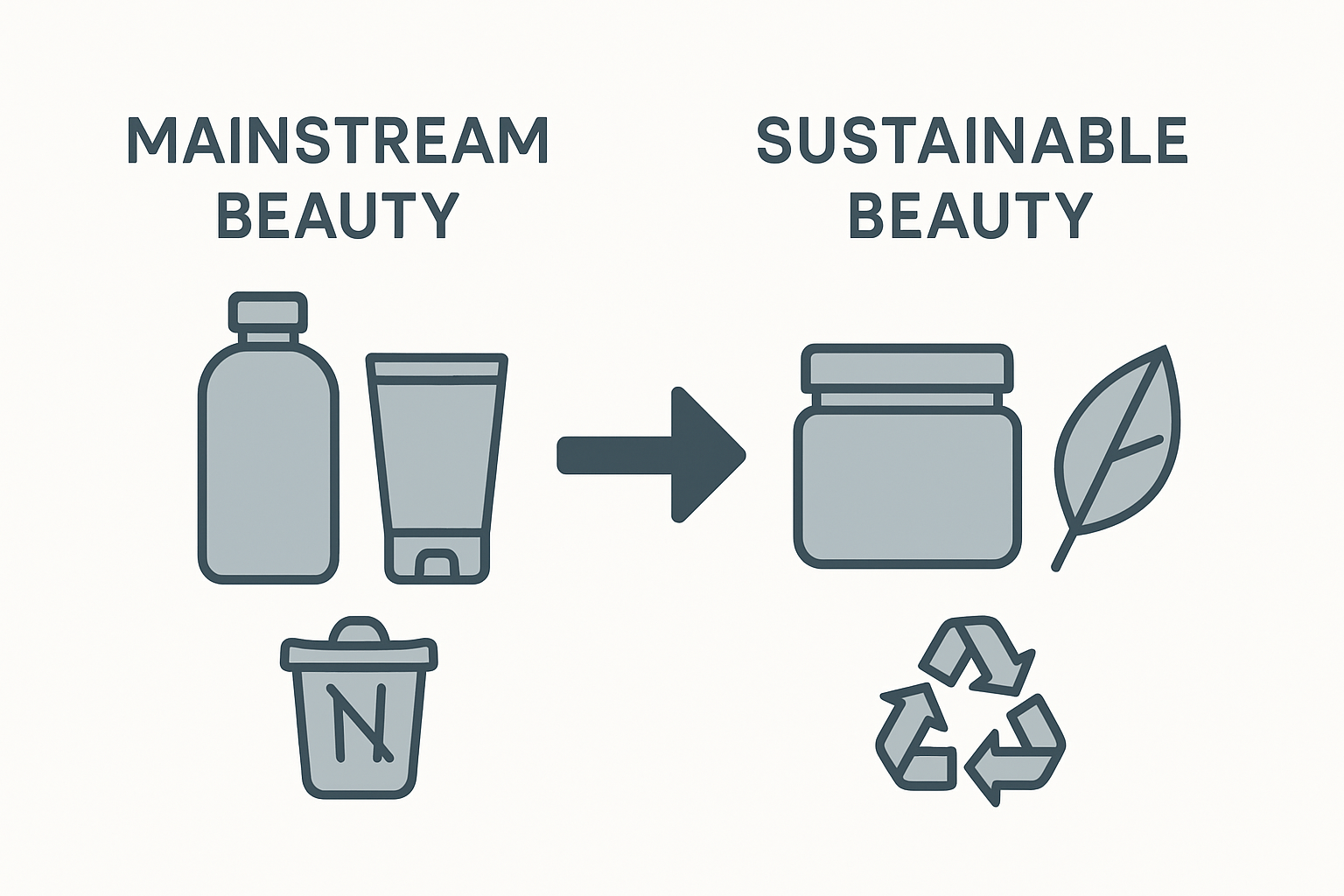
Ultimately, the transition represents more than a trend—it’s a fundamental reimagining of personal care. Consumers are increasingly recognizing that their beauty choices have broader implications, selecting products that align with personal wellness, social responsibility, and environmental stewardship. The sustainable beauty approach transforms cosmetic selection from a purely aesthetic decision to a conscious, impactful lifestyle choice.
Discover Sustainable Beauty That Supports Your Wellness Journey
The article highlights the growing importance of ethical sourcing, eco-friendly ingredients, and sustainable packaging in beauty routines. Many consumers face challenges choosing products that truly reflect responsible practices while maintaining high standards of quality and performance. At GNS Beauty & Personal Care, we understand your desire to align your self-care with a commitment to environmental and social wellness. Our curated collection features luxury, eco-conscious products designed to empower your natural beauty and support holistic wellness.
Explore our selection today at GNS Beauty & Personal Care to find expertly chosen skincare, haircare, and personal care essentials that embody the sustainable beauty principles discussed. Take the step now to make mindful choices backed by transparency, quality, and ethical values. Visit GNS Beauty & Personal Care and transform your beauty routine into a powerful act of self-care and planet care.
Frequently Asked Questions
What are sustainable beauty practices?
Sustainable beauty practices involve a holistic approach to cosmetics that prioritizes environmental consciousness, ethical sourcing, and minimal waste. This includes using eco-friendly ingredients, cruelty-free development, and sustainable packaging solutions.
How do eco-friendly ingredients impact wellness choices?
Eco-friendly ingredients prioritize natural and renewable resources that are less harmful to the environment and the user. Choosing products with these ingredients can lead to better overall wellness by reducing exposure to harmful chemicals and promoting ethical consumption.
What role does ethical sourcing play in sustainable beauty?
Ethical sourcing ensures that ingredients are obtained through fair labor practices and sustainable agricultural methods. This not only supports the welfare of workers and local communities but also contributes to the preservation of ecological systems, enhancing personal wellness through social responsibility.
How can consumers identify sustainable beauty products?
Consumers can identify sustainable beauty products by looking for certifications such as cruelty-free, organic, and vegan labels. Understanding ingredient sourcing and packaging claims can also help shoppers make informed choices that align with sustainable practices.
Recommended
- The Essential Guide to Why Sustainable Beauty Matters
- Complete Guide to Holistic Beauty Habits
- Sustainable Beauty: Why Eco-Friendly Personal Care Tools Matter
- Sustainable Beauty: Shop Ethical Personal Care Products
- Top 5 Anti-Aging Facials Oakville: Which One is Right for You? | Distill Laser Clinic







Hinterlasse einen Kommentar
Alle Kommentare werden vor der Veröffentlichung geprüft.
Diese Website ist durch hCaptcha geschützt und es gelten die allgemeinen Geschäftsbedingungen und Datenschutzbestimmungen von hCaptcha.