Over 60 percent of American shoppers now question the safety of their personal care products. Concerns about ingredient safety and environmental impact are driving a surge in clean beauty interest across the United States. This shift reflects more than just a trend as it challenges common misconceptions and spotlights the differences between clean beauty and conventional choices. If you want clarity on what clean beauty really means for your health and the planet, you are in the right place.
Table of Contents
- Clean Beauty Defined And Common Misconceptions
- Key Ingredients And Safety Standards
- Skin Health And Long-Term Wellness Impact
- Sustainable Packaging And Environmental Benefits
- Comparing Clean Beauty To Conventional Products
Key Takeaways
| Point | Details |
|---|---|
| Clean Beauty Definition | Clean beauty focuses on ingredient safety, transparency, and wellness, avoiding harmful synthetic chemicals without being synonymous with natural products. |
| Ingredient Safety Standards | Key ingredients like parabens and phthalates are avoided, requiring rigorous screening and safety evaluations to prioritize consumer health. |
| Holistic Wellness Approach | Clean beauty supports long-term skin health by minimizing toxic exposure and enhancing the skin’s protective functions through proactive ingredient choices. |
| Environmental Sustainability | Clean beauty brands are leading initiatives to reduce packaging waste and adopt eco-friendly strategies, promoting a holistic approach to personal and environmental health. |
Clean Beauty Defined and Common Misconceptions
The term clean beauty represents a progressive approach to personal care that prioritizes ingredient safety, transparency, and wellness. Far from a passing trend, clean beauty focuses on creating products that minimize potential health risks while supporting holistic well-being. Understanding the nuanced definition of clean beauty reveals a commitment to formulating skincare and cosmetic products without potentially harmful synthetic chemicals.
Contrary to popular belief, clean beauty is not synonymous with natural or organic products. The core principle centers on avoiding ingredients scientifically linked to health concerns, such as parabens, phthalates, and certain synthetic fragrances. Experts emphasize that clean beauty requires rigorous ingredient screening, prioritizing consumer safety through careful product development. Many industry professionals highlight that the term remains unregulated, which can lead to significant consumer confusion about product claims.
Common misconceptions about clean beauty include:
- Clean beauty means 100% natural ingredients
- All “clean” products are automatically safe
- Clean beauty products are less effective than traditional cosmetics
- Only expensive brands can produce clean beauty products
In reality, clean beauty represents a nuanced approach that balances scientific research, ingredient safety, and performance. Consumers should look beyond marketing claims and investigate product ingredient lists, understanding that “clean” does not automatically guarantee superior quality or complete safety. The movement continues evolving, pushing the beauty industry toward greater transparency and more responsible formulation practices.
Key Ingredients and Safety Standards
Clean beauty’s foundational philosophy centers on ingredient transparency and proactive health protection. Safety standards in this evolving industry focus on systematically eliminating potentially harmful synthetic chemicals from personal care formulations. Clean beauty brands carefully evaluate ingredient safety by screening for compounds that might pose long-term health risks, prioritizing consumer wellness through meticulous product development.
The most commonly avoided ingredients in clean beauty products include parabens, phthalates, sulfates, and synthetic fragrances. These substances have been linked to potential endocrine disruption, skin irritation, and other health concerns. Instead of using these traditional preservatives and stabilizers, clean beauty formulations increasingly rely on alternative ingredients like phenoxyethanol, plant-derived plasticizers, and natural botanical extracts that provide similar functional benefits without compromising safety.
Key safety evaluation criteria for clean beauty products typically involve:
- Comprehensive ingredient screening
- Toxicology risk assessments
- Verification of molecular safety profiles
- Commitment to transparent labeling
- Ongoing research into ingredient interactions
Consumers seeking clean beauty products should look beyond marketing claims and carefully examine ingredient lists. Understanding that “clean” represents a commitment to safer, more responsible formulation helps individuals make informed choices about their personal care products. The movement continues driving innovation, pushing beauty brands toward more rigorous scientific standards and greater accountability in product development.
Skin Health and Long-Term Wellness Impact
Holistic skincare represents a comprehensive approach to maintaining skin health that extends far beyond surface-level treatments. Clean beauty products aim to reduce exposure to potentially harmful chemicals, promoting long-term wellness by minimizing the absorption of potentially toxic substances through our body’s largest organ - the skin. This approach recognizes that what we apply topically can have significant implications for our overall health and cellular functioning.

The connection between skin health and overall wellness is increasingly supported by scientific research. Synthetic chemicals found in traditional skincare products can potentially disrupt hormonal balance, trigger inflammatory responses, and accumulate in body tissues over time. Clean beauty formulations focus on ingredients that not only nourish the skin but also support its natural protective mechanisms. Experts caution that individual reactions to ingredients can vary significantly, emphasizing the importance of personalized skincare approaches.
Key considerations for long-term skin wellness include:
- Minimizing exposure to endocrine-disrupting chemicals
- Supporting the skin’s natural microbiome
- Choosing ingredients with proven nutritional benefits
- Prioritizing anti-inflammatory and antioxidant compounds
- Understanding individual skin sensitivities
Beyond immediate aesthetic concerns, clean beauty represents a proactive approach to personal health. Understanding the benefits of daily skincare goes beyond cosmetic improvements, focusing on prevention, protection, and long-term cellular health. By selecting products that work in harmony with the body’s natural processes, individuals can support their skin’s resilience, promote cellular regeneration, and potentially mitigate long-term health risks associated with chronic chemical exposure.
Sustainable Packaging and Environmental Benefits
Environmental sustainability has become a critical consideration in the clean beauty movement, extending far beyond product formulations. Clean beauty brands are embracing eco-conscious packaging strategies that significantly reduce waste and minimize ecological impact. This holistic approach recognizes that true sustainability encompasses not just the ingredients inside a product, but also how those products are packaged, transported, and ultimately disposed of.
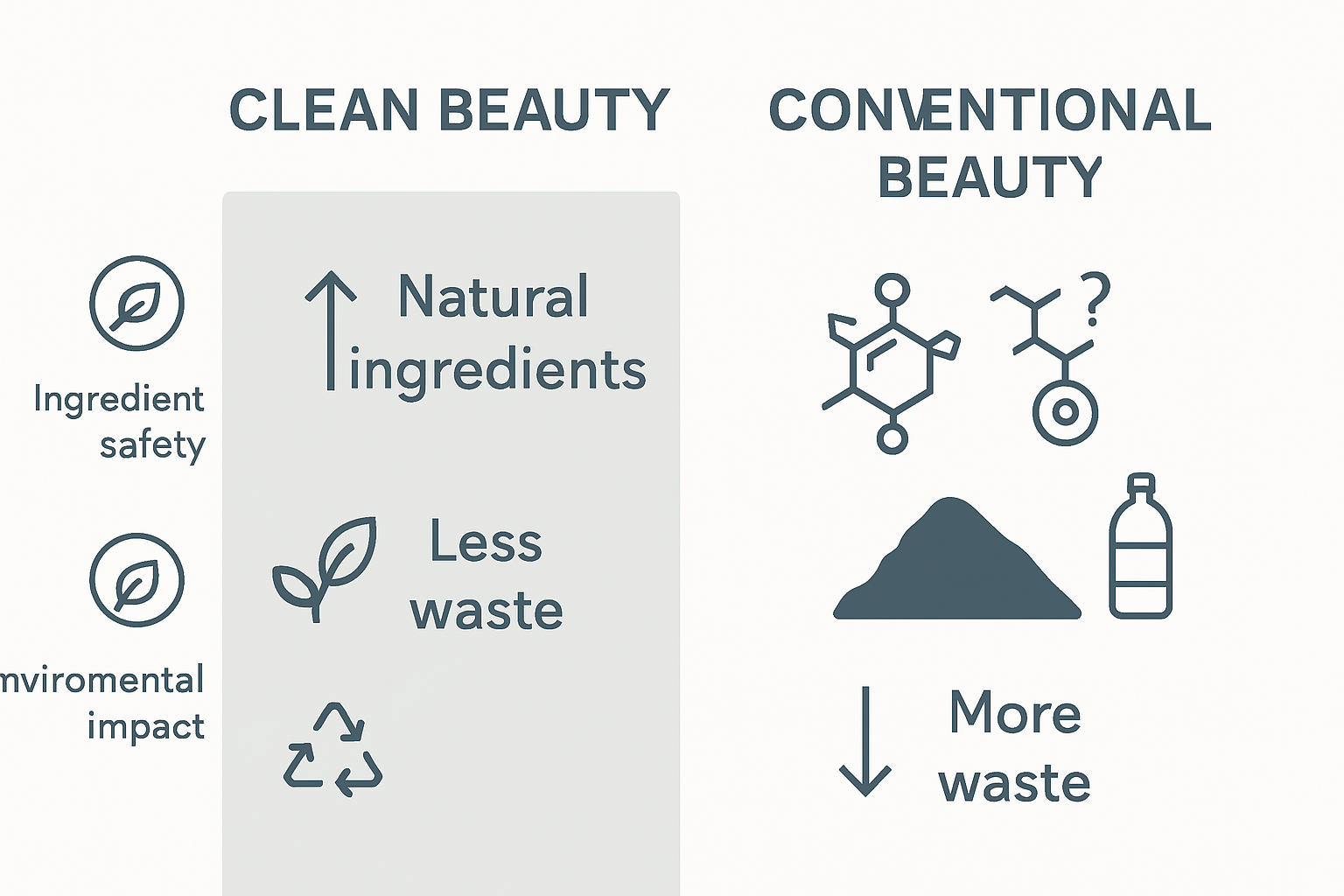
The environmental impact of traditional beauty packaging is substantial, with millions of tons of plastic waste generated annually by the cosmetics industry. Clean beauty brands are pioneering innovative solutions, including biodegradable containers, refillable packaging systems, and materials sourced from recycled or renewable resources. These approaches dramatically reduce carbon footprints and challenge conventional single-use packaging models that have long dominated the beauty and personal care markets.
Key sustainable packaging strategies include:
- Using recycled and recyclable materials
- Implementing refillable container systems
- Reducing overall packaging volume
- Choosing biodegradable packaging alternatives
- Supporting circular economy principles
- Minimizing plastic usage
What is sustainable packaging represents more than an environmental trend. It reflects a fundamental shift in how beauty brands approach product design, production, and consumer responsibility. By prioritizing packaging that minimizes waste and supports ecological health, clean beauty brands demonstrate a commitment to comprehensive wellness that extends beyond individual skincare to global environmental stewardship.
Comparing Clean Beauty to Conventional Products
Product philosophy represents the fundamental difference between clean beauty and conventional beauty products. Clean beauty products differ significantly by avoiding potentially harmful ingredients, emphasizing transparency, sustainability, and holistic wellness. Conventional beauty products often rely on synthetic chemicals, preservatives, and mass-production techniques that prioritize shelf life and cost-effectiveness over long-term health considerations.
The ingredient composition reveals stark contrasts between these two approaches. Conventional products typically contain parabens, phthalates, synthetic fragrances, and petroleum-based compounds that can potentially disrupt hormonal systems and cause skin irritation. Experts caution that the ‘clean beauty’ label can be misleading without standardized definitions, highlighting the importance of individual research and critical assessment of product claims.
Key comparative points between clean and conventional beauty products include:
- Ingredient sourcing and transparency
- Chemical composition and potential health impacts
- Environmental sustainability
- Production and manufacturing practices
- Long-term skin and body wellness considerations
- Ethical and cruelty-free standards
Clean beauty standards continue evolving to challenge traditional beauty industry practices. The movement represents more than a trend - it’s a fundamental reimagining of personal care that prioritizes individual health, environmental responsibility, and transparent manufacturing. Consumers are increasingly demanding products that align with their values, pushing brands to reconsider formulation strategies and embrace more conscious approaches to beauty and wellness.
Embrace Clean Beauty for Lasting Wellness and Radiant Skin
Navigating the complexities of clean beauty means understanding the importance of ingredient safety, transparency, and long-term skin health. If you are ready to reduce exposure to harmful chemicals like parabens and synthetic fragrances while supporting your skin’s natural resilience, the solution starts with choosing the right products. At GNS Beauty & Personal Care, we offer a curated collection of eco-conscious, high-quality personal care essentials designed to align with your wellness goals.
Discover how clean beauty can transform your daily routine by promoting holistic skin wellness and environmental responsibility. Act now to explore our carefully selected offerings that meet evolving clean beauty standards. Visit GNS Beauty & Personal Care to start your journey toward healthier skin and a more sustainable lifestyle. Learn more about the benefits of daily skincare and find products that truly support your well-being today.
Frequently Asked Questions
What is clean beauty?
Clean beauty refers to a personal care approach that prioritizes ingredient safety, transparency, and holistic wellness, focusing on avoiding potentially harmful synthetic chemicals in products.
How does clean beauty impact skin health?
Clean beauty promotes skin health by minimizing the absorption of harmful chemicals, fostering a nourishing environment that supports the skin’s natural protective mechanisms and overall wellness.
Are clean beauty products effective compared to conventional products?
Clean beauty products can be just as effective as conventional products, as they emphasize rigorous ingredient screening and prioritize formulations that support skin health and safety.
What ingredients should be avoided in clean beauty products?
Commonly avoided ingredients in clean beauty include parabens, phthalates, sulfates, and synthetic fragrances, as these substances are linked to potential health risks and skin irritation.







Hinterlasse einen Kommentar
Alle Kommentare werden vor der Veröffentlichung geprüft.
Diese Website ist durch hCaptcha geschützt und es gelten die allgemeinen Geschäftsbedingungen und Datenschutzbestimmungen von hCaptcha.