

Most American consumers have heard that custom skincare is transforming the beauty world, yet few realize that artificial intelligence recommendation systems can now achieve up to 93 percent accuracy for individual needs. Personalized skincare matters because generic routines fail to address the unique concerns shaped by genetics, lifestyle, or environment. This article clarifies what makes personalized skincare different, debunks common myths, and explains the real impact of modern tools for your skin health.
Table of Contents
- Defining Personalized Skincare and Common Myths
- Differences Among Skin Types and Concerns
- How Personalized Skincare Solutions Are Created
- Benefits Over Generic Skincare Products
- Risks, Costs, and What to Avoid
Key Takeaways
| Point | Details |
|---|---|
| Personalized Skincare Benefits | Personalized skincare tailors solutions to individual skin needs, enhancing effectiveness over generic products. |
| AI Technology in Skincare | Advanced AI can analyze diverse data for accurate recommendations, improving the personalization of skincare routines. |
| Cost and Accessibility | Contrary to beliefs, personalized skincare can be economical by preventing wasteful purchases of ineffective products. |
| Skin Type Variation | Understanding the unique needs of different skin types is crucial for developing effective skincare strategies. |
Defining Personalized Skincare and Common Myths
Personalized skincare represents a revolutionary approach to beauty and wellness that moves far beyond traditional one-size-fits-all product recommendations. Unlike generic skincare routines, personalized strategies analyze individual characteristics like skin type, genetic predispositions, and lifestyle factors to create targeted solutions. Advanced AI technologies are transforming skincare recommendations by integrating complex individual data points into precise, adaptive treatment plans.
Many consumers mistakenly believe personalized skincare is complicated or exclusively for those with significant skin concerns. In reality, these approaches benefit everyone by recognizing that each person’s skin is unique. Modern personalization techniques utilize sophisticated tools like facial analysis and genetic screening to understand specific skin needs. Artificial intelligence recommendation systems can now achieve up to 93% accuracy in classifying individual skin issues, making customized care more accessible than ever.
Common myths about personalized skincare often revolve around cost and complexity. Contrary to popular belief, personalized routines aren’t necessarily expensive or time-consuming. They can actually help consumers save money by recommending exactly what their skin requires, eliminating wasteful purchases of ineffective products. These tailored approaches consider multiple factors including environmental conditions, lifestyle habits, stress levels, and genetic predispositions to create holistic skincare strategies.
Pro Tip: Start Your Personalization Journey: Begin by tracking your skin’s responses to different products, environmental changes, and lifestyle factors. Take clear, well-lit photos of your skin under consistent conditions to help identify patterns and guide your personalized skincare strategy.
Differences Among Skin Types and Concerns
Skin diversity is far more complex than most people realize. Our skin is a dynamic organ that varies dramatically across individuals, influenced by genetics, ethnicity, environment, and lifestyle factors. Research investigating facial aging reveals profound differences in skin characteristics among racial and ethnic groups, highlighting the critical need for personalized skincare approaches that recognize individual biological uniqueness.
Different skin types fundamentally require unique care strategies. Oily skin, characterized by excess sebum production, demands different treatments compared to dry or combination skin. Comparative studies of skin biophysical parameters demonstrate significant regional variations in skin properties, revealing that even within the same individual, skin characteristics can differ between facial regions like the forehead and cheeks. These nuanced differences underscore why a universal skincare routine is ineffective.

Skin concerns also vary widely, ranging from acne and hyperpigmentation to sensitivity and premature aging. Factors such as hormonal changes, environmental exposure, stress levels, and genetic predispositions play crucial roles in determining individual skin challenges. Understanding these intricate variations allows for more targeted and effective skincare interventions that address specific needs rather than applying generic solutions.
Here is a comparison of common skin types and their unique care needs:
| Skin Type | Typical Characteristics | Special Considerations |
|---|---|---|
| Oily | Excess sebum, shiny areas | Lightweight, non-comedogenic products |
| Dry | Flaky, tight, dull-looking | Intense hydration, gentle cleansers |
| Combination | Oily T-zone, dry cheeks | Multi-zoning, balanced formulas |
| Sensitive | Redness, irritation, stinging | Fragrance-free, calming ingredients |
Pro Tip: Skin Mapping Strategy: Create a detailed skin map by photographing different facial regions under consistent lighting, noting texture, moisture levels, and specific concerns in each area. This visual tracking will help you develop a more precise and personalized skincare approach.
How Personalized Skincare Solutions Are Created
Artificial Intelligence has revolutionized the approach to creating personalized skincare solutions, transforming how we understand and address individual skin needs. Advanced AI-driven technologies analyze comprehensive datasets that integrate intrinsic and extrinsic factors, capturing everything from genetic predispositions to environmental influences that impact skin health. This sophisticated approach goes far beyond traditional one-size-fits-all skincare recommendations, allowing for dynamic and adaptive treatment strategies.
The creation of personalized skincare solutions involves a multi-step process that leverages cutting-edge technology and data collection methods. Convolutional neural networks process detailed facial images and comprehensive questionnaires to identify precise skin characteristics, types, and potential concerns. These advanced algorithms can map subtle variations in skin texture, hydration levels, pigmentation, and potential problem areas with remarkable accuracy, enabling the development of highly targeted skincare recommendations.
Key components in developing personalized skincare solutions include genetic analysis, environmental data tracking, lifestyle assessment, and real-time skin condition monitoring. Modern approaches incorporate wearable technology, smartphone applications, and advanced imaging techniques to create a holistic understanding of an individual’s skin health. By combining machine learning algorithms with dermatological expertise, these solutions can predict skin changes, recommend preventative treatments, and adapt skincare routines to evolving personal needs.
Pro Tip: Digital Skin Tracking: Download a reputable skin analysis app that allows you to log daily skin conditions, environmental factors, and product responses. Consistent tracking will help you and potential skincare professionals develop more precise, personalized treatment strategies.
Benefits Over Generic Skincare Products
Personalized skincare represents a quantum leap beyond traditional generic product approaches, offering unprecedented precision in addressing individual skin needs. Advanced AI-driven analysis enables more accurate prediction of long-term skin health outcomes, moving far beyond the one-size-fits-all solutions that have dominated the beauty industry for decades. Unlike generic products that treat skin as a uniform surface, personalized approaches recognize the unique biochemical landscape of each individual’s dermatological profile.
The fundamental advantages of personalized skincare extend beyond mere product selection. AI-assisted systems provide targeted recommendations that enhance treatment efficiency and consistency, addressing specific skin concerns with unprecedented accuracy. Where generic products offer broad-spectrum solutions, personalized approaches analyze intricate factors like genetic predispositions, environmental exposures, lifestyle patterns, and real-time physiological changes to craft truly adaptive skincare strategies.
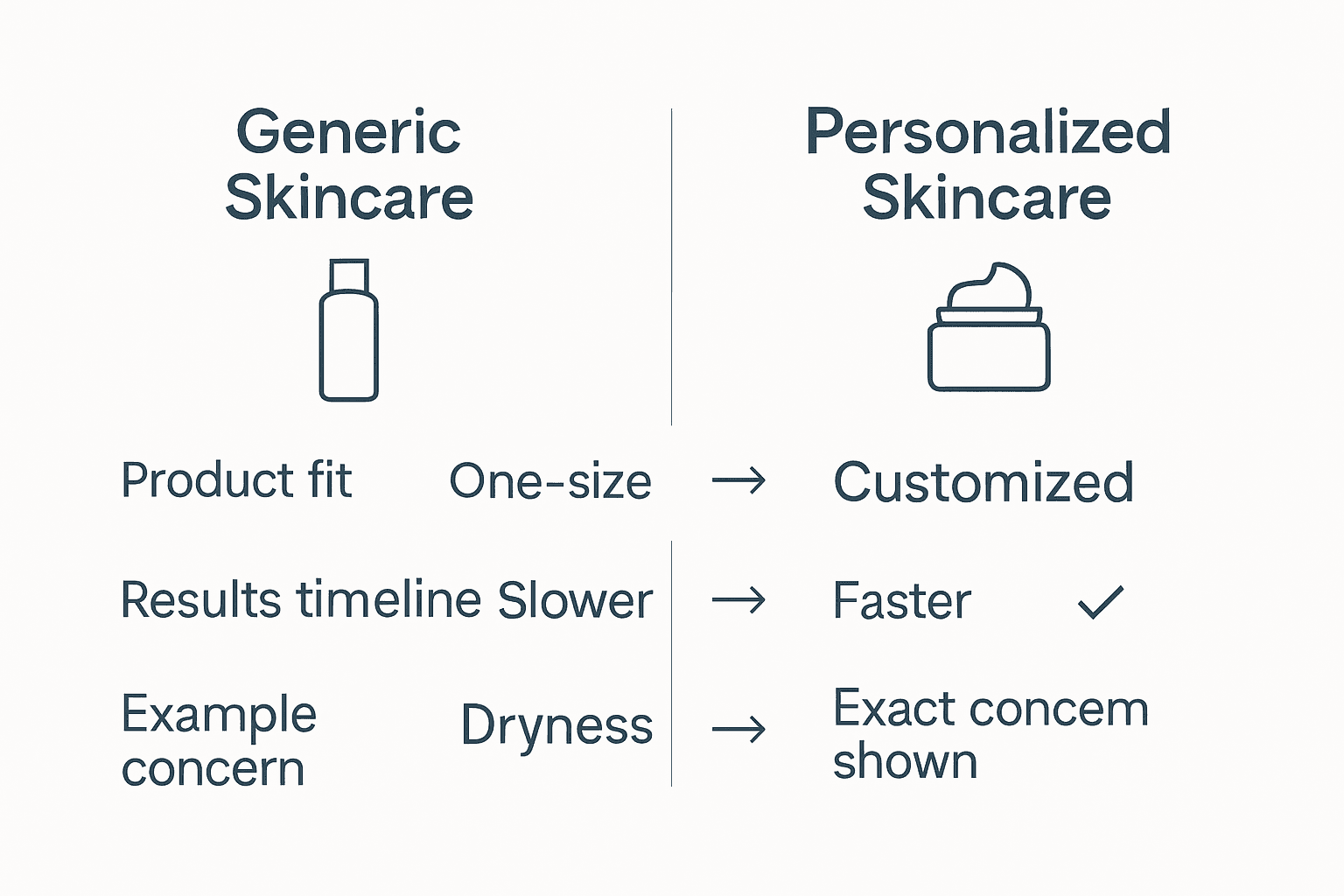
Generic skincare products typically rely on mass-market formulations that prioritize cost-effectiveness and wide appeal. In contrast, personalized solutions integrate sophisticated data analysis to create treatments that evolve with an individual’s changing skin conditions. This dynamic approach means skincare becomes a responsive, intelligent system that can adjust recommendations based on ongoing assessments of skin health, environmental interactions, and personal wellness indicators.
Pro Tip: Skincare Diagnostic Approach: Collect comprehensive data about your skin by maintaining a detailed log of environmental exposures, diet, stress levels, and product responses. This personal archive will become an invaluable resource for developing increasingly precise skincare strategies.
Risks, Costs, and What to Avoid
Digital skincare technologies bring transformative potential, but they are not without significant challenges and potential pitfalls. Emerging research reveals critical disparities in AI performance across different skin tones and diagnostic scenarios, highlighting the importance of understanding potential risks before fully embracing personalized skincare solutions. These technological limitations can lead to inaccurate recommendations, potentially causing more harm than benefit for individuals with diverse skin characteristics.
AI systems may exhibit inherent biases that compromise their effectiveness across different demographic groups, particularly when analyzing skin conditions and recommending treatments. These biases can manifest through reduced accuracy in diagnosing skin issues for individuals with darker skin tones or less common dermatological conditions. Consumers must remain critically aware that personalized skincare technologies are still evolving, and not all systems provide equally reliable or comprehensive assessments.
The financial investment in personalized skincare can also be substantial, with advanced diagnostic tools and customized product lines often commanding premium prices. While the potential benefits are significant, consumers should approach these technologies with measured expectations. Key risks include over-reliance on digital assessments, potential data privacy concerns, and the possibility of receiving recommendations that are not truly personalized despite marketing claims. Careful research, consulting professional dermatologists, and maintaining a skeptical approach can help mitigate these potential drawbacks.
Below is a summary of the main risks and costs associated with adopting personalized skincare:
| Factor | Potential Challenge | Mitigation Strategy |
|---|---|---|
| AI Bias | Less effective for some skin tones | Validate with dermatologists |
| High Cost | Premium price for diagnostics | Evaluate necessity, consider budget |
| Data Privacy | Sensitive personal information | Choose reputable, secure providers |
| Over-reliance on Tech | Ignoring professional guidance | Balance digital and human expertise |
Pro Tip: Verification Strategy: Always cross-reference digital skincare recommendations with professional dermatological advice, and maintain a critical perspective about the limitations of AI-driven personalization tools. Collect multiple data points and seek expert human insights to validate digital recommendations.
Experience the Power of Personalized Skincare for Your Unique Wellness Journey
The challenge with traditional skincare is clear Every individual’s skin is different and requires solutions that truly understand these unique needs Personalized skincare offers targeted care by considering your skin type lifestyle and environmental factors just as highlighted in the article. If you are looking to move beyond generic products and embrace a dynamic skincare routine optimized for long-term wellness and natural beauty GNS Beauty & Personal Care is here to help.
Explore our curated collection at GNS Beauty & Personal Care where you will find premium eco-conscious and luxury products designed to support personalized skincare routines Whether you are managing oily dry combination or sensitive skin our range allows for thoughtful selections that speak to your skin’s true needs Don’t wait to elevate your self-care regimen Take the first step toward radiant confident skin by visiting our store now and discover the personalized solutions you deserve.
Frequently Asked Questions
What is personalized skincare?
Personalized skincare refers to customized skincare strategies that analyze individual characteristics such as skin type, genetics, and lifestyle factors to create targeted solutions, moving beyond generic product recommendations.
How can I start my personalized skincare journey?
You can start by tracking your skin’s responses to different products and environmental changes. Keeping a visual record through photos can help identify patterns and inform your personalized skincare strategy.
Are personalized skincare products more expensive than generic ones?
Not necessarily. While some personalized skincare solutions may come at a premium, they can actually save money by recommending only what your skin needs, thus eliminating ineffective purchases.
How do AI technologies improve personalized skincare recommendations?
AI technologies analyze comprehensive datasets that encompass genetic, lifestyle, and environmental factors, allowing for highly accurate and adaptable skincare recommendations tailored to individual needs.







Leave a comment
All comments are moderated before being published.
This site is protected by hCaptcha and the hCaptcha Privacy Policy and Terms of Service apply.