

Finding skincare that actually works for sensitive skin can feel like a real challenge. Whether you’re reacting to harsh ingredients or struggling with redness after trying new products, your search for safer options matters. Discover step-by-step guidance on creating a personalized routine using gentle, eco-conscious products that prioritize your skin’s health and environmental impact, so you can feel confident about every decision.
Table of Contents
- Step 1: Assess Your Skin’s Sensitivities
- Step 2: Select Gentle, Eco-Conscious Products
- Step 3: Cleanse and Soothe Without Irritation
- Step 4: Moisturize and Protect Skin Barrier
- Step 5: Verify Results and Adjust Routine
Quick Summary
| Key Point | Explanation |
|---|---|
| 1. Understand Your Skin’s Sensitivities | Conduct a self-examination to identify reactions and triggers, using a skin journal to track responses. |
| 2. Choose Gentle, Eco-Conscious Products | Select products with natural ingredients, avoid irritants, and support sustainable brands for skin health. |
| 3. Maintain a Gentle Cleansing Routine | Use lukewarm water and fragrance-free cleansers, applying them softly to protect the skin’s barrier. |
| 4. Prioritize Effective Moisturization | Use barrier-repairing moisturizers immediately after cleansing to lock in hydration and protect sensitive skin. |
| 5. Track and Adjust Your Skincare Routine | Monitor changes and reactions over time, making gradual adjustments while consulting a dermatologist if needed. |
Step 1: Assess Your Skin’s Sensitivities
Understanding your skin’s unique sensitivities is the first crucial step in developing a personalized skincare routine that protects and nourishes your complexion. When it comes to sensitive skin, recognizing potential triggers and reactions can help you make informed product choices and minimize irritation.
To effectively assess your skin’s sensitivities, start by conducting a comprehensive self-examination. Identifying skin reactions involves paying close attention to how your skin responds to different environmental factors, products, and ingredients. Look for common signs of sensitivity such as:
- Redness or flushing after product application
- Burning or stinging sensations
- Persistent dryness or tightness
- Frequent breakouts or rashes
- Itching or inflammation
Documenting these reactions in a skin journal can help you track patterns and potential irritants. Consider performing a patch test before introducing new skincare products by applying a small amount to your inner forearm and monitoring for 24-48 hours. This method allows you to detect potential allergic reactions or sensitivities before applying products to your entire face.
Sensitive skin requires careful observation and a gentle, targeted approach to maintain its health and balance.
Pro tip: Consult a dermatologist if you experience persistent or severe skin reactions to develop a more comprehensive understanding of your skin’s specific sensitivities.
Step 2: Select Gentle, Eco-Conscious Products
Choosing the right skincare products for sensitive skin requires a thoughtful approach that prioritizes both your skin’s health and environmental sustainability. Sustainable skincare practices are crucial for individuals with delicate skin who want to minimize potential irritants while supporting responsible beauty choices.
When selecting products for sensitive skin, focus on ingredients and brands that align with gentle and eco-conscious principles. Look for skincare lines that offer:
- Natural plant-based ingredients
- Fragrance-free formulations
- Cruelty-free certifications
- Minimal and recyclable packaging
- Organic and sustainably sourced components
Specifically, seek out products containing soothing botanical extracts like aloe vera, chamomile, and green tea, which provide gentle nourishment without harsh chemicals. Avoid potential irritants such as sulfates, parabens, and synthetic fragrances that can trigger skin reactions.
Eco-conscious skincare is not just about what you apply to your skin, but also about supporting brands that prioritize environmental responsibility.
Pro tip: Research brands that offer sample sizes or travel kits to test product compatibility before committing to full-sized purchases.
Step 3: Cleanse and Soothe Without Irritation
Creating a gentle cleansing routine is critical for maintaining the delicate balance of sensitive skin while effectively removing impurities and environmental buildup. Gentle face washing techniques help protect your skin’s natural barrier and prevent unnecessary inflammation.
When cleansing sensitive skin, follow these essential guidelines:
- Use lukewarm water to avoid temperature shock
- Select fragrance-free, sulfate-free cleansers
- Apply cleanser with light, circular motions
- Avoid harsh scrubbing or abrasive tools
- Pat skin dry with a soft, clean towel
Focus on using products containing soothing ingredients like aloe vera, ceramides, and niacinamide. These components help calm redness and support your skin’s natural healing processes. Minimize physical exfoliation and opt for ultra-gentle cleansing methods that respect your skin’s sensitivity.
Sensitive skin requires a delicate touch and mindful approach to maintain its health and resilience.
Pro tip: Consider keeping your cleansing routine to no more than 60 seconds to prevent over-stimulating your skin.
The following table compares gentle versus harsh skincare routines for sensitive skin:
| Routine Type | Typical Ingredients | Potential Impact |
|---|---|---|
| Gentle Routine | Botanical extracts, ceramides | Supports barrier, minimizes flare-ups |
| Harsh Routine | Sulfates, synthetic fragrance | Increases dryness, triggers irritation |
Step 4: Moisturize and Protect Skin Barrier
Moisturizing is a critical step in maintaining healthy, resilient skin, especially for those with sensitive complexions. Moisturizing techniques for barrier repair play a crucial role in protecting your skin from environmental stressors and reducing inflammation.
When selecting and applying moisturizer for sensitive skin, consider these key strategies:
- Choose products with barrier-supporting ingredients
- Look for ceramides, hyaluronic acid, and natural oils
- Apply moisturizer immediately after cleansing
- Use gentle, patting motions for application
- Select fragrance-free, hypoallergenic formulations
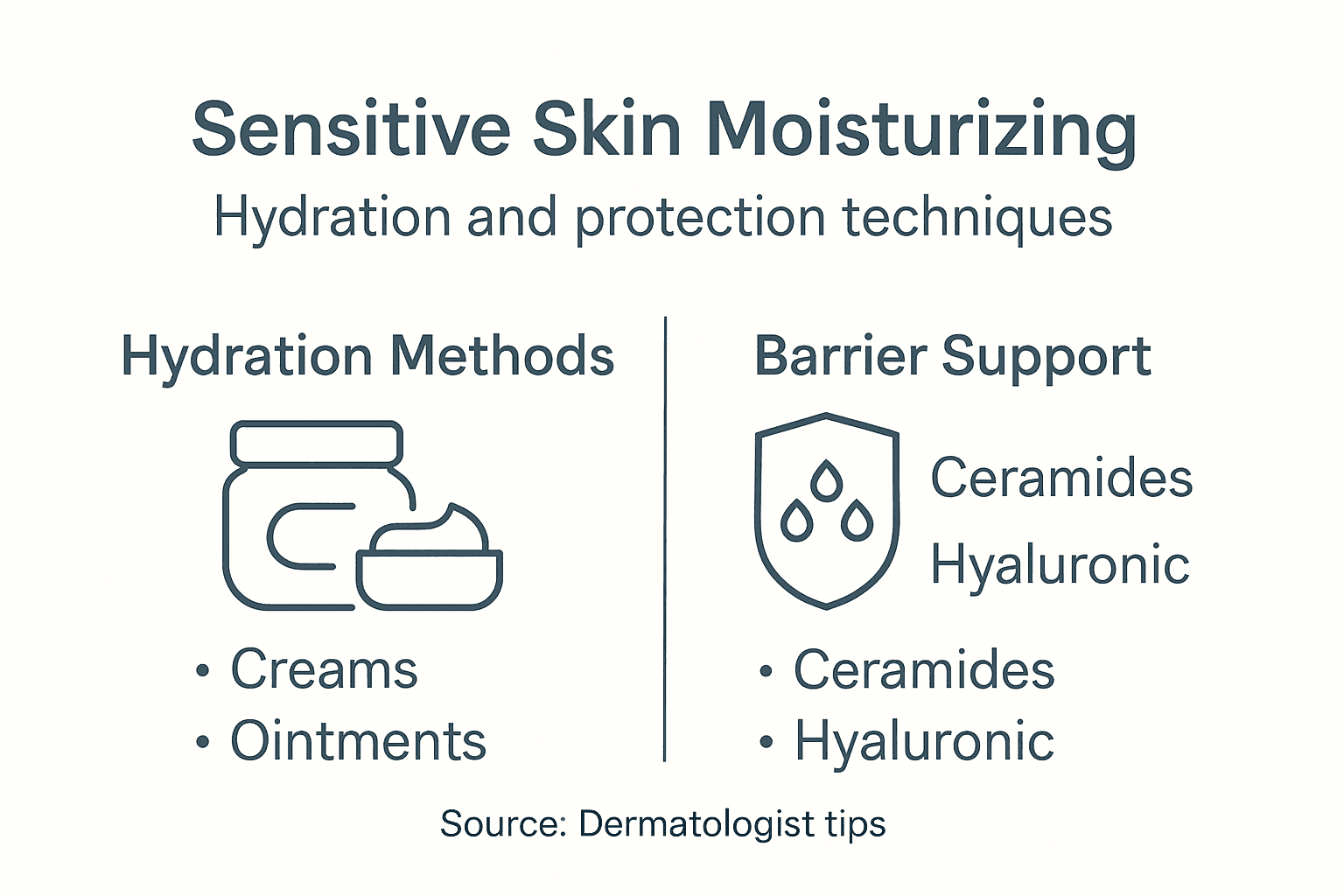
Focus on ingredients that help lock in hydration and rebuild your skin’s protective barrier. Prioritize cream or ointment-based moisturizers that provide deep, lasting hydration without causing additional irritation. These products work to reduce transepidermal water loss and create a protective shield against potential environmental triggers.
Here is a summary of soothing and barrier-repair ingredients for sensitive skin:
| Ingredient | Primary Benefit | Suitable For |
|---|---|---|
| Aloe Vera | Calms redness, hydrates | All sensitive skin types |
| Ceramides | Restores skin barrier | Dry or compromised skin |
| Niacinamide | Reduces inflammation | Reactive or red skin |
| Hyaluronic Acid | Deep hydration | Dehydrated or tight skin |
| Chamomile Extract | Soothes irritation | Itchy or inflamed skin |
Consistent moisturizing is the foundation of maintaining calm, healthy-looking skin for those with sensitivity.
Pro tip: Apply your moisturizer to slightly damp skin to maximize absorption and enhance hydration retention.
Step 5: Verify Results and Adjust Routine
Tracking your sensitive skincare routine’s effectiveness is crucial for long-term skin health and achieving your desired results. Monitoring skin care routine progress helps you understand how your skin responds to different products and interventions.
To effectively evaluate your skincare routine, implement these strategic tracking methods:
- Take weekly progress photos in consistent lighting
- Maintain a detailed skin journal
- Record product interactions and skin reactions
- Note changes in skin texture, hydration, and sensitivity
- Track environmental and lifestyle factors
Pay close attention to how your skin responds over time. Gradual adjustments are key to preventing potential irritation. If you notice persistent issues or unexpected reactions, consider consulting a dermatologist who can provide personalized insights into your skin’s unique needs.
Consistent, patient observation is the cornerstone of developing an effective sensitive skincare routine.
Pro tip: Use a smartphone app or spreadsheet to systematically log your skincare observations for more objective tracking.
Discover Your Calm, Healthy Skin with GNS Beauty
Sensitive skin calls for a careful approach to cleansing, moisturizing, and protecting your skin barrier. This article highlights the challenge of avoiding irritation while nurturing your skin’s unique sensitivities through gentle, eco-conscious products and consistent care. If you struggle with redness, dryness, or discomfort, it is vital to choose formulations free of harsh chemicals and rich in soothing ingredients like aloe vera and ceramides.
Take control of your sensitive skincare routine today by exploring a specially curated collection at GNS Beauty & Personal Care. Our selection focuses on premium, fragrance-free, and cruelty-free products designed to maintain your skin’s calm and natural beauty. Visit GNS Beauty now to find eco-conscious essentials that empower your self-care journey and deliver the gentle care your skin deserves. Don’t wait to experience healthier, more resilient skin—start your transformation with us today.
Frequently Asked Questions
How can I assess my skin’s sensitivities?
To assess your skin’s sensitivities, conduct a thorough self-examination and keep track of any reactions. Document signs like redness, burning sensations, or dryness in a skin journal, and perform a patch test on new products before full application to identify potential irritants.
What types of products should I look for in a sensitive skincare routine?
When selecting products for sensitive skin, choose those with gentle, natural ingredients such as aloe vera, chamomile, and fragrance-free formulations. Focus on eco-conscious brands that prioritize minimal and recyclable packaging to align with your skin’s needs and environmental values.
How should I cleanse my sensitive skin to avoid irritation?
Use lukewarm water and a fragrance-free, sulfate-free cleanser, applying it gently with light circular motions. Keep your cleansing routine to about 60 seconds and avoid harsh scrubbing to protect your skin’s natural barrier from irritation.
What are the best moisturizing techniques for sensitive skin?
To moisturize sensitive skin effectively, apply products with barrier-supporting ingredients like ceramides and hyaluronic acid immediately after cleansing. Use gentle patting motions for application and consider applying moisturizer to slightly damp skin to maximize hydration retention.
How can I track the effectiveness of my sensitive skincare routine?
To track your skincare routine’s effectiveness, take weekly progress photos and maintain a detailed skin journal. Record any changes in skin texture, hydration, and reactions to products to help you make informed adjustments over time.
What should I do if I experience persistent skin reactions?
If you experience persistent or severe skin reactions, consider consulting a dermatologist for personalized advice. Monitoring your symptoms and documenting triggers can help you and your dermatologist create a tailored plan for your sensitive skin.
Recommended
- 7 Essential Types of Skincare Routines for Every Lifestyle
- Understanding the Benefits of Daily Skincare for All
- Skincare Routine for Normal Skin: Achieve Radiant Results
- 7 Inspiring Examples of Personal Care Routines for Adults
- Achieve Radiant Skin with an Organic Skin Care Routine – naturessoulshop







Leave a comment
All comments are moderated before being published.
This site is protected by hCaptcha and the hCaptcha Privacy Policy and Terms of Service apply.