

Finding a self-care routine that feels right is often confusing, especially when so many messages suggest it is just about pampering. Millennial and Gen Z adults looking for genuine wellness know that true self-care includes actions like eating well, staying active, and building habits that support health. Understanding the difference between self-care and indulgence helps you make choices that actually enhance your well-being while supporting eco-friendly values.
Table of Contents
- Defining Self-Care And Common Misconceptions
- Key Types Of Self-Care And Their Benefits
- How To Start A Personalized Self-Care Routine
- Choosing Eco-Friendly Self-Care Products
- Common Pitfalls And How To Avoid Them
Key Takeaways
| Point | Details |
|---|---|
| Self-Care is Essential for Well-Being | Self-care promotes health, prevents disease, and aids in coping with illness. It is a practical responsibility, not a luxury or indulgence. |
| Define Your Own Self-Care Routine | Self-care should be personalized; what works for one person may not be effective for another. Focus on what genuinely improves your well-being. |
| Balance Different Types of Self-Care | Address physical, emotional, mental, and social needs to create a well-rounded routine. A balanced approach enhances overall health and satisfaction. |
| Start Small and Stay Consistent | Introduce one or two self-care activities at a time to create sustainable habits. Consistency is key to long-term success. |
Defining Self-Care and Common Misconceptions
Self-care gets thrown around a lot these days, but most people don’t understand what it actually means. It’s not just bubble baths and face masks, though those can be part of it. Self-care is the ability of individuals, families, and communities to promote health, prevent disease, and cope with illness, with or without professional support.
Think of it as your personal health management toolkit. It includes everything from eating nutritious meals to managing stress, staying active, and taking medication as prescribed. It’s about taking intentional actions to support your overall well-being.
Separating Myth from Reality
Misconception number one: Self-care is indulgence. Many people think self-care means pampering yourself constantly or being selfish. The truth? Self-care is a practical health responsibility, not a luxury.
Misconception number two: Self-care replaces doctor visits. Self-care complements professional healthcare. It works alongside your doctor, therapist, or dermatologist—not instead of them. You still need regular checkups and professional guidance.
Misconception number three: Self-care is the same for everyone. Your self-care routine should fit your life, not someone else’s Instagram feed. What works for your friend might not work for you.
What Self-Care Actually Includes
Self-care covers multiple dimensions:
- Health promotion: Eating well, exercising, and sleeping enough
- Disease prevention: Getting vaccinations, protecting your skin from sun damage, and regular screenings
- Self-management: Taking medications on schedule and managing chronic conditions
- Mental wellness: Managing stress, practicing mindfulness, and seeking support when needed
- Personal care: Using what self-care routines look like in everyday practice, like skincare and grooming
According to research, self-care as a health intervention is grounded in this comprehensive definition—it’s about prevention, management, and promotion all at once.
Self-care isn’t selfish. It’s the foundation that allows you to show up better for yourself and others.
The real difference between self-care and indulgence comes down to intention. Are you doing it to avoid uncomfortable feelings? That’s escapism. Are you doing it to support your health and well-being? That’s self-care.
Here’s a quick look at the real differences between self-care and indulgence:
| Aspect | Self-Care | Indulgence |
|---|---|---|
| Intention | Supports health and well-being | Offers temporary pleasure |
| Longevity | Builds sustainable habits | Often one-time acts |
| Impact | Enhances physical, emotional, and mental health | May boost mood briefly |
| Example | Regular exercise, mindful eating | Spa day, shopping spree |
Pro tip: Start by identifying one health area that matters most to you right now—whether it’s sleep, stress, nutrition, or skincare—and build your self-care habits around that single focus rather than trying to overhaul everything at once.
Key Types of Self-Care and Their Benefits
Self-care isn’t one-size-fits-all. It branches into multiple categories, each addressing different aspects of your wellness. Understanding these types helps you build a routine that actually works for your life instead of copying someone else’s.
Seven Types of Self-Care
Research identifies seven distinct self-care types: emotional, physical, mental, social, spiritual, practical, and professional. Each plays a unique role in your overall well-being.
Physical self-care is straightforward: moving your body, eating nutritious food, getting quality sleep, and using skincare products that support your skin health. It’s the foundation everything else builds on.

Emotional self-care helps you process feelings and build resilience. This includes journaling, talking with friends, setting boundaries, and allowing yourself to feel without judgment.
Mental self-care keeps your mind sharp and engaged. Reading, learning new skills, practicing meditation, or solving puzzles all count. It’s about feeding your brain.
Social self-care strengthens your connections with others. Spending time with loved ones, joining communities, and nurturing relationships directly impacts your mental health.
Spiritual self-care connects you to something larger than yourself. This might be religion, nature, volunteering, or practices that align with your values.
Practical self-care handles life’s logistics. Organizing your space, managing finances, scheduling appointments, and meal planning reduce daily stress.
Professional self-care protects your work-life balance. Setting work boundaries, taking breaks, and pursuing career growth prevent burnout.
Why This Matters
Integrating these types creates a comprehensive wellness approach. You’re not just exercising or meditating—you’re addressing every dimension of health.
Here’s what happens when you balance them:
- Better emotional regulation and stress management
- Improved physical health and energy levels
- Stronger relationships and social support
- Reduced burnout and increased life satisfaction
- Greater sense of purpose and direction
Self-care becomes powerful when you address multiple dimensions of your life, not just the physical or mental aspects alone.
Beginners often focus only on physical self-care because it’s tangible. But skipping emotional or social care leaves gaps. A balanced approach means feeling good inside and out.
Pro tip: Identify which two self-care types currently feel neglected in your life, then add one small action for each—like a 10-minute journaling session for emotional care and one phone call weekly for social care.
How to Start a Personalized Self-Care Routine
Building a self-care routine that actually sticks means making it personal. Generic advice doesn’t work because your life, stressors, and preferences are unique. The goal is creating something sustainable that fits your reality.
Step 1: Define What Self-Care Means to You
Start by asking yourself: What does self-care actually look like for me? For some people it’s skincare and fitness. For others it’s creative time or nature walks. There’s no “right” answer here.
Think about your lifestyle and what genuinely makes you feel better. Forcing yourself into trends that don’t resonate wastes time and energy.
Step 2: Assess Your Current Needs
Identify where you’re struggling most right now. Are you exhausted? Stressed about work? Feeling disconnected from friends? Your biggest pain point becomes your starting focus.
Here’s what to evaluate:
- Physical energy and sleep quality
- Stress levels and emotional stability
- Social connections and relationships
- Mental clarity and focus
- Sense of purpose or meaning
Step 3: Choose Activities That Matter
When creating a personalized self-care plan, select activities that directly address your needs. If you’re stressed, meditation might help more than a shopping trip. If you’re lonely, time with friends beats solo activities.
Your routine should feel good and manageable, not like another obligation.
Step 4: Start Small and Build Gradually
Don’t overhaul everything at once. Pick one or two activities and commit to them for two weeks. Once those feel natural, add another element.
Small wins build momentum. Success with three activities beats failure with ten.
A self-care routine that evolves with your needs is far more valuable than a perfect routine you abandon after a month.
Flexibility matters too. Your routine will change as your life changes, and that’s okay. Revisit and adjust quarterly.
Step 5: Make It Part of Daily Life
Successful self-care routines integrate naturally into your day rather than feeling like separate tasks. A five-minute morning skincare ritual. A lunch walk. Evening stretching while watching TV.
Consistency beats perfection. Missing one day doesn’t derail your progress.
Pro tip: Anchor your new self-care habits to existing routines—do your meditation right after coffee, skincare immediately after showering, or journaling before bed—to make them automatic without relying on willpower.
Choosing Eco-Friendly Self-Care Products
Your self-care routine is only as good as the products you use. Choosing eco-friendly options means supporting your wellness while respecting the planet. But knowing what actually qualifies as sustainable can feel overwhelming.
Understanding What Eco-Friendly Really Means
Eco-friendly doesn’t have a strict definition, which is why clarity matters. A truly sustainable product considers its entire lifecycle: sourcing ingredients, manufacturing, packaging, and disposal.
Look for products that minimize environmental impact. This includes using renewable resources, reducing waste, and avoiding harmful chemicals.
Check for Third-Party Certification
Third-party certifications build trust in product claims. Certifications verify that brands aren’t just marketing buzzwords—they’re actually meeting standards.
Common certifications include:
- USDA Organic: Confirms ingredients meet organic standards
- Cruelty-Free: Verifies no animal testing was used
- Vegan: Ensures no animal-derived ingredients
- Fair Trade: Supports ethical labor practices
- Carbon Neutral: Indicates reduced environmental footprint
Examine the Ingredient List
Consumers increasingly prioritize organic and natural ingredients in personal care products. Reading labels matters because many “natural” claims lack real backing.
Seek products with recognizable plant-based ingredients rather than synthetic chemicals. Ingredients should be clearly listed and easy to understand.
Evaluate the Packaging
Sustainable packaging matters as much as what’s inside. Look for products using:
- Recyclable or compostable materials
- Minimal packaging waste
- Refillable containers
- Glass or aluminum instead of single-use plastic
GNS Beauty products emphasize eco-conscious packaging designed to reduce your environmental footprint while delivering premium personal care.
Understand Natural vs. Synthetic Ingredients
Not all synthetic ingredients are bad, and not all natural ingredients are perfect. Modern green chemistry and sustainable formulations blend safety, effectiveness, and environmental responsibility.
The key is choosing brands transparent about their sourcing and manufacturing. Honest companies explain why they chose specific ingredients.
A truly eco-friendly product balances effectiveness with environmental responsibility—it shouldn’t require choosing between results and sustainability.
Don’t pay premium prices just for green marketing. Research the brand’s actual practices and commitments.
Pro tip: Start by replacing one or two products in your routine with certified eco-friendly alternatives—perhaps a cleanser and moisturizer—rather than overhauling everything at once, allowing you to identify what works best for your skin while supporting sustainable practices.
Common Pitfalls and How to Avoid Them
Most beginners make the same mistakes when starting self-care routines. Knowing what to avoid saves time, money, and frustration. Learning from others’ experiences accelerates your progress.
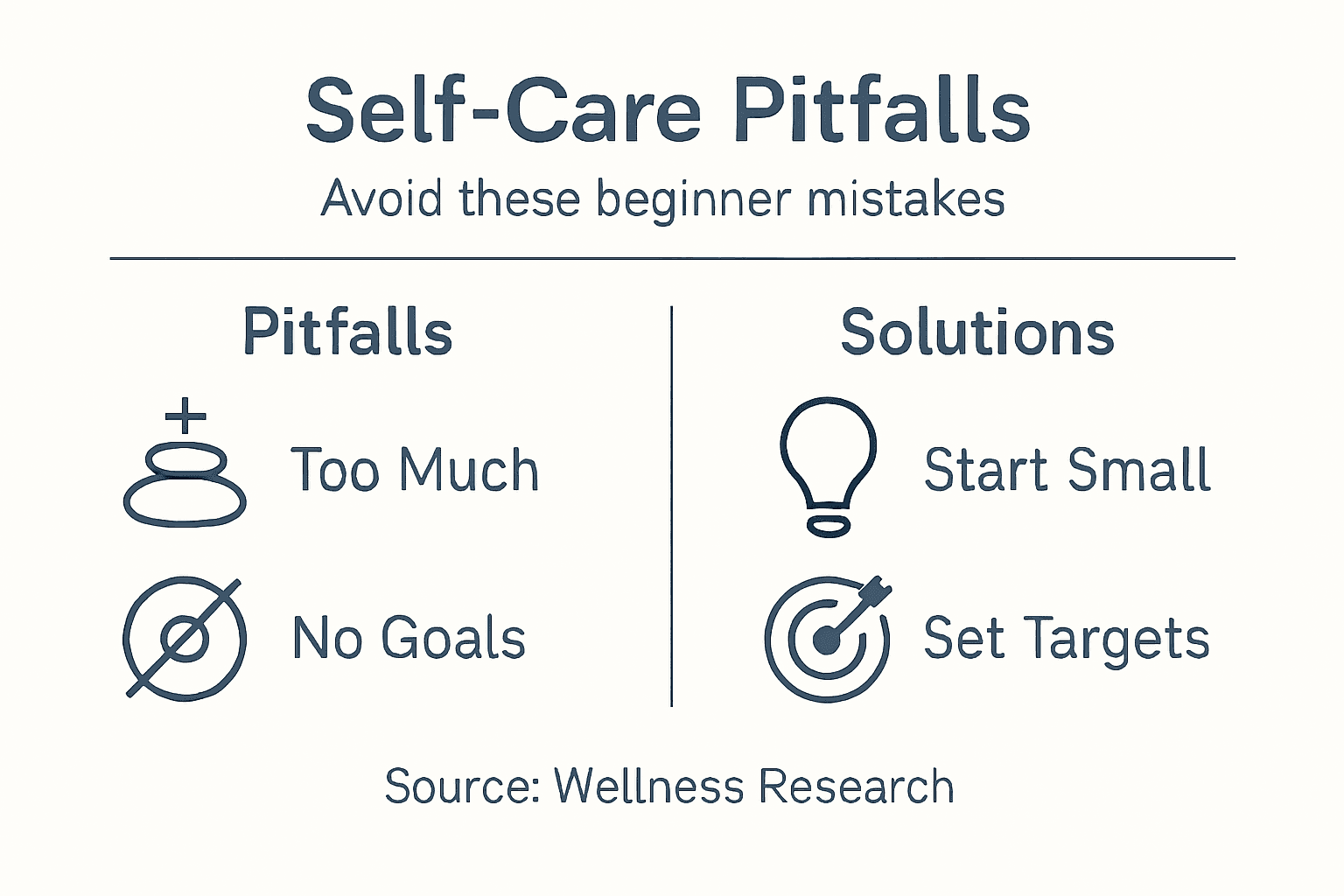
Pitfall 1: Doing Too Much Too Fast
The biggest mistake is trying to overhaul your entire life immediately. You feel motivated, buy ten new products, commit to three workouts daily, and start meditating for an hour. By week two, you’re exhausted and quit.
Solution: Pick one or two activities and master them first. Add more only when those feel automatic.
Pitfall 2: Neglecting Emotional Self-Care
Many people focus exclusively on physical activities like exercise and skincare while ignoring emotional needs. You can eat well and look great but still feel hollow inside.
Solution: Balance physical routines with emotional practices. Add journaling, therapy, or meaningful conversations to your weekly schedule.
Pitfall 3: Lacking Clear Goals
Without specific goals, self-care becomes aimless busywork. You go through motions without knowing why or measuring progress.
Solution: Define what you want to achieve. Instead of “I want to be healthier,” aim for “I want to sleep eight hours nightly and reduce stress through meditation.”
Pitfall 4: Inconsistency and Skipped Sessions
Common self-care mistakes include abandoning routines after missing one or two sessions. You miss a day, feel guilty, then skip the whole week.
Solution: Expect imperfection. Missing one day doesn’t erase progress. Simply resume the next day without guilt or shame.
Pitfall 5: Confusing Self-Care with Indulgence
Shopping sprees, constant pampering, and avoidance behaviors feel good momentarily but don’t build lasting wellness. True self-care requires intentionality.
Solution: Ask yourself: Does this action support my health long-term, or am I escaping difficult feelings?
Pitfall 6: Ignoring Your Skin’s Unique Needs
Using products that don’t match your skin type wastes money and causes problems. You might apply skincare routines that damage rather than help your complexion.
Solution: Know your skin type and choose products accordingly. Start slow when introducing new items to avoid irritation.
Self-care works best when built slowly, consistently, and with genuine care for your whole self—not just pursuit of perfection.
Small, sustainable actions compound into real transformation over time.
This table summarizes common self-care mistakes and the best ways to avoid them:
| Pitfall | Why It Happens | Solution |
|---|---|---|
| Doing Too Much Too Fast | Over-commitment leads to burnout | Start with one habit at a time |
| Neglecting Emotional Self-Care | Focus is only on physical health | Schedule intentional emotional practices |
| Lacking Clear Goals | No specific outcomes targeted | Set measurable self-care objectives |
| Inconsistency | Missed sessions trigger guilt | Forgive lapses and resume routine |
| Confusing Self-Care with Indulgence | Mixing healthy and escapist actions | Ask if the action benefits your wellness |
Pro tip: When you miss a self-care session, never skip the next one as punishment—instead, shorten it or simplify it, then commit to the full routine the following day to maintain momentum without all-or-nothing thinking.
Start Your Personalized Self-Care Journey with GNS Beauty Today
Building consistent wellness habits can feel overwhelming at first. You may struggle to balance physical, emotional, and social self-care while avoiding common pitfalls like trying to do too much too fast or confusing indulgence with true self-care. The key is intentional, sustainable actions tailored to your unique needs.
At GNS Beauty & Personal Care, we understand these challenges and offer a curated selection of premium, eco-friendly products designed to support every dimension of your self-care routine—from nourishing skincare essentials to mindful wellness tools. Our collection helps you build real habits that promote lasting health and confidence.
Ready to make self-care a meaningful part of your life? Explore our carefully chosen personal care products to start with small but powerful changes. Visit GNS Beauty to find items that fit your lifestyle and discover tips on what self-care routines really look like. Don’t wait to feel your best—embrace a customized routine today and experience the benefits of balanced wellness.
Find your perfect match now at GNS Beauty and take the first step toward healthier habits that stick.
Frequently Asked Questions
What is self-care?
Self-care is the ability of individuals, families, and communities to promote health, prevent disease, and cope with illness through intentional actions that support overall well-being.
How can I start a self-care routine?
Begin by defining what self-care means to you, assessing your current needs, selecting meaningful activities, starting small, and integrating these actions into your daily life gradually.
What are some common types of self-care?
The seven types of self-care include emotional, physical, mental, social, spiritual, practical, and professional. Balancing these types can enhance your overall wellness.
How do I avoid common pitfalls in self-care?
To avoid pitfalls, start small by focusing on one or two activities, maintain consistency, set clear goals, and differentiate between self-care and indulgence. Remember that it’s okay to miss a day; just get back on track without guilt.





Leave a comment
All comments are moderated before being published.
This site is protected by hCaptcha and the hCaptcha Privacy Policy and Terms of Service apply.