

Finding the right skincare solution sometimes feels confusing with so many myths and trendy ingredients. For those who care about both their skin and the planet, understanding what makes a serum different is key. Serums deliver ten times more active ingredients than creams for rapid, noticeable results, making them powerful tools for anyone seeking targeted, effective care. Discover how these concentrated formulas blend luxury with eco-conscious values, helping you choose the right product that matches your needs and stays gentle on the environment.
Table of Contents
- Serums In Skincare: Definition And Myths
- Key Types Of Serums And Core Ingredients
- How Serums Work And Their Unique Benefits
- Using Serums Safely In Daily Routines
- Choosing Sustainable, Eco-Conscious Serums
Key Takeaways
| Point | Details |
|---|---|
| Serums Deliver Targeted Results | Serums contain a higher concentration of active ingredients that penetrate deeper into the skin, addressing specific concerns effectively. |
| Understanding Skin Compatibility is Key | Not all serums are suitable for every skin type; patch testing is crucial to avoid irritation. |
| Layering Is Essential for Effectiveness | Serums should be used in conjunction with moisturizers to ensure optimal hydration and protection. |
| Focus on Sustainable Choices | Select serums with natural ingredients and ethical sourcing to minimize environmental impact while achieving skincare goals. |
Serums in Skincare: Definition and Myths
Serums are concentrated powerhouses in your skincare routine, delivering active ingredients far more effectively than traditional creams or moisturizers. Unlike heavier formulations, serums contain ten times more active ingredients and absorb rapidly into deeper skin layers for faster results.
Think of serums as the precision tools of skincare. While creams sit on the surface, serums penetrate deeper to target specific concerns from within, making them ideal for addressing anti-aging, hydration, and skin repair.
What Makes Serums Different
Serums stand out for several reasons:
- Lightweight texture allows deeper penetration without leaving residue
- Higher concentration of active compounds means stronger results
- Faster absorption gets to work within minutes of application
- Customizable solutions address targeted concerns like brightening, firming, or calming
- Compatible layering works seamlessly with other products in your routine
Their concentrated formula makes them particularly valuable for eco-conscious skincare seekers who want effective results without excess packaging or waste.
Debunking Common Serum Myths
Misconceptions about serums can prevent you from getting maximum benefits. Let’s address the most persistent ones.
Myth 1: Serums work for everyone.
Not quite. While serums offer targeted benefits, individual skin types respond differently. For example, people with sensitive skin may experience irritation from certain actives like Vitamin C, even though these ingredients deliver real benefits such as collagen stimulation and sun damage repair for others.
Myth 2: More serum means better results.
Applying extra serum won’t accelerate results. A few drops properly distributed across your face provides optimal coverage. Overuse wastes product and can irritate skin.
Myth 3: Serums replace moisturizers.
Serums work best as part of a layered routine. They deliver targeted actives, but your skin still needs a quality moisturizer to lock in hydration and protect your barrier.
Myth 4: All serums are suitable for sensitive skin.
This is false. Some serum ingredients can trigger reactions, so patch testing and understanding your skin’s tolerance matters significantly.
Serums work best when chosen for your specific skin type and integrated into a complete routine, not used in isolation.
When selecting serums, consider your primary skin concerns and whether you have sensitivities to common actives. Understanding what your skin actually needs prevents disappointment and wasted money.
You can explore natural skincare serums designed for every skin type to find formulations that align with your eco-conscious values and specific needs.
Pro tip: Start with one serum targeting your main concern, introduce it gradually over two weeks, and observe how your skin responds before layering additional serums into your routine.
Key Types of Serums and Core Ingredients
Serums come in different formulations, each designed to tackle specific skin concerns. Understanding which type addresses your needs helps you build an effective routine that actually delivers results instead of wasting money on mismatched products.
Popular Serum Types
The main serum categories target distinct skin issues:
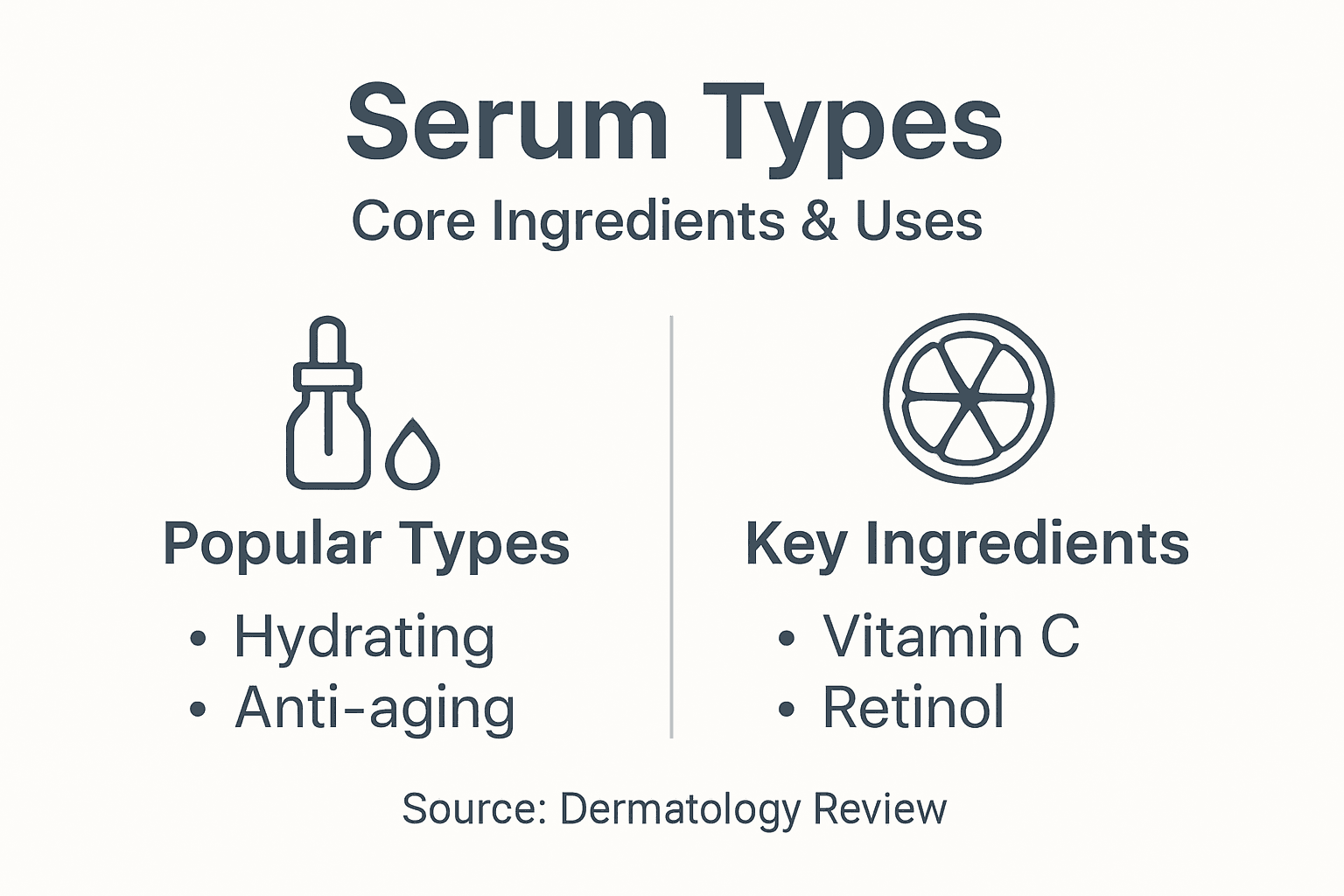
- Anti-aging serums contain peptides and retinols to boost collagen production and reduce fine lines
- Hydration serums use humectants to draw moisture deep into skin layers
- Brightening serums feature vitamin C and other actives to fade dark spots and even skin tone
- Acne serums contain niacinamide and salicylic acid to control breakouts and inflammation
- Soothing serums use calming ingredients like aloe vera for sensitive or irritated skin
Each type serves a purpose, so choosing one aligned with your primary concern matters more than owning multiple serums.
Here’s how the main types of serums address common skin issues:
| Serum Type | Core Ingredients | Best For |
|---|---|---|
| Anti-aging | Peptides, retinol | Fine lines, aging |
| Hydration | Hyaluronic acid, glycerin | Dry, dull skin |
| Brightening | Vitamin C, licorice | Uneven tone, spots |
| Acne-Control | Niacinamide, salicylic acid | Oily, breakout-prone |
| Soothing | Aloe vera, oat extract | Sensitive skin |
Core Ingredients That Deliver Results
Dermatologists recommend specific active ingredients00612-7/fulltext) that have proven efficacy. These powerhouse components show up across different serum types because they work.
Vitamin C protects against environmental damage and brightens dull skin by stimulating collagen production. It’s potent but can irritate sensitive skin, so introduce it gradually.
Retinol accelerates cell turnover, revealing fresher skin underneath and reducing visible signs of aging. Start with low concentrations to minimize irritation.
Niacinamide controls oil production, reduces inflammation, and strengthens your skin barrier. It’s gentler than other actives, making it suitable for most skin types.
Peptides signal your skin to produce more collagen, improving firmness and elasticity over time. They work best in serums formulated for anti-aging routines.
Natural ingredients like aloe vera and bee venom deliver healing and collagen-boosting benefits without harsh synthetics. Many eco-conscious brands emphasize these botanical actives.
The most effective serum contains ingredients matched to your specific concern, not just trendy actives that everyone else uses.
When shopping, read ingredient lists carefully. The order matters—ingredients listed first appear in higher concentrations. Look for serums with 1-3 primary active ingredients rather than a kitchen sink formula.
You can find serums formulated with organic and natural ingredients that align with eco-conscious values while delivering real results.
Pro tip: Choose one serum type addressing your main concern, and pair it with complementary actives like pairing vitamin C with SPF during the day or retinol with a hydration serum at night.
How Serums Work and Their Unique Benefits
Serums deliver results faster than traditional moisturizers because of their molecular structure and concentrated formulation. Understanding how they work helps you maximize their effectiveness and choose the right ones for your skin.

The Science Behind Serum Penetration
Small molecular sizes allow serums to penetrate deeper into skin layers than heavier creams can reach. This deeper delivery means active ingredients reach living cells where they can create real change, not just sit on the surface.
Think of serum molecules as messengers. They slip through your skin barrier efficiently because they contain less water and more concentrated actives. This is why you see faster results compared to traditional moisturizers.
Key Benefits That Matter
Serums offer targeted advantages beyond basic hydration:
- Faster absorption means ingredients work within minutes, not hours
- Potent results come from concentrated active ingredients in smaller doses
- Specific targeting addresses individual concerns like aging, dullness, or breakouts
- Layering flexibility allows combination with other products without heaviness
- Antioxidant protection shields skin from environmental damage and free radicals
These benefits make serums indispensable in modern routines, especially for anyone serious about addressing specific skin concerns.
What Serums Actually Do to Your Skin
Facial serums deliver hydration, collagen support, and skin protection through specialized active ingredients. Hyaluronic acid pulls moisture deep into skin. Peptides signal collagen production. Antioxidants neutralize damage from pollution and sun exposure.
Your skin absorbs these actives and responds with visible improvements. Fine lines become less pronounced. Texture smooths out. Skin looks more radiant and feels plumper.
The concentrated nature means you need less product to see results. A few drops go further than a full pump of cream, making serums economical despite their higher price point.
Serums work best when their active ingredients match your specific concern, delivering noticeable results faster than any other skincare category.
When applied correctly—typically on damp skin before moisturizer—serums maximize their benefit. The moisture helps them spread evenly and penetrate more effectively.
Finding serums matched to your unique skin needs ensures you invest in products that actually address your priorities.
Pro tip: Apply serum to slightly damp skin, wait 30 seconds for slight absorption, then layer your moisturizer to lock in benefits and prevent product pilling.
Using Serums Safely in Daily Routines
Serums are powerful tools, but using them correctly matters for getting results without irritation. Improper application or ingredient combinations can backfire, leaving your skin frustrated instead of glowing.
The Right Order Matters
Apply serums after cleansing and toning but before moisturizing ensures optimal absorption and effectiveness. This sequencing allows active ingredients to penetrate without interference from heavier products sitting on top.
Your routine should flow like this:
- Cleanser to remove dirt and oil
- Toner to balance pH
- Serum for targeted actives
- Moisturizer to lock everything in
- SPF during daytime
This order maximizes serum benefits while protecting your skin barrier integrity.
Starting Slowly Prevents Irritation
Introduce potent ingredients like retinols and vitamin C gradually to let your skin adjust without freaking out. Begin with lower concentrations or use these actives just 2-3 times weekly initially.
Your skin needs time to build tolerance. Jumping straight to daily use of strong actives causes redness, flaking, and irritation that makes you want to abandon serums entirely.
Avoid Problematic Combinations
Not all serums play nicely together. Certain pairings can overwhelm your skin:
- Retinol + Exfoliants creates excessive irritation and barrier damage
- Vitamin C + Retinol can reduce each other’s effectiveness or cause sensitivity
- Multiple Actives at once overwhelms skin, especially initially
- Acids + Strong Actives risks compromised barrier function
Alternating these serums on different nights works better than combining them.
Sun Protection is Non-Negotiable
When using active serums like vitamin C or retinol, your skin becomes more sun-sensitive. Daily SPF isn’t optional—it’s essential for preventing sun damage and protecting your investment in serums.
Safe serum use means matching ingredients to your skin type, introducing them gradually, and always protecting skin with appropriate moisturizer and sunscreen.
Consider your skin type when selecting serums. Oily skin benefits from lighter, hydration-focused formulas. Dry skin needs richer serums with humectants. Sensitive skin requires gentler actives and lower concentrations.
When building a consistent skincare routine order with serums, consistency matters more than complexity. One well-chosen serum used correctly beats multiple serums used haphazardly.
Pro tip: Use the “sandwich method” for strong actives: apply moisturizer first, then serum, then another layer of moisturizer to buffer irritation while still delivering benefits.
Choosing Sustainable, Eco-Conscious Serums
Your skincare choices impact both your skin and the planet. Selecting eco-conscious serums means looking beyond marketing claims to understand what truly makes a product sustainable and effective.
What Makes a Serum Eco-Conscious
Sustainable serums prioritize three core elements: natural ingredients, ethical sourcing, and responsible packaging. These factors work together to reduce environmental harm while delivering real skincare benefits.
Look for serums with naturally derived, biodegradable ingredients that are ethically sourced rather than synthetic chemicals harming ecosystems. Plant-based oils, vitamins derived from renewable sources, and peptides from sustainable methods show a brand’s commitment.
Check Transparency and Certifications
Brands serious about sustainability should openly share their sourcing and manufacturing practices. Look for certifications like cruelty-free, vegan, carbon-neutral, or organic labels from recognized organizations.
These certifications require third-party verification, meaning they carry actual weight. A brand without certifications claiming sustainability might just be greenwashing.
Ingredient Sourcing Matters
Where ingredients come from affects environmental impact significantly:
- Plant-based actives like botanical oils require less processing than synthetics
- Ethically sourced minerals support responsible mining practices
- Renewable resources replenish naturally, unlike finite mineral extraction
- Minimal synthetic additives reduce chemical runoff into waterways
- Fair trade ingredients support farming communities and fair labor
When you see an ingredient list, research unfamiliar names. Many eco-conscious brands list ingredient origins on their websites.
Natural Doesn’t Always Mean Better
Natural ingredients aren’t automatically safer or more effective than synthetics, but they typically have lower environmental impact. The distinction matters for both your skin and the planet.
Some natural ingredients like certain plant extracts can irritate sensitive skin. Conversely, well-formulated synthetic actives deliver consistent results without environmental damage. The goal is finding products that work for your skin while minimizing planetary impact.
Sustainable serum choices require verifying ingredient safety, sourcing practices, and environmental footprint—not just trusting “natural” or “eco-friendly” labels.
Packaging deserves equal attention. Sustainable brands use refillable containers, recyclable materials, or minimal packaging to reduce waste. Plastic reduction through glass bottles or aluminum tubes shows genuine commitment.
To help you choose a truly eco-conscious serum, consider these sustainability factors:
| Criteria | Why It Matters | What to Look For |
|---|---|---|
| Natural Ingredients | Reduce chemical impact | Plant-based, biodegradable |
| Ethical Sourcing | Supports fair labor | Fair Trade, transparent supply |
| Minimal Packaging | Lowers environmental waste | Recyclable, refillable, glass |
| Certifications | Verifies sustainability | Cruelty-free, organic labels |
Explore cruelty-free serums that support your values while delivering visible skincare results without compromising ethics.
Pro tip: Research brands on sustainability websites, read ingredient lists carefully, and prioritize serums with minimal packaging and certifications from organizations like Leaping Bunny or Fair Trade USA.
Unlock the Power of Serums for Your Skin Today
If you have struggled to find the right serum that truly targets your unique skin concerns while fitting seamlessly into your daily routine you are not alone. Many face challenges such as choosing the right actives like vitamin C or retinol without irritation or confusion about layering serums with moisturizers. This article clearly shows that understanding what your skin really needs and using serums correctly is key to achieving faster visible results without unnecessary waste or sensitivity.
Discover a curated collection of premium, eco-conscious serums crafted to address a range of concerns from hydration and brightening to anti-aging and soothing needs. At GNS Beauty & Personal Care you will find carefully selected serums designed with natural ingredients, ethical sourcing, and sustainable packaging that enhance your self-care routine responsibly. Take control of your skincare journey and experience the fusion of science and nature by exploring our natural skincare serums and handpicked organic formulations that resonate with your skin and values. Start your path to radiant skin now by visiting GNS Beauty & Personal Care where self-care meets conscious beauty.
Embrace convenience and confidence with serums tailored just for you and elevate your routine. Shop today and give your skin the concentrated care it deserves.
Frequently Asked Questions
What are the main benefits of using serums in skincare?
Serums deliver targeted benefits such as faster absorption, concentrated active ingredients, and specific targeting for issues like aging, dullness, or breakouts, providing visible results more quickly than traditional moisturizers.
How do I choose the right serum for my skin type?
To pick the right serum, identify your primary skin concerns (e.g., dryness, aging, or acne) and look for formulations that contain active ingredients specifically designed to address those issues, ensuring they align with your skin’s sensitivities.
Can I use multiple serums in my skincare routine?
Yes, you can use multiple serums, but it’s advisable to introduce them gradually. Start with one serum targeting your main concern, then slowly add others, paying attention to how your skin reacts to avoid irritation.
Is it necessary to use a moisturizer after applying a serum?
Yes, a moisturizer is essential after applying a serum. While serums deliver concentrated actives, a good moisturizer helps to lock in hydration and protect the skin barrier, enhancing the overall effectiveness of your skincare routine.






Leave a comment
All comments are moderated before being published.
This site is protected by hCaptcha and the hCaptcha Privacy Policy and Terms of Service apply.