

Searching for luxury haircare that matches your green values can feel overwhelming. The right products depend on your individual hair type, texture, and scalp health, as well as your commitment to wellness and the environment. By focusing on eco-friendly essentials and learning how chemical bonds in keratin affect manageability, you can build a routine that nourishes your strands sustainably. Discover practical steps for choosing personalized products and workflow techniques that deliver vibrant, healthy hair without compromise.
Table of Contents
- Step 1: Assess Hair Needs And Choose Suitable Products
- Step 2: Prepare Hair And Gather Eco-Friendly Essentials
- Step 3: Cleanse And Condition Using Workflow Techniques
- Step 4: Treat And Nourish With Targeted Solutions
- Step 5: Verify Results And Adjust Routine For Optimal Health
Quick Summary
| Key Point | Explanation |
|---|---|
| 1. Assess Your Hair Needs | Understand your hair type and scalp condition to choose suitable products. |
| 2. Choose Eco-Friendly Products | Opt for natural and sustainable products that nourish hair without harsh chemicals. |
| 3. Follow a Consistent Routine | Establish a structured haircare routine, allowing products time to work effectively. |
| 4. Use Targeted Treatments | Apply specific treatments based on your unique hair concerns to achieve optimal results. |
| 5. Regularly Evaluate Results | Monitor changes in hair condition to adjust your routine for continual improvement. |
Step 1: Assess Hair Needs and Choose Suitable Products
Your haircare routine starts with honest self-assessment. Understanding your unique hair profile helps you select products that actually work for you instead of wasting money on generic solutions.
Begin by identifying your hair type and texture. Hair texture depends on follicle shape and the chemical bonds in your keratin proteins, which determine whether your hair is straight, wavy, curly, or coily. Different textures require different care approaches, so getting this right matters.
Next, evaluate your scalp condition. Your scalp health directly impacts hair quality, so assess whether it’s oily, dry, normal, or sensitive. A healthy scalp produces natural oils that protect and nourish hair strands, but imbalances create problems.
Identify any specific hair concerns you want to address:
- Damage from heat styling or chemical treatments
- Frizz and lack of smoothness
- Lack of shine or dullness
- Breakage or weakness
- Slow growth or thinning
- Color-treated hair needing protection
Your specific hair needs should drive your product choices, not trends or what works for someone else.
Once you know your type and concerns, match them to appropriate formulations. Understanding how chemical bonds affect texture helps you choose products with the right ingredients. For example, curly hair benefits from moisturizing formulas that respect curl patterns, while fine, straight hair needs lightweight products that won’t weigh it down.
When selecting products, look for suitable products tailored to your hair texture that align with your eco-conscious values. Eco-friendly beauty products using natural ingredients support both your hair health and environmental wellness.
Read ingredient lists carefully. Look for natural moisturizers, strengthening proteins, and antioxidants rather than harsh sulfates or silicones that build up over time. This is especially important if you care about sustainable personal care and long-term hair vitality.
Here is a summary of common hair types, their key characteristics, and recommended product features:
| Hair Type | Main Characteristics | Recommended Product Features |
|---|---|---|
| Straight | Smooth, lacks volume | Lightweight, volumizing, oil control |
| Wavy | S-shaped, frizz-prone | Moisturizing, curl-defining, anti-frizz |
| Curly | Tight curls, dry ends | Deep hydration, curl-enhancing, protein-rich |
| Coily | Very tight curls, fragile | Nourishing, ultra-moisturizing, gentle formulas |
Pro tip: Buy one product at a time and use it consistently for at least two weeks before judging results—hair needs time to adjust to new formulations, and rushing to switch products prevents you from seeing real benefits.
Step 2: Prepare Hair and Gather Eco-Friendly Essentials
This step focuses on assembling the right tools and products before you begin your routine. Having everything ready means you won’t scramble mid-wash or compromise your commitment to sustainable personal care.
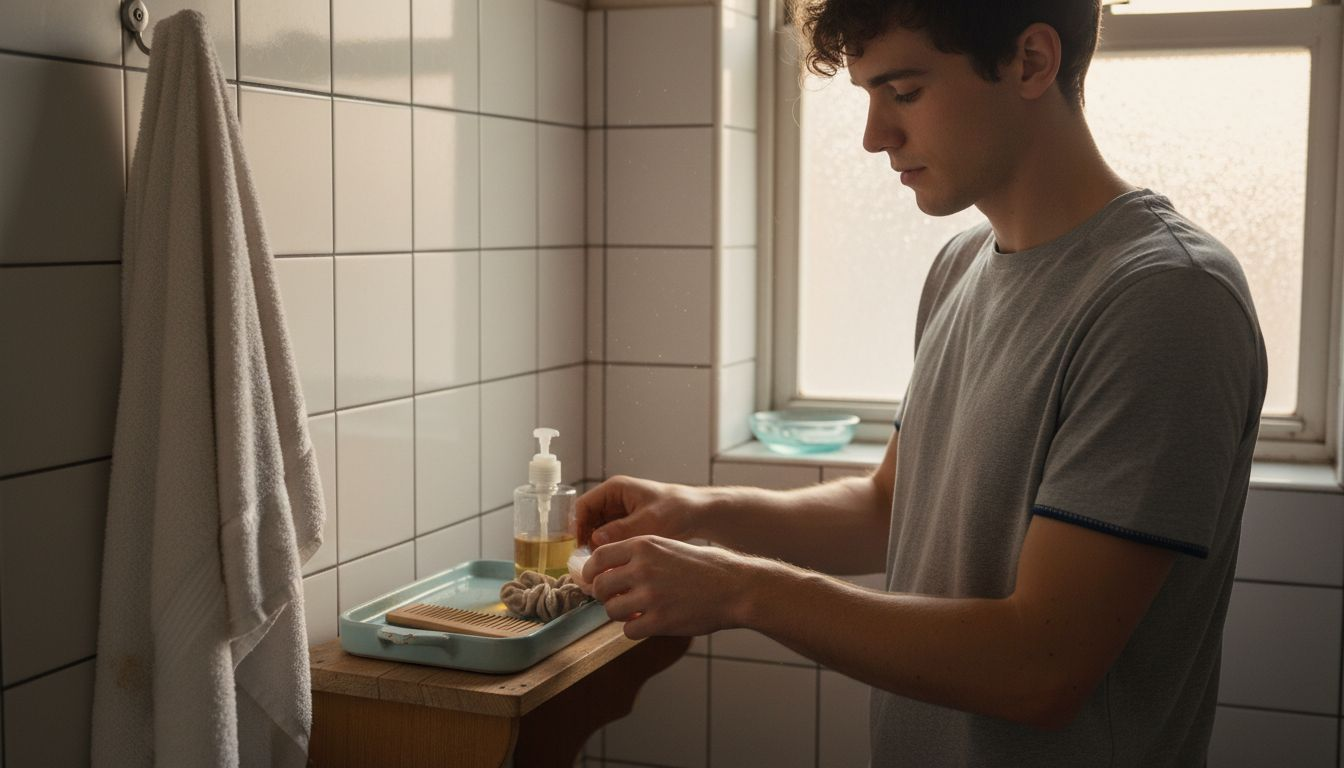
Start by gathering your core haircare products. You’ll need a shampoo, conditioner, and at least one treatment product tailored to your hair type. Look for formulations with eco-friendly biosurfactants and bio-based polymers that deliver performance without petrochemicals.
Collect the physical tools you’ll use:
- A wide-tooth comb for detangling wet hair
- A microfiber towel or cotton t-shirt for drying
- A spray bottle for dampening hair during styling
- A natural bristle brush for smoothing and distribution
- Any heat tools if you use them (and a heat protectant spray)
Choose products featuring plant-derived biopolymers from sustainable sources like tara fruit and red algae. These natural formulations create protective films on your hair strands while reducing brittleness and improving shine. This approach aligns perfectly with eco-conscious living.
Eco-friendly essentials aren’t just better for the planet—they’re gentler on your hair and scalp long-term.
Check your product labels carefully. Avoid sulfates, parabens, and silicones that build up over time. Instead, seek out natural moisturizers, plant extracts, and botanical oils that nourish without harsh chemicals.
Organize your products in one designated space. Whether it’s a bathroom caddy or shelf, keeping everything together streamlines your routine and prevents you from forgetting steps. This preparation phase also gives you a chance to read product instructions thoroughly before applying them.
Consider investing in reusable or sustainable personal care tools that minimize waste. Bamboo combs, wooden brushes, and glass containers replace plastic alternatives while delivering the same results.
The following table compares traditional and eco-friendly haircare approaches based on essential factors:
| Factor | Traditional Haircare | Eco-Friendly Haircare |
|---|---|---|
| Main Ingredients | Synthetic sulfates, silicones | Plant oils, natural extracts |
| Environmental Impact | High, more waste | Lower, sustainable sources |
| Hair Benefits | Immediate, can cause buildup | Gradual, supports scalp health |
| Packaging | Plastic, single-use | Reusable, biodegradable |
Pro tip: Prep your space the night before by laying out all products and tools in order of use—this eliminates decision fatigue and ensures you follow your routine consistently without skipping steps.
Step 3: Cleanse and Condition Using Workflow Techniques
This step is where the actual cleaning happens. A structured approach ensures you cleanse thoroughly while protecting your hair’s integrity and maintaining your commitment to sustainable practices.
Begin with the shampooing phase. Wet your hair completely with lukewarm water, then apply shampoo to your scalp and roots. Use your fingertips to massage gently for about 60 seconds, working the product through. Shampooing targets scalp and hair cleansing, removing oils and dirt while bio-based surfactants preserve your hair’s natural structure.
Rinse thoroughly with cool water. This closes the hair cuticle and adds shine while removing all product residue.
Move to the conditioning phase immediately after rinsing. Apply conditioner primarily to the mid-lengths and ends of your hair, avoiding your scalp. Let it sit for at least two minutes while you shower or relax.
Here’s your workflow sequence:
- Wet hair thoroughly with lukewarm water
- Apply shampoo and massage scalp for 60 seconds
- Rinse completely with cool water
- Apply conditioner to mid-lengths and ends
- Wait 2-3 minutes for conditioning to work
- Rinse with cool water until all product is gone
Workflow consistency matters more than rushing through each step—taking time allows products to work effectively and minimizes damage.
The conditioning step is crucial. Conditioning protects the hair fiber and restores moisture, sealing in hydration and repairing minor damage from daily wear. This is where your eco-friendly formulations really shine, as natural polymers coat your strands without silicone buildup.
If you have particularly dry or damaged hair, consider a second conditioning pass on your ends. Some people benefit from leaving conditioner on for five to ten minutes while they finish their shower.
Finish by rinsing with the coolest water you can tolerate. This final rinse locks everything in and leaves your hair smooth and manageable.
Pro tip: Time each step with your shower routine—shampoo while letting water heat the scalp, condition while you wash your body—so cleansing feels natural rather than like an extra chore.
Step 4: Treat and Nourish with Targeted Solutions
This step goes beyond basic cleansing to address your specific hair concerns. Targeted treatments deliver concentrated benefits where your hair needs them most, supporting restoration and long-term health.
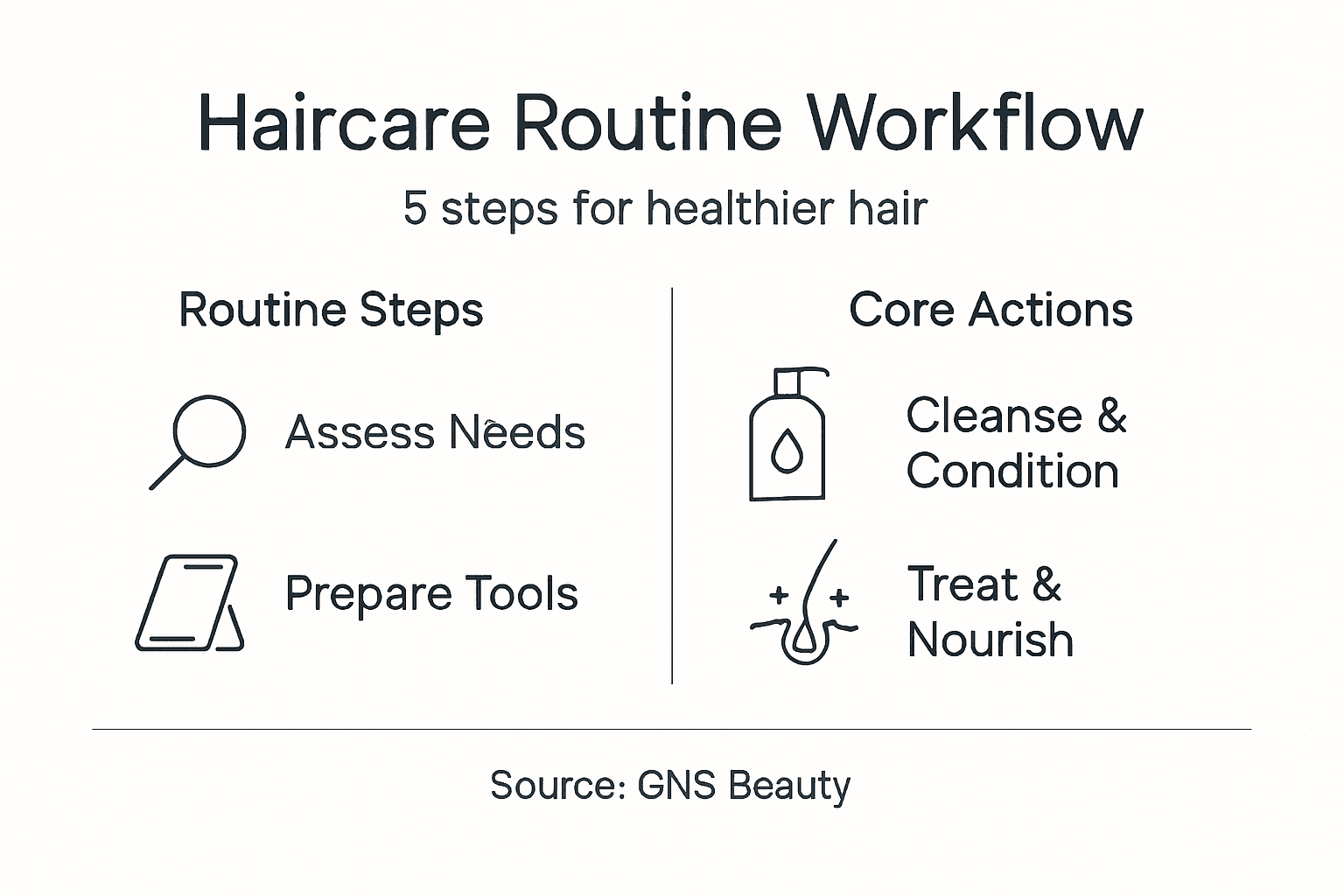
Choose a treatment based on your primary concern. Whether your hair needs moisture, strength, repair, or growth support, the right product makes a measurable difference. Targeted hair treatments focus on scalp health and hair shaft repair through peptide-enriched formulas and plant stem cells designed to promote density and growth.
Common treatment options include:
- Deep conditioning masks for moisture and shine
- Protein treatments for strength and repair
- Scalp treatments for follicle health and growth
- Oil treatments for nourishment and protection
- Bond-building treatments for chemically processed hair
Apply your chosen treatment thoughtfully. Start at the roots if targeting scalp health, or focus on mid-lengths and ends if addressing damage. Use enough product to coat your hair thoroughly, then distribute with a wide-tooth comb for even coverage.
Let the treatment sit for the recommended time. Most masks and treatments work best with 10 to 20 minutes of contact time. For intensive nourishment, leave treatments on overnight or use them as a pre-shampoo.
Natural phytoconstituents in plant-based treatments offer multitarget benefits that stimulate follicles and reduce hair loss while minimizing side effects.
Bioactive compounds delivered through advanced formulations penetrate deep into your hair structure, addressing damage at the molecular level. This is why eco-conscious brands using natural ingredients outperform synthetic alternatives—they work with your hair’s biology rather than against it.
Rinse thoroughly with cool water until no product remains. Your hair should feel noticeably softer, smoother, and more resilient immediately after treatment.
Frequency matters. Use intensive treatments once or twice weekly depending on your hair’s condition. Overusing treatments can lead to buildup, so adjust based on how your hair responds.
Pro tip: Apply treatment to damp hair rather than soaking wet hair—damp hair absorbs products more effectively while still allowing proper rinsing, giving you better results in less time.
Step 5: Verify Results and Adjust Routine for Optimal Health
Your haircare routine isn’t static. Regular assessment helps you understand what’s working and what needs adjustment, ensuring your hair continues to improve over time.
Begin by observing your hair objectively after two to three weeks of consistent routine use. Look for changes in texture, shine, strength, and overall appearance. Optimizing your haircare routine requires ongoing verification of results by observing hair condition, scalp health, and response to products.
Track these key indicators:
- Hair texture and smoothness
- Natural shine and luster
- Breakage and split ends
- Frizz control
- Scalp comfort and health
- Overall hair strength and resilience
Assess your scalp carefully too. A healthy scalp feels comfortable, balanced, and free from excessive dryness or oiliness. If you notice itching, flaking, or unusual oiliness, your products or routine frequency may need adjustment.
Document your observations. Take photos under consistent lighting to track progress visually. This makes subtle improvements obvious and helps you identify patterns over time.
Regular assessment of hair and scalp condition is essential to adjust your haircare regimen effectively and maintain optimal health.
Monitoring responses to shampoos, conditioners, and treatments ensures appropriate product selection and helps you catch problems early. If your hair feels dry or brittle, switch to richer formulations or reduce washing frequency. If it feels limp or weighed down, lighten your products or adjust how much you’re using.
Seasonality matters too. Your hair’s needs shift with humidity levels, temperature, and environmental stress. What works perfectly in winter might need tweaking in summer.
Make one change at a time when adjusting your routine. This helps you identify exactly what made the difference. Switching multiple products simultaneously makes it impossible to know which adjustment helped.
Consider your lifestyle as well. Increased heat styling, chlorine exposure, or stress can all impact hair health. Adapting protective measures like heat protectant sprays or clarifying treatments addresses these environmental factors.
Pro tip: Take a baseline photo and measurements of hair concerns when starting, then assess again every four weeks—this consistent tracking reveals patterns you might otherwise miss and keeps you motivated to maintain your routine.
Take Control of Your Haircare Journey with GNS Beauty
Mastering your haircare routine workflow requires more than just knowing your hair type and selecting products it needs. The challenge lies in consistently applying eco-friendly, effective solutions that respect your hair’s natural texture while addressing concerns like frizz, damage, and scalp health. This article highlights the importance of matching your hair profile to targeted treatments and adopting a step-by-step workflow for vibrant, resilient hair.
At GNS Beauty & Personal Care, we understand that your hair deserves luxury meets sustainability. Our curated collection features clean shampoos, conditioners, and nourishing treatments made with plant-derived ingredients designed to support your unique hair texture and eco-conscious lifestyle. Whether you need moisturizing formulas for curly hair or lightweight products for straight hair, our selection delivers performance without compromise.
Start transforming your routine today. Explore our range to find products that fit your needs and elevate your self-care ritual. Visit GNS Beauty & Personal Care now and embrace healthier, more beautiful hair from root to tip. Your hair’s next chapter begins here.
Frequently Asked Questions
How do I assess my hair needs for a better routine?
To assess your hair needs, start by identifying your hair type and texture, as well as your scalp condition. Once you understand these factors, select haircare products that specifically address your concerns, ensuring they match your unique hair profile.
What are the essential products I should include in my haircare routine?
Your core haircare routine should include shampoo, conditioner, and at least one treatment tailored to your hair type. Choose products formulated with natural ingredients that promote healthy hair without harsh chemicals to support sustainability and hair vitality.
How should I cleanse and condition my hair effectively?
To cleanse and condition your hair effectively, follow these steps: wet your hair thoroughly, apply shampoo focusing on the scalp, rinse with cool water, apply conditioner to mid-lengths and ends, and let it sit for a few minutes before rinsing again with cool water. This structured workflow ensures proper cleansing while locking in moisture.
What targeted treatments should I use for specific hair concerns?
Choose targeted treatments based on your specific concerns, such as moisture, strength, or scalp health. For instance, use a deep conditioning mask for moisture or a protein treatment for strengthening when addressing damage.
How can I verify the results of my haircare routine?
To verify your haircare results, observe your hair’s texture, shine, and overall health after using a routine consistently for two to three weeks. Take notes about any changes, allowing you to adjust your haircare products and techniques effectively for optimal results.





Leave a comment
All comments are moderated before being published.
This site is protected by hCaptcha and the hCaptcha Privacy Policy and Terms of Service apply.