

Finding the right skincare routine can feel overwhelming when you want results that reflect your natural beauty and your values. Choosing products and steps that suit your individual skin needs matters for both personal wellness and environmental impact. By exploring methods backed by science and focusing on ingredients that are plant-based and eco-friendly, you can craft a routine that is both premium and sustainable.
Table of Contents
- Step 1: Assess Your Skin Type And Needs
- Step 2: Gather Essential Natural Skincare Products
- Step 3: Layer Products In The Recommended Order
- Step 4: Adjust Routine For Morning And Night
- Step 5: Verify Results And Make Necessary Tweaks
Quick Summary
| Main Insight | Explanation |
|---|---|
| 1. Identify Your Skin Type | Understanding your specific skin type helps in selecting suitable products and treatments for optimal care. |
| 2. Choose Natural Ingredients | Prioritize eco-friendly, plant-based products that nourish your skin without harmful additives. |
| 3. Layer Products Correctly | Apply skincare products from lightest to heaviest for maximum absorption, following a structured order. |
| 4. Tailor Morning and Evening Routines | Customize your skincare approach to address different daily needs for protection and repair. |
| 5. Track Your Skin Progress | Regularly monitor changes and reactions to products, allowing for informed adjustments to your routine. |
Step 1: Assess Your Skin Type and Needs
Knowing your skin type is crucial for creating a personalized skincare routine that helps you achieve a natural, healthy glow. Understanding the unique characteristics of your skin will guide you in selecting the right products and treatments.
To determine your skin type, you’ll need to analyze several key factors. Skin phototype classification offers a scientific approach to understanding your skin’s specific needs and sensitivities. Here are the primary steps to assess your skin:
- Observe your skin’s baseline characteristics
- Check how your skin responds to environmental factors
- Note your typical skin concerns
The Fitzpatrick scale provides a comprehensive method for categorizing skin types based on color and sun sensitivity. This ranges from very light (type 1) to very dark (type 6), helping you understand your skin’s unique traits:
- Examine your skin’s natural color
- Test how your skin reacts to sun exposure
- Consider your tendency to burn or tan
Your skin type is unique, and understanding its specific needs is the first step toward a personalized skincare routine.
Skin Type Indicators:
- Oily skin: Shiny appearance, enlarged pores
- Dry skin: Feels tight, may have flaky patches
- Combination skin: Different characteristics in different facial zones
- Sensitive skin: Easily irritated, prone to redness
By carefully evaluating these factors, you’ll create a foundation for a targeted skincare approach that enhances your natural beauty.

Here’s a quick reference for identifying skin type using both visual and response cues:
| Skin Type | Visual Indicators | Typical Reaction to Sun |
|---|---|---|
| Oily | Shiny, enlarged pores | Tans easily, may burn |
| Dry | Tight, flaky patches | Burns easily, rarely tans |
| Combination | Oily T-zone, dry cheeks | Mixed response, varies |
| Sensitive | Redness, irritation quick | Burns or stings, reacts fast |
Pro tip: Take photos of your skin in natural light to track changes and help identify your true skin type over time.
Step 2: Gather Essential Natural Skincare Products
Building a natural skincare routine starts with carefully selecting high-quality, eco-friendly products that nourish your skin without harsh synthetic ingredients. Your goal is to create a collection of pure, plant-based skincare essentials that support your skin’s unique needs.
Natural skincare ingredients offer powerful benefits for maintaining healthy, radiant skin. When gathering your products, focus on these key categories:
- Gentle cleansers with botanical surfactants
- Hydrating botanical oils
- Soothing plant extracts
- Vitamin-enriched moisturizers
- Natural antioxidant serums
Prioritize products with traceable, sustainable ingredients that provide multiple skin benefits. Look for formulations containing:
- Plant-based oils like jojoba or argan
- Herbal extracts such as chamomile and green tea
- Natural humectants like hyaluronic acid
- Vitamin-rich antioxidants
Natural skincare isn’t just about ingredients - it’s about creating a holistic approach to skin health and environmental responsibility.
Key Selection Criteria:
- Organic and wildcrafted ingredients
- Minimal processing
- Cruelty-free certifications
- Biodegradable packaging
- Transparent ingredient lists
By thoughtfully curating your natural skincare products, you’ll build a routine that supports both your skin and the planet.
Pro tip: Always patch test new natural products to ensure compatibility with your unique skin type and avoid potential allergic reactions.
Step 3: Layer Products in the Recommended Order
Creating an effective natural skincare routine is all about strategic product application. The key to maximizing your skincare benefits lies in understanding how to layer products correctly for optimal absorption and effectiveness.
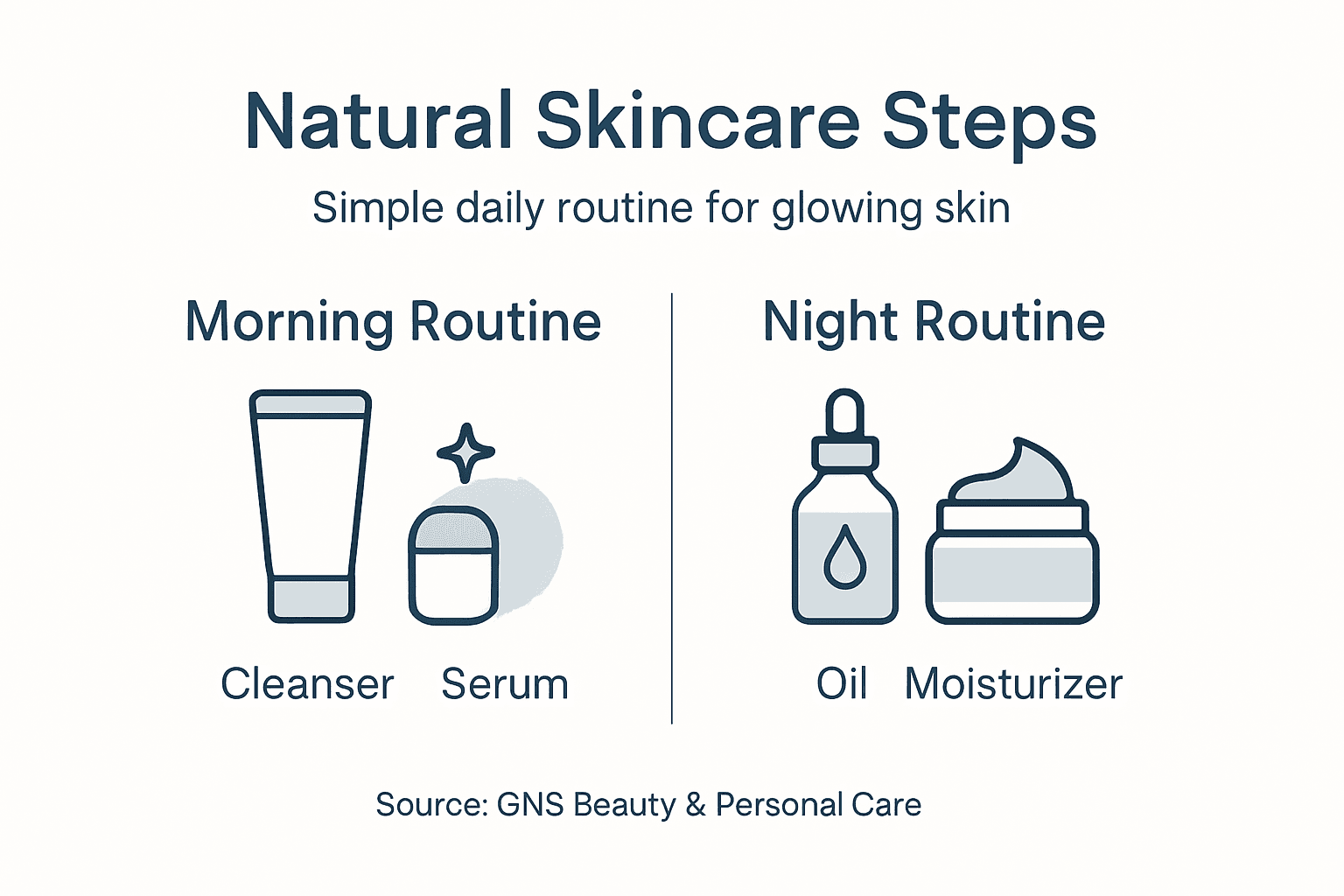
Proper skincare product order is crucial for ensuring each product penetrates and works effectively. Your layering strategy should follow a simple principle: move from the lightest to the heaviest consistency to allow maximum nutrient absorption.
Here’s the recommended natural skincare layering sequence:
- Cleanser: Remove impurities and prepare skin
- Toner: Balance skin pH and prep for next steps
- Serum: Deliver concentrated active ingredients
- Moisturizer: Lock in hydration
- Sunscreen (morning routine): Protect against UV damage
Key Application Tips:
- Apply products within 2-3 minutes of each other
- Pat, don’t rub products into skin
- Wait 30-60 seconds between layers
- Use upward, gentle motions
The goal of layering is not just application, but creating a synergistic approach that allows each product to work its magic.
Remember that thicker products can block lighter formulations from penetrating, so always start with the thinnest consistency and build up.
Pro tip: Keep your natural skincare routine simple by using fewer, more concentrated products to reduce potential skin irritation.
Step 4: Adjust Routine for Morning and Night
Designing a skincare routine isn’t a one-size-fits-all approach. Your skin has different needs throughout the day, which means your morning and evening routines should be strategically tailored to support your skin’s natural functions.
Morning skincare routines are all about protection and preparation for the day ahead. Your focus should be on defending your skin against environmental stressors and supporting its natural resilience.
Morning Routine Essentials:
- Gentle cleanser
- Vitamin C antioxidant serum
- Lightweight moisturizer
- Broad-spectrum sunscreen
Evening Routine Priorities:
- Thorough makeup and impurity removal
- Deep cleansing
- Repair and regeneration treatments
- Richer, nourishing moisturizers
Your skincare routine is a dynamic process that adapts to your skin’s changing needs throughout the day.
Key differences between morning and evening routines include:
- Morning protection focuses on defense
- Evening routine emphasizes repair
- Daytime products are lighter
- Nighttime products are more intensive
Key Application Strategies:
Below is a summary comparing morning and evening routines:
| Routine Timing | Main Purpose | Product Texture | Key Focus |
|---|---|---|---|
| Morning | Protection & defense | Light, fast absorbing | Prevent damage |
| Evening | Repair & restoration | Rich, nourishing | Heal & rejuvenate |
- Morning: Lightweight, protective layers
- Evening: Reparative, deeply nourishing treatments
- Always listen to your skin’s signals
- Be consistent but flexible
Pro tip: Keep travel-sized versions of your key morning and evening products to maintain your routine consistently, even when your schedule changes.
Step 5: Verify Results and Make Necessary Tweaks
A natural skincare routine is a journey of continuous learning and adaptation. Monitoring your skin’s response is crucial to understanding which products and techniques work best for your unique complexion.
Tracking skin changes involves careful observation and patience to determine the effectiveness of your skincare approach. Most significant transformations happen gradually, so give your routine at least 4-6 weeks before making major adjustments.
Signs of Positive Progress:
- Improved skin texture
- Enhanced hydration
- Reduced sensitivity
- More even skin tone
- Fewer breakouts
Red Flags to Watch:
- Persistent irritation
- Increased redness
- Unexpected breakouts
- Excessive dryness or oiliness
- Burning or stinging sensations
Key evaluation strategies include:
- Take weekly progress photos
- Maintain a skincare journal
- Note product interactions
- Track environmental factors
Your skin is dynamic, and your routine should be equally flexible and responsive.
Adjustment Approach:
- Introduce changes one product at a time
- Allow 2-3 weeks between modifications
- Patch test new products
- Consult a dermatologist for persistent issues
Pro tip: Create a digital or physical skincare log to systematically track product performance and your skin’s responses.
Discover Your Perfect Natural Skincare Essentials Today
Creating a natural skincare routine that delivers a glowing, healthy complexion can feel overwhelming, especially when choosing the right products for your unique skin type and layering them properly. If you want to eliminate confusion and avoid irritation, focusing on pure, plant-based ingredients and sustainable solutions is key. Many struggle with finding gentle cleansers, nourishing serums, and moisturizers that truly work without harsh chemicals or complicated regimens.
At GNS Beauty & Personal Care, we understand these challenges and offer a carefully curated selection of eco-conscious, luxury skincare essentials designed to support every step of your routine—from cleansing to protection. Whether you need products rich in antioxidants, botanical oils, or lightweight moisturizers to layer correctly, our collection empowers you to build confidence in your natural beauty with seamless, effective solutions.
Start your journey to radiant, glowing skin now by exploring our expertly curated range. Visit GNS Beauty & Personal Care for clean, sustainable skincare products that adapt to your skin’s changing needs and help you maintain a vibrant, healthy complexion with ease.
Frequently Asked Questions
How do I determine my skin type for a natural skincare routine?
To determine your skin type, observe your skin’s baseline characteristics, how it reacts to the environment, and typical concerns. Take note of visual indicators like oiliness or dryness and track your skin’s response to sun exposure over a week.
What are the essential natural skincare products I should include?
Your natural skincare routine should include gentle cleansers, hydrating botanical oils, soothing plant extracts, vitamin-enriched moisturizers, and antioxidant serums. Focus on products made with organic and eco-friendly ingredients that cater to your skin’s specific needs.
How should I layer my skincare products for the best results?
Layer your skincare products from the lightest to heaviest consistency, starting with a cleanser and ending with a sunscreen in the morning or a richer moisturizer at night. Apply products within 2-3 minutes of each other, allowing 30-60 seconds between steps for optimal absorption.
What should I focus on in my morning versus evening skincare routine?
Your morning routine should prioritize protection with lightweight products, including a gentle cleanser, vitamin C serum, moisturizer, and sunscreen. In the evening, focus on repair using deeper cleansing and richer moisturizers to nourish and rejuvenate your skin overnight.
How can I track the effectiveness of my skincare routine?
Keep a skincare journal to monitor how your skin responds to different products and changes over time. Take weekly photos and note any improvements or issues, and be patient, as significant changes often take 4-6 weeks to become noticeable.
When should I adjust my skincare routine?
Adjust your skincare routine if you notice persistent irritation, increased sensitivity, or unexpected breakouts. Make changes gradually, introducing one product at a time and allowing at least 2-3 weeks to observe how your skin reacts before further modifications.







Leave a comment
All comments are moderated before being published.
This site is protected by hCaptcha and the hCaptcha Privacy Policy and Terms of Service apply.