

Finding the right skincare for oily skin can feel like a daily challenge, especially when shine and breakouts threaten your confidence. This concern goes beyond looks, as genetics and hormones are the main reasons behind excess oil production, not what you eat. Understanding how your sebaceous glands work is essential if you want lasting results that fit both your wellness goals and your eco-conscious values. Discover solutions that balance self-care with sustainability, helping you achieve healthy skin without compromise.
Table of Contents
- What Oily Skin Is And Why It Happens
- Key Signs And Variations Of Oily Skin
- Effective Routines And Best Ingredients
- Sustainable Solutions For Oily Skin Care
- Common Mistakes And What To Avoid
Key Takeaways
| Point | Details |
|---|---|
| Oily Skin Causes | Excessive oil production is primarily influenced by genetics and hormones rather than diet. |
| Skincare Routine | A gentle, multi-step skincare routine is essential for managing oily skin effectively. |
| Key Ingredients | Ingredients like Salicylic Acid and Niacinamide are beneficial for controlling oil and preventing breakouts. |
| Common Mistakes | Avoid over-washing and harsh products that can disrupt your skin’s natural oil balance. |
What Oily Skin Is and Why It Happens
Oily skin is a complex dermatological condition characterized by excessive sebum production from the skin’s sebaceous glands. Unlike popular misconceptions, oily skin isn’t just about appearance - it’s a physiological response driven by multiple internal factors.
The science behind oily skin starts with the sebaceous glands, which are microscopic oil-producing structures embedded throughout your skin. These glands naturally produce sebum, an oily substance that helps lubricate and protect your skin. However, when these glands become overactive, they generate more oil than necessary, leading to what dermatologists call seborrhoea.
Several key factors contribute to excessive oil production:
- Genetic predisposition: If your parents had oily skin, you’re more likely to experience it
- Hormonal changes: Puberty, menstrual cycles, and stress can trigger increased oil production
- Environmental factors: High humidity and heat can stimulate sebum secretion
- Hormonal conditions: Polycystic ovary syndrome (PCOS) and thyroid imbalances
Contrary to popular belief, diet plays a minimal role in oil production. Medical research from MedlinePlus confirms that genetics and hormones are the primary drivers of oily skin, not what you eat.
Pro tip: Monitor your skin’s oil levels throughout the day and adjust your skincare routine accordingly, focusing on gentle cleansing and oil-control strategies.
Key Signs and Variations of Oily Skin
Oily skin is not a one-size-fits-all condition but a nuanced dermatological profile with distinctive characteristics that vary across different facial regions. Skin variations emerge from complex physiological interactions that impact sebum production, texture, and overall appearance.
The most prominent signs of oily skin include:
- Excessive shine: A persistent glossy appearance across the face
- Enlarged pores: Visibly larger and more prominent skin pores
- Prone to breakouts: Increased likelihood of acne and comedones
- Thick or greasy texture: Skin feels heavy and appears somewhat slick
Interestingly, oily skin isn’t uniform across your face. Different areas like the nose, chin, and forehead (collectively known as the T-zone) typically produce more oil than cheeks or temples. Hormonal levels significantly influence skin oiliness, with androgens and growth hormones playing crucial roles in determining sebum production.

Individuals experience unique skin variations based on multiple factors including genetic predisposition, environmental conditions, and hormonal balance. Some might have mild oiliness concentrated in specific regions, while others experience overall skin greasiness.
Here’s how oily skin varies across facial regions and why it matters:
| Area of Face | Oil Production Level | Impact on Skin | Care Focus |
|---|---|---|---|
| Forehead | High | Prone to shine | Mattifying products |
| Nose | High | Visible pores | Deep cleansing |
| Chin | Moderate | Occasional breakouts | Targeted treatment |
| Cheeks | Low | Less texture change | Hydration balance |
| Temples | Low | Minimal oil | Gentle care |
Pro tip: Conduct a midday blotting paper test to accurately map your skin’s oil production zones and customize your skincare routine accordingly.
Effective Routines and Best Ingredients
Managing oily skin requires a strategic approach that balances oil control with maintaining healthy skin hydration. Effective skincare routines focus on gentle yet targeted treatments that address excess sebum production without stripping the skin’s natural protective barrier.
Key ingredients that work wonders for oily skin include:
See which skincare ingredients best address oily skin causes:
| Ingredient | Main Function | Best For Oily Skin Because |
|---|---|---|
| Salicylic Acid | Deep pore cleansing | Reduces clogged pores and breakouts |
| Niacinamide | Oil regulation | Minimizes sebum and calms skin |
| Glycolic Acid | Surface exfoliation | Controls shine and smooths texture |
| Hyaluronic Acid | Lightweight hydration | Maintains moisture without oiliness |
| Retinoids | Cell renewal | Lowers oil and improves skin turnover |
- Salicylic Acid: Penetrates pores to dissolve excess oil and prevent breakouts
- Niacinamide: Regulates sebum production and reduces inflammation
- Glycolic Acid: Exfoliates and helps control shine
- Hyaluronic Acid: Provides lightweight hydration without clogging pores
- Retinoids: Regulate skin cell growth and reduce oil production
A comprehensive skincare routine for oily skin typically involves a multi-step approach. Start with a gentle foaming cleanser that removes excess oil without over-drying, followed by a lightweight, oil-free moisturizer. Incorporate chemical exfoliants like salicylic or glycolic acid 2-3 times a week to prevent clogged pores and reduce shine.
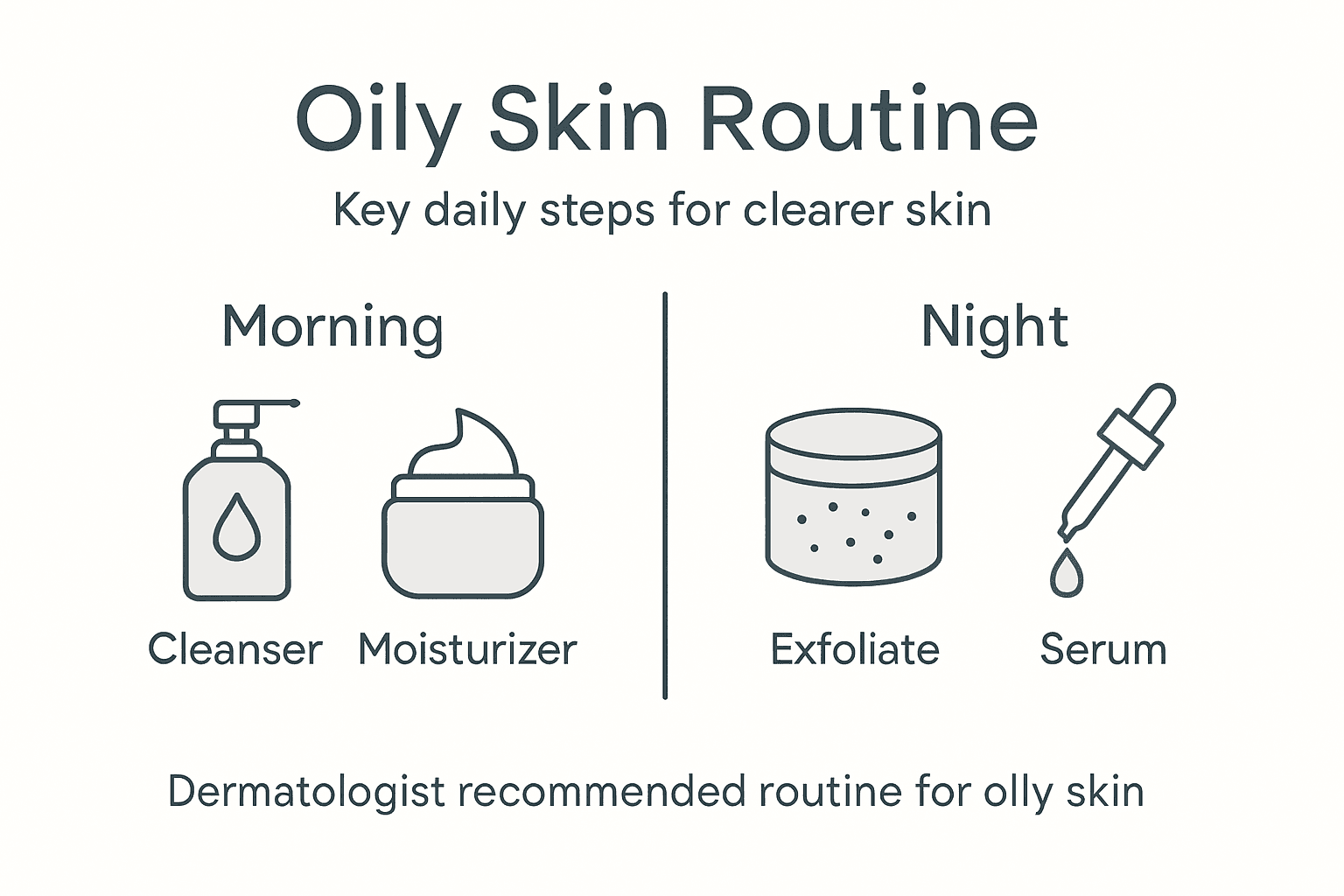
Consistency is key when managing oily skin. Your routine should adapt to seasonal changes, stress levels, and hormonal fluctuations. Always use non-comedogenic products and look for oil-free, water-based formulations that won’t exacerbate existing oiliness.
Pro tip: Keep blotting papers in your bag for midday oil control, and choose a lightweight, mattifying sunscreen to prevent additional shine.
Sustainable Solutions for Oily Skin Care
Sustainable skincare for oily skin goes beyond temporary fixes, focusing on long-term skin health and environmental consciousness. Consistent gentle approaches prevent excessive oil production while maintaining the skin’s natural protective mechanisms.
Key sustainable strategies for managing oily skin include:
- Minimal Product Approach: Using fewer, multi-functional products
- Eco-Friendly Formulations: Selecting biodegradable and natural ingredient-based skincare
- Zero-Waste Packaging: Choosing brands with recyclable or refillable containers
- Water Conservation: Using targeted cleansing techniques that minimize water waste
- Natural Ingredient Preference: Prioritizing plant-based, non-synthetic solutions
Medical recommendations emphasize using soapless cleansers and warm water to maintain skin balance without triggering increased oil production. This approach reduces environmental impact while supporting skin health through gentle, mindful treatment.
Choosing sustainable skincare means understanding that your skin’s ecosystem is interconnected with broader environmental systems. Look for brands committed to ethical sourcing, minimal processing, and transparent ingredient lists that support both personal and planetary wellness.
Pro tip: Research brands that offer refillable containers and concentrate on purchasing products with minimal, recyclable packaging to reduce your skincare environmental footprint.
Common Mistakes and What to Avoid
Managing oily skin requires a nuanced understanding of what not to do, as many well-intentioned actions can actually worsen skin conditions. Common skincare mistakes can significantly disrupt your skin’s natural balance, leading to increased oil production and potential breakouts.
The most critical mistakes people with oily skin tend to make include:
- Over-Washing: Cleaning your face too frequently or aggressively
- Skipping Moisturizer: Believing that moisture will increase oiliness
- Using Harsh Alcohol-Based Products: Stripping natural protective barriers
- Sleeping in Makeup: Clogging pores and preventing skin regeneration
- Touching Face Frequently: Transferring bacteria and stimulating oil production
Dermatological research emphasizes the importance of gentle skincare approaches that respect your skin’s natural ecosystem. Harsh treatments might provide temporary relief but ultimately trigger more oil production as your skin attempts to compensate for the disrupted moisture balance.
Understanding that oily skin requires balanced, mindful care is crucial. Aggressive treatments, excessive exfoliation, and quick-fix solutions often create a counterproductive cycle of increased sebum production and skin irritation. Patience and consistent, gentle treatment are key to managing oily skin effectively.
Pro tip: Invest in a gentle, pH-balanced cleanser and use it no more than twice daily, focusing on careful application rather than aggressive scrubbing.
Restore Balance and Confidence with Tailored Oily Skin Solutions
Struggling with excess shine, enlarged pores, or persistent breakouts is a common challenge for those with oily skin. This article highlights how factors like hormonal fluctuations and overactive sebaceous glands contribute to oily skin and why aggressive treatments can backfire. If you are ready to embrace gentle, effective care that respects your skin’s natural balance and helps you achieve a clear, matte complexion, our curated collection is designed just for you.
Discover premium, eco-conscious skincare essentials at GNS Beauty & Personal Care that feature vital ingredients such as salicylic acid and niacinamide proven to control oil and reduce blemishes. Don’t let oily skin hold you back from feeling confident in your natural beauty. Shop now to start a customized routine that adapts to your skin’s unique needs. Explore our range today at GNS Beauty & Personal Care and experience the transformation your skin deserves.
Frequently Asked Questions
What are the key signs of oily skin?
The key signs of oily skin include excessive shine, enlarged pores, a tendency to break out, and a thick or greasy texture. Different areas of the face may experience varying levels of oil production, particularly in the T-zone.
What ingredients should I look for in oily skin care products?
Effective ingredients for oily skin include salicylic acid for deep pore cleansing, niacinamide to regulate oil production, glycolic acid for exfoliation, hyaluronic acid for lightweight hydration, and retinoids for cell renewal and reduced oil production.
Can I skip moisturizer if I have oily skin?
No, you should not skip moisturizer. It’s essential to use a lightweight, oil-free moisturizer to maintain skin hydration without exacerbating oiliness. Hydrated skin is less likely to produce excess oil.
What common mistakes should I avoid with oily skin care?
Avoid over-washing your face, skipping moisturizer, using harsh alcohol-based products, sleeping in makeup, and touching your face frequently, as these habits can worsen oiliness and lead to breakouts.







Leave a comment
All comments are moderated before being published.
This site is protected by hCaptcha and the hCaptcha Privacy Policy and Terms of Service apply.