
Finding genuine cruelty-free skincare can feel confusing when labels and claims seem to blur together across North American and European shelves. For anyone who cares about animal welfare, understanding the difference between brands that are truly certified and those that simply claim the label is essential. Discover how cruelty-free skincare means products are never tested on animals at any stage and why global certification matters when adding premium, ethical products to your wellness routine.
Table of Contents
- Cruelty-Free Skincare Brands Defined
- Identifying Authentic Cruelty-Free Brands
- Certifications: Leaping Bunny, PETA, More
- Global Regulations And Ethical Challenges
- Steps For Shopping Cruelty-Free Effectively
Key Takeaways
| Point | Details |
|---|---|
| Cruelty-Free Skincare Explained | Cruelty-free products are not tested on animals at any stage, focusing on animal welfare in product development. |
| Importance of Certifications | Look for third-party certifications from organizations like Leaping Bunny and PETA to verify cruelty-free claims. |
| Navigating Global Regulations | Animal testing regulations vary globally; brands must be transparent about their practices, especially if they operate in multiple markets. |
| Effective Shopping Practices | Research certification status and ingredient suitability before purchasing to ensure you support genuinely cruelty-free brands. |
Cruelty-free skincare brands defined
When you’re shopping for skincare, you’ve probably noticed “cruelty-free” plastered across product labels and brand websites. But what does it actually mean? At its core, cruelty-free skincare refers to products that have not been tested on animals during any stage of development, from ingredient testing to final product formulation. This distinction matters because traditional skincare and cosmetics development has historically relied on animal testing to ensure safety and efficacy. Cruelty-free brands reject this practice entirely, choosing alternative testing methods that don’t harm animals.
Now here’s where it gets tricky. The term “cruelty-free” gets thrown around alongside other labels like natural, organic, and vegan, which can create confusion about what each one actually means. While these terms often appear together, they address completely different aspects of skincare. Natural refers to ingredient sourcing, organic addresses farming practices, and vegan means no animal-derived ingredients are used. Cruelty-free specifically focuses on animal welfare during product development and testing. Because of this inconsistency in how brands use and define these terms across different regions, looking for proper certifications has become crucial for identifying genuinely cruelty-free products. Understanding what truly makes a product cruelty-free helps you separate authentic commitments from misleading marketing claims.
Here’s a quick comparison of key cruelty-free labels and what each one means:
| Term | What It Means | Focus Area |
|---|---|---|
| Cruelty-Free | Not tested on animals at any stage | Animal welfare/testing |
| Vegan | No animal-derived ingredients | Ingredient sourcing |
| Natural | Uses ingredients from natural sources | Ingredient origin |
| Organic | Ingredients farmed without certain chemicals | Farming and processing |
When evaluating whether a brand is genuinely cruelty-free, certification matters more than self-labeling. Organizations like Leaping Bunny, PETA, and Choose Cruelty-Free provide third-party verification that brands truly meet cruelty-free standards. These certifications typically require brands to prove they don’t test on animals, don’t commission others to test on animals, and don’t use ingredients tested on animals by suppliers. Some brands also extend their cruelty-free commitment to parent companies and suppliers, creating a more comprehensive ethical standard. Reading through trusted cruelty-free brand options can help you identify companies that have earned these legitimate certifications rather than simply claiming the label.
Pro tip: Look for certification logos from recognized organizations on product packaging or brand websites rather than relying solely on the “cruelty-free” claim, as certifications provide independent verification of ethical practices.
Identifying authentic cruelty-free brands
With so many brands claiming to be cruelty-free, distinguishing the genuine from the greenwashed requires knowing where to look. The most reliable way to verify a brand’s cruelty-free status is through third-party certification programs that conduct thorough audits and ongoing monitoring. These organizations set strict standards that go beyond simple marketing claims. PETA’s Beauty Without Bunnies program, for instance, verifies that companies don’t test products or ingredients on animals at any stage of development. When a brand has earned these certifications, it means independent experts have vetted their practices and confirmed they meet rigorous ethical standards. You can consult PETA’s searchable database to verify whether specific brands have legitimate certification and meet their non-animal testing criteria.
Certified cruelty-free brands typically display recognizable logos from organizations like Leaping Bunny, PETA, or Choose Cruelty-Free on their packaging or websites. These logos aren’t just decorative; they represent a commitment that has been verified and monitored regularly. The certification process usually requires brands to disclose their testing methods, ingredient sourcing, and supplier practices. Some certifications also mandate that parent companies and suppliers meet the same standards, creating a comprehensive chain of accountability. Reading the fine print on brand websites or checking their certification status directly through these organizations helps you avoid falling for misleading claims. Brands that are genuinely certified will happily provide documentation and links to their certification status.
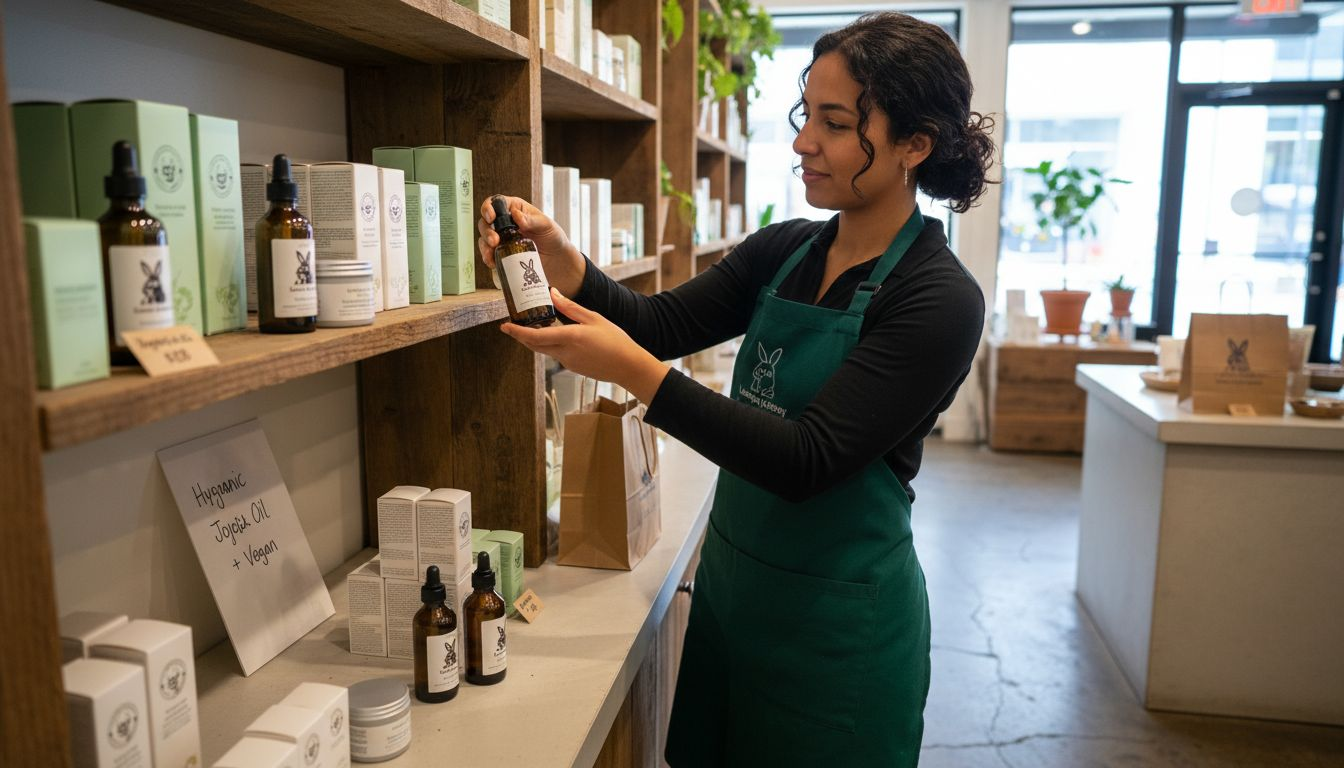
Beyond certifications, you can research a brand’s transparency and track record. Check if they clearly explain their cruelty-free practices on their website, respond to customer questions about their testing methods, and maintain consistent messaging across platforms. Be cautious of brands that use vague language or refuse to provide specific information about their testing practices. Look for details about whether they’ve made any recent commitments to expand their cruelty-free practices or if they’ve previously tested on animals. Reading customer reviews and checking cruelty-free community forums can reveal whether other shoppers have verified a brand’s authenticity through their own research.
Pro tip: Before making a purchase, spend two minutes checking a brand’s certification status on PETA or Leaping Bunny’s websites instead of relying on packaging claims, which can save you from supporting companies that don’t actually meet cruelty-free standards.
Certifications: Leaping Bunny, PETA, more
When you’re shopping for truly cruelty-free skincare, recognizing legitimate certifications is your best defense against misleading marketing. The most trusted cruelty-free certifications come from independent organizations that rigorously vet brands and maintain strict standards. Leaping Bunny stands as the gold standard, recognized globally for its comprehensive approach to ending animal testing in cosmetics. The program requires brands to open their supply chains for inspection and commit to ongoing monitoring. Another major player is PETA’s Beauty Without Bunnies program, which verifies that companies don’t conduct, commission, or permit animal testing anywhere in their supply chain. Choose Cruelty-Free operates primarily in Australia and represents another credible certification body. These three organizations work independently to authenticate cruelty-free beauty standards that consumers can trust.
Earning and maintaining these certifications isn’t simple or quick. Brands must complete thorough application processes that demand transparency about every ingredient, every testing method, and every supplier relationship. The certification process typically includes detailed questionnaires, documentation reviews, and sometimes facility inspections. Once certified, brands face periodic audits to ensure they continue meeting standards. This ongoing accountability means that certification logos actually represent real commitments, not just marketing spin. The application fees and audit costs also create a barrier that filters out brands using cruelty-free claims superficially. When you see these logos on packaging, you’re looking at a brand willing to invest resources and accept scrutiny to prove their values.
Each certification organization maintains searchable databases where you can verify brand status in real time. Before purchasing, you can look up whether a brand holds active certification or if it has been revoked for failing to maintain standards. Some brands carry multiple certifications, which demonstrates an extra layer of commitment to animal welfare standards across different regions. Others may hold certifications in specific countries where regulations require them. Understanding these nuances helps you make informed choices about which brands align with your values. The availability of these verification tools means you have no reason to take brand claims at face value when independent verification is just a few clicks away.
Use this summary to understand how major cruelty-free certifications differ:
| Certification | Key Criteria | Geographic Focus |
|---|---|---|
| Leaping Bunny | Full supply-chain audit, ongoing monitoring | Global reach |
| PETA | No animal testing by brand or suppliers | International, strong U.S. presence |
| Choose Cruelty-Free | Strict documentation, limited region | Primarily Australia |
Pro tip: Bookmark the certification organization websites for Leaping Bunny, PETA, and Choose Cruelty-Free so you can quickly verify any brand’s status before adding it to your skincare routine, saving time and ensuring your purchases support genuinely ethical companies.
Global regulations and ethical challenges
Here’s where cruelty-free skincare gets complicated. The rules governing animal testing in cosmetics differ dramatically across the world, creating a patchwork of regulations that brands must navigate carefully. The European Union has banned animal testing for cosmetics since 2013, setting a strong precedent for animal welfare. The United States and many other countries have followed suit with varying levels of restriction. However, global regulations on animal testing remain inconsistent, with some nations maintaining partial bans or no restrictions whatsoever. This inconsistency presents real ethical dilemmas for companies trying to maintain cruelty-free standards across all markets.
China historically required all imported cosmetics to undergo animal testing before reaching store shelves, forcing brands into an impossible choice: abandon the Chinese market or compromise their cruelty-free commitments. While China has relaxed some restrictions in recent years, allowing certain imported products to skip animal testing, this remains a critical issue for many beauty companies. Brands must also consider their supply chains, where ingredients sourced from different countries may have been tested on animals by suppliers, even if the final product wasn’t. This creates a gray area where brands operating with genuine ethical intentions still struggle to guarantee complete cruelty-free status. The challenge intensifies when you factor in cultural expectations and legal requirements that vary from region to region.
These inconsistent laws on animal testing create supply chain challenges that complicate accurate communication with consumers. Some brands address this by maintaining different product lines for different markets, while others choose to exit markets with strict animal testing requirements. As a consumer in North America or Europe, you benefit from stronger regulations, but understanding these global complexities helps you appreciate why cruelty-free claims matter. Supporting brands that navigate these challenges honestly, through third-party certifications, sends a clear message that you value ethical practices even when they cost more.
Pro tip: When choosing between cruelty-free brands, prioritize those certified by international organizations rather than relying on individual brand claims, especially if the brand sells in multiple countries where regulations differ significantly.
Steps for shopping cruelty-free effectively
Shopping for cruelty-free skincare doesn’t have to feel overwhelming. Start by identifying what you’re actually looking for. Are you seeking a complete skincare overhaul, or are you replacing specific products as they run out? This determines your shopping pace and helps you focus your research. Next, visit trusted certification databases to research brands you’re considering. PETA’s certification database allows you to search specific companies and verify their current cruelty-free status in seconds. Look beyond the packaging claims and check whether the brand holds active certification from recognized organizations. This single step eliminates most misleading marketing because certified brands have undergone rigorous vetting. Make note of the certification logos you’ll recognize: Leaping Bunny, PETA’s Beauty Without Bunnies, and Choose Cruelty-Free are the ones that actually matter.
Once you’ve identified certified brands, check their ingredient lists and formulations to match your specific skin needs. A cruelty-free certification doesn’t automatically mean the product will work for your skin type or concerns. Some certified brands focus on natural ingredients, while others use synthetic formulations. Take time reading reviews from people with similar skin types to get a sense of real-world performance. Also verify that brands aren’t selling in countries that mandate animal testing, which would compromise their cruelty-free status. This matters because a brand might be cruelty-free in North America but unable to maintain that status everywhere they operate. Understanding how to choose cruelty-free makeup applies equally to skincare selection.
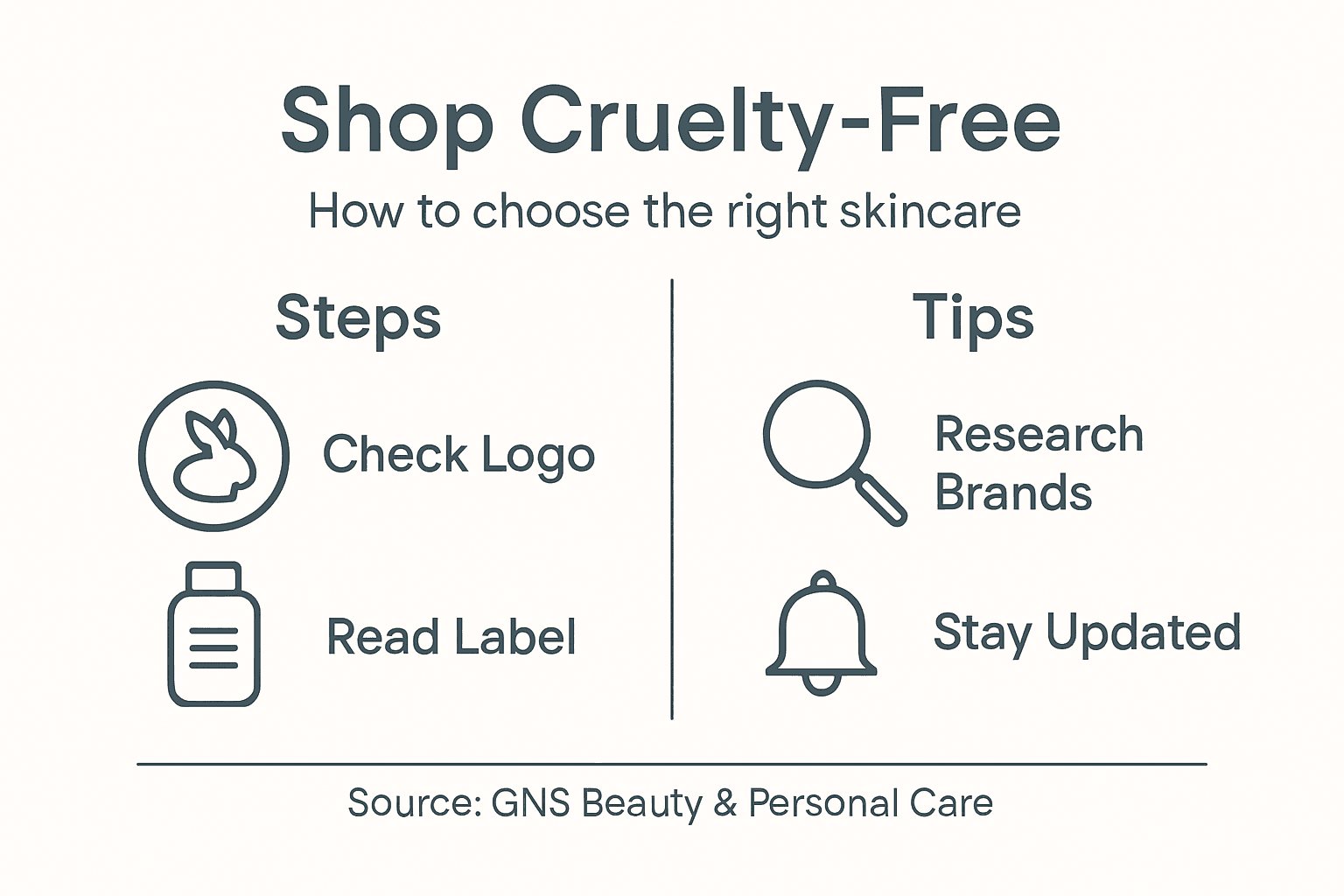
Finally, stay informed about policy changes and new certifications. The cruelty-free landscape evolves as regulations shift and brands update their practices. Bookmark the certification organization websites and check them periodically when adding new products to your routine. Consider joining cruelty-free communities online where shoppers share updates about brand status changes and new releases. This community knowledge proves invaluable when navigating gray areas or catching brands that make questionable compromises. Shopping cruelty-free becomes easier once you establish these habits, transforming what feels like research into a natural part of your routine.
Pro tip: Create a simple checklist noting certification status, ingredients, and skin compatibility for your favorite products, then reference it whenever you shop to avoid repeatedly researching the same brands.
Elevate Your Skincare Routine with Truly Cruelty-Free Choices
Choosing authentic cruelty-free skincare can feel confusing and overwhelming. Many brands claim to protect animals yet lack verified certification which leaves you unsure if your choices really make a difference. You deserve products that not only pamper your skin but also align with your values by being fully certified through organizations like Leaping Bunny or PETA. Key challenges include understanding complex certifications, avoiding misleading marketing, and navigating brands selling in countries with contradictory animal testing laws. You want confidence that every product in your regimen supports ethical, animal-friendly practices while delivering effective results.
At GNS Beauty & Personal Care we understand this challenge and help you shop with clarity and integrity. Our curated collection features only high-quality skincare and beauty essentials from brands verified to meet cruelty-free standards. Each product helps you build a routine that respects animal welfare while boosting your natural beauty and wellness. Embrace skin-loving products free from animal testing and ethically crafted to fit your lifestyle.
Start your cruelty-free journey today by exploring our thoughtfully selected assortment at GNS Beauty & Personal Care. Discover trusted brands that proudly carry third-party cruelty-free certifications so you can shop confidently with every purchase. Don’t wait to transform your routine into one that is responsible and radiant. Visit GNS Beauty & Personal Care now and take a meaningful step toward cruelty-free self-care.
Frequently Asked Questions
What does cruelty-free mean in skincare?
Cruelty-free skincare refers to products that have not been tested on animals at any stage of development, ensuring that no animals were harmed during testing.
How can I identify if a skincare brand is truly cruelty-free?
To verify if a brand is genuinely cruelty-free, look for certification logos from recognized organizations like Leaping Bunny, PETA, or Choose Cruelty-Free on their packaging or websites.
What is the difference between cruelty-free, vegan, natural, and organic skincare?
Cruelty-free focuses on the absence of animal testing; vegan means no animal-derived ingredients; natural refers to the use of ingredients from natural sources, while organic addresses farming practices without certain chemicals.
Why is certification important for cruelty-free skincare brands?
Certification from third-party organizations provides independent verification of a brand’s cruelty-free status, ensuring that their claims are legitimate and not merely marketing tactics.





Leave a comment
All comments are moderated before being published.
This site is protected by hCaptcha and the hCaptcha Privacy Policy and Terms of Service apply.