
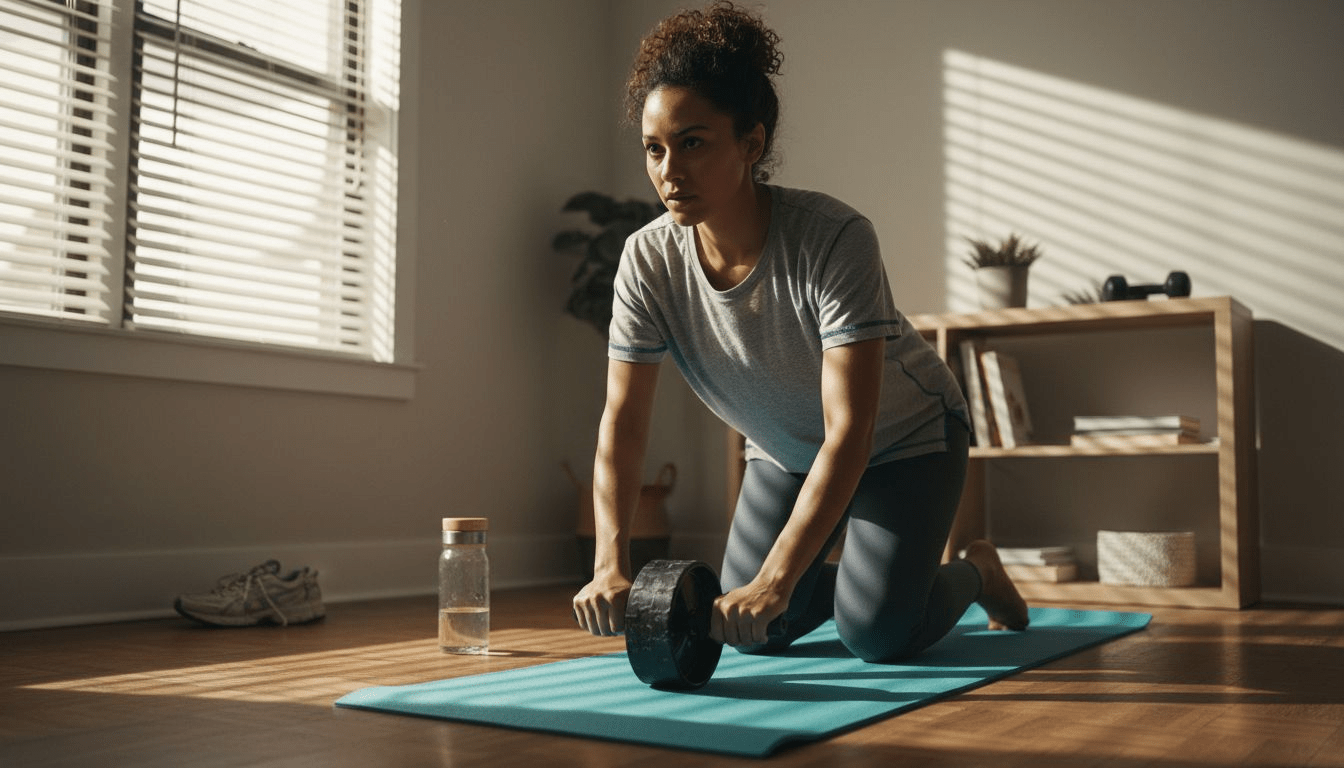
More than 60 percent of American adults prioritize core training as part of their fitness routine, but using the wrong ab roller or surface can lead to injuries and disappointing results. Picking quality equipment and a suitable workout space matters for anyone serious about building a strong, safe core. This step by step guide will show you how to select the right gear, set up correctly, and get the most from every ab roller session.
Table of Contents
- Step 1: Choose the Right Ab Roller and Surface
- Step 2: Set Up Your Starting Position Safely
- Step 3: Perform Basic Rollouts with Proper Form
- Step 4: Adjust Difficulty for Progressive Gains
- Step 5: Check Your Technique and Track Results
Quick Summary
| Key Insight | Explanation |
|---|---|
| 1. Choose a High-Quality Ab Roller | Opt for sturdy rollers with comfortable grips and wider wheels for better stability and performance during your workouts. |
| 2. Select a Suitable Workout Surface | Use smooth surfaces like yoga mats to ensure grip and prevent injury while rolling. Avoid slippery or excessively thick materials. |
| 3. Master Your Starting Position | Begin by kneeling with legs hip-width apart, ensuring a straight back and core engagement for effective exercise execution. |
| 4. Progress Gradually | Increasing the challenge of your workouts safely can involve longer rollouts or incorporating resistance bands as your core strength develops. |
| 5. Track Your Progress Meticulously | Keep a workout journal to record repetitions and modifications, which helps in monitoring improvements and maintaining motivation throughout your fitness journey. |
Step 1: Choose the Right Ab Roller and Surface
Selecting the appropriate ab roller and workout surface can dramatically improve your core training effectiveness and safety. When choosing your equipment, several key factors will determine your success in mastering ab roller workouts.
First, examine the ab roller’s construction and quality. A comprehensive study comparing muscle activation across different abdominal training devices reveals significant variations in workout performance depending on equipment design. Look for rollers with sturdy handles, smooth wheel movement, and comfortable grips that allow stable hand positioning. Professional grade rollers typically feature wider wheels which distribute weight more evenly and provide better stability during exercises.
Equally important is selecting the right surface for your workout. Experts recommend using a smooth and comfortable surface like a yoga mat or carpet to reduce injury risk and ensure proper traction. Hardwood floors or tiles can be too slippery, while thick carpets might create too much resistance. An ideal surface provides enough grip to keep the roller controlled while allowing smooth rolling motion.
When shopping, consider rollers with adjustable features and padded handles that accommodate different fitness levels. Beginners should prioritize stability and comfort over advanced design complexities.
Here’s a quick comparison of common ab roller features and their impact on your workout:
| Feature | Benefit for Users | Potential Drawback |
|---|---|---|
| Wide Wheel Design | Increases stability | May reduce challenge for experts |
| Padded Handles | Enhances grip comfort | Can wear out over time |
| Adjustable Resistance | Adapts to skill levels | Can be harder to assemble |
| Lightweight Materials | Easy to transport | Less durable for heavy use |
| Dual-Wheel Roller | Improves balance | Slightly bulkier than single wheel |
Professional tip: Test the ab roller on your intended workout surface before purchasing to ensure compatibility and smooth movement.
Step 2: Set Up Your Starting Position Safely
Perfecting your starting position is crucial for executing ab roller exercises effectively and preventing potential injuries. This step will help you establish a strong foundation for your core workout.
According to expert guidance on ab roller technique, begin by kneeling on your mat with your knees positioned hip-width apart. Grasp the ab roller handles firmly, ensuring a comfortable and stable grip. Your back should remain straight, maintaining a neutral spine position that supports proper body alignment and reduces strain.
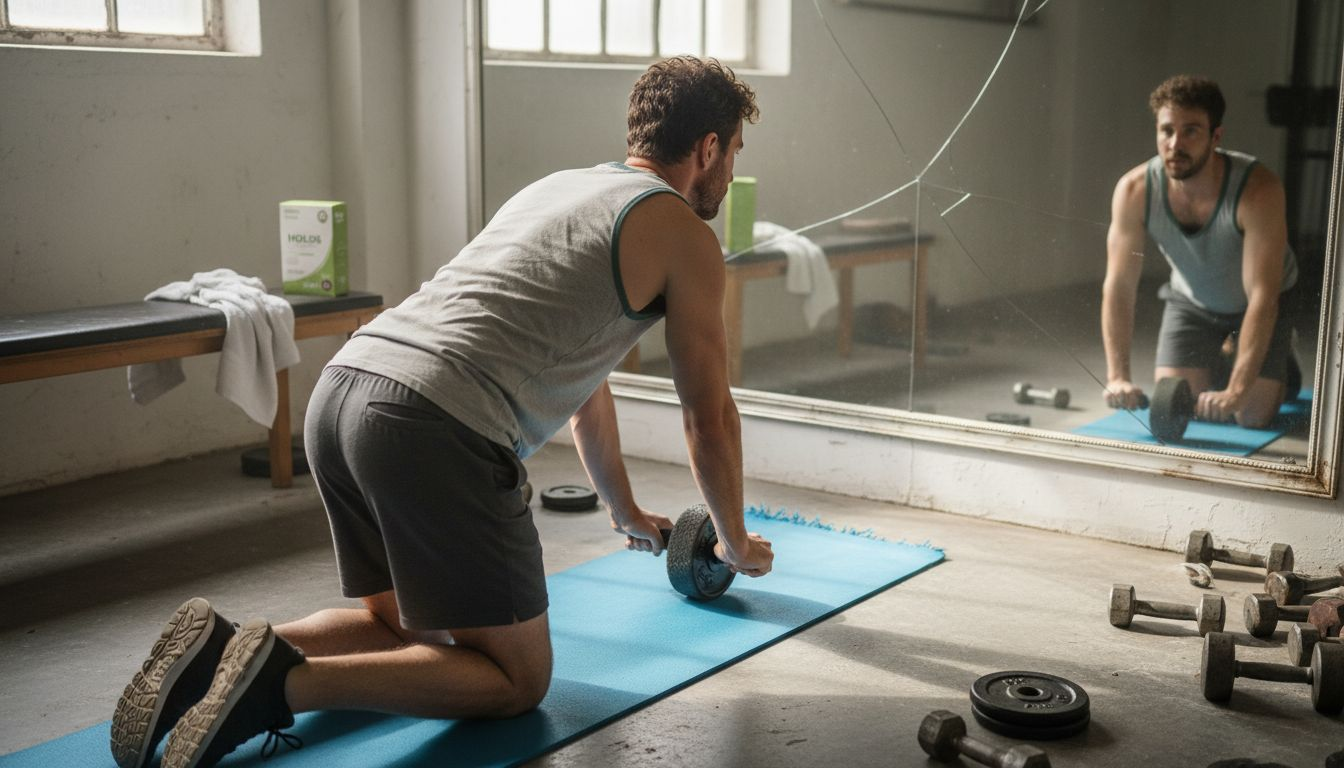
Maintaining correct body positioning is essential to prevent potential muscle stress, so focus on engaging your core muscles throughout the setup. Avoid arching your back or allowing your abdomen to sag. Keep your glutes and abdominal muscles contracted, which will help stabilize your body and provide the necessary support during the exercise.
As you prepare to start, distribute your body weight evenly between your knees and hands. Your shoulders should be directly above the ab roller, creating a stable and balanced starting position. Take a moment to check your alignment and ensure you feel comfortable and supported before initiating any movement.
Professional tip: Practice your starting position in front of a mirror to verify proper body alignment and muscle engagement before performing full ab roller movements.
Step 3: Perform Basic Rollouts with Proper Form
Mastering the basic ab roller rollout is fundamental to developing core strength and ensuring safe, effective workouts. This section will guide you through executing precise movements that maximize muscle engagement while minimizing injury risk.
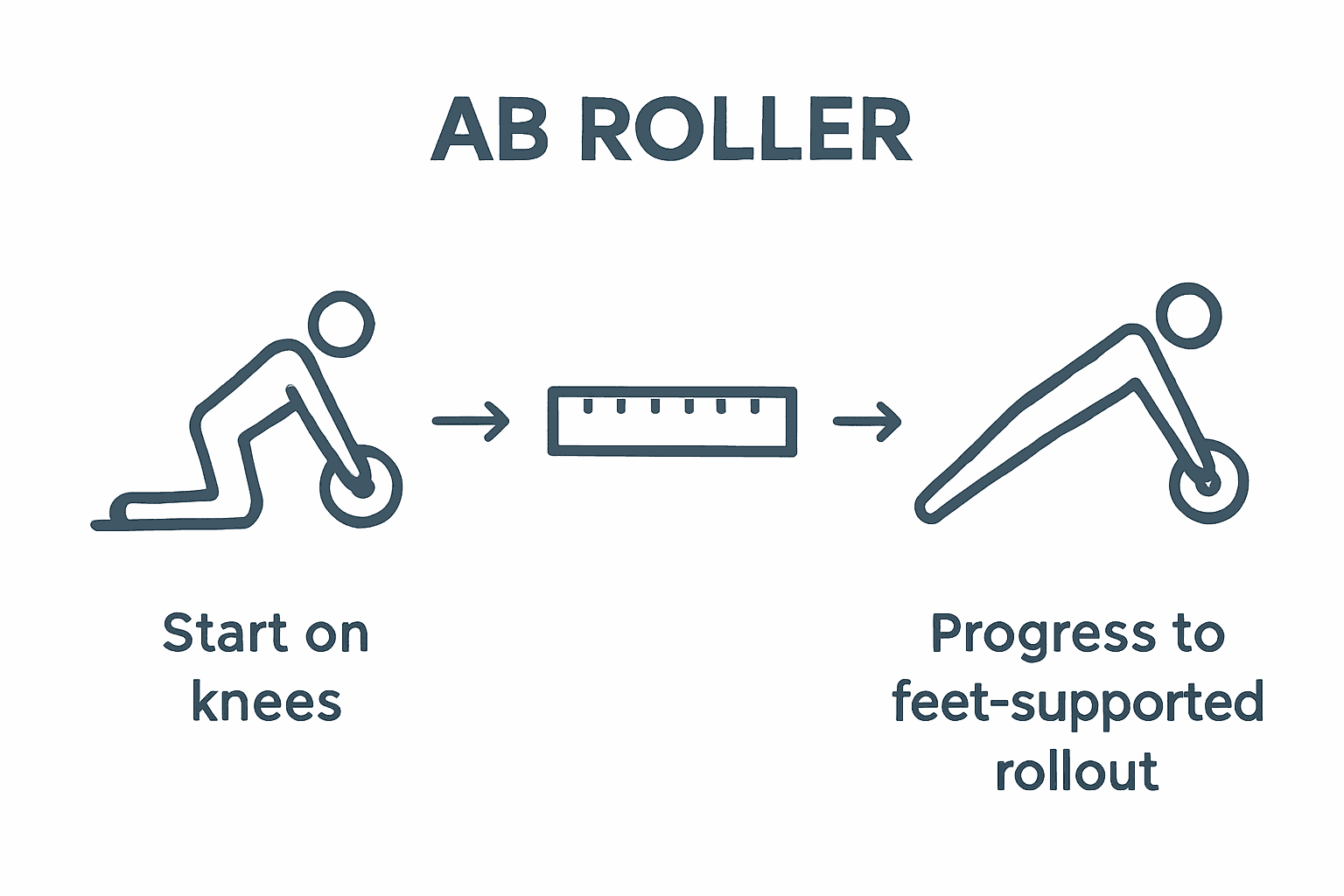
Expert guidance on ab roller technique recommends initiating the movement by rolling the ab wheel forward with a tight core and maintained spinal alignment. Begin by slowly extending your body forward, controlling the movement with your abdominal muscles. Focus on keeping your back straight and core engaged throughout the entire motion. The key is to roll out just far enough to feel significant muscle tension without compromising your form or experiencing discomfort.
Proper body positioning during rollouts is crucial for preventing muscle strain, so maintain a consistent technique. As you extend forward, keep your glutes and abdomen contracted, preventing your thighs from touching the ground. When you reach the point of maximum extension where you can still maintain control, pause briefly to intensify core engagement. Then slowly roll back to your starting position using your abdominal muscles to control the movement.
Progress gradually by increasing the distance of your rollout as your core strength improves. Start with shorter extensions and focus on maintaining perfect form rather than reaching maximum distance. Pay attention to your body and stop if you experience any pain or excessive strain.
Professional tip: Practice rollouts in front of a mirror initially to ensure your body remains in a straight line and your movements are controlled and symmetrical.
Step 4: Adjust Difficulty for Progressive Gains
Progressing in ab roller workouts requires strategic difficulty modifications that challenge your core muscles while preventing potential injury. Understanding how to scale your workout will help you continuously improve strength and technique.
Advanced fitness equipment offers multiple progression strategies to accommodate different fitness levels. Begin with foundational kneeling rollouts, which provide stability and allow you to develop initial core strength. As your technique improves, you can transition to more challenging variations like extended rollouts or standing positions. Some athletes incorporate resistance bands to add extra tension and increase muscle engagement.
Exploring alternative core training methods can help you progressively challenge your muscles, preventing workout plateaus. Consider incorporating variations such as stability ball rollouts or slider slide-outs when traditional ab roller movements become comfortable. These alternatives engage similar muscle groups while introducing unique movement patterns that continue to challenge your core stability.
Monitor your body’s response during each progression. Incrementally increase range of motion, duration, or resistance only when you can consistently perform the current level with perfect form. Pay attention to muscle fatigue and recovery, ensuring you are challenging yourself without compromising technique or risking injury.
Refer to this summary for ways to increase ab roller workout difficulty safely:
| Progression Method | How It Increases Challenge | Suitable For |
|---|---|---|
| Extended Rollouts | Demands greater core control | Intermediate users |
| Standing Rollouts | Engages entire body, toughest level | Advanced athletes |
| Resistance Bands | Adds extra tension for progression | All fitness levels |
| Stability Ball Rollouts | Engages additional stabilizer muscles | Those seeking variety |
Professional tip: Track your ab roller workout progression in a fitness journal to objectively measure improvements and identify when you are ready to advance to more difficult variations.
Step 5: Check Your Technique and Track Results
Accurately assessing your ab roller performance is crucial for continuous improvement and preventing potential injuries. This step will help you develop a systematic approach to evaluating your technique and measuring progress.
Expert guidance emphasizes the importance of controlled movements and gradual progression, recommending that beginners start with eight repetitions per set and progressively increase to 15 or more as strength improves. Focus on executing each rollout with deliberate, precise movements rather than relying on momentum. Avoid rushing through repetitions and instead concentrate on maintaining proper form throughout the entire exercise.
Consistent practice with meticulous attention to technique will yield the most significant results, so develop a keen awareness of your body positioning. Pay close attention to maintaining a straight back and preventing hyperlordosis during each movement. Record video of your workouts periodically to analyze your form objectively. Compare your technique against professional demonstration videos and identify areas that need improvement.
Create a workout journal to track your progress systematically. Record the number of repetitions, distance of rollouts, and any modifications you implement. Note how your body feels during and after each session, tracking improvements in core strength, stability, and overall muscle engagement. This documentation will help you stay motivated and provide concrete evidence of your fitness journey.
Professional tip: Use your smartphone to record workout videos from multiple angles, allowing you to conduct a comprehensive self assessment of your ab roller technique.
Strengthen Your Core and Elevate Your Wellness Journey Today
Mastering the ab roller workout requires the right support both in equipment and self-care to build core strength safely and effectively. This article highlights key challenges like proper technique, progression, and preventing injury while helping you achieve your fitness goals through controlled movements and consistent practice. At GNS Beauty & Personal Care, we understand that true wellness combines physical fitness with premium personal care products designed to boost your confidence and enhance recovery.
Explore our carefully curated selection of luxurious and eco-conscious wellness essentials that perfectly complement your fitness routine. Whether you need soothing skincare after an intense session or want to revitalize your body with nourishing haircare and personal wellness products, GNS Beauty offers solutions tailored to your self-care needs. Take the next step in your journey by visiting GNS Beauty now and experience how quality personal care enhances every workout. Don’t wait to feel stronger inside and out with products crafted for your lifestyle and well-being at GNS Beauty & Personal Care.
Frequently Asked Questions
What is the best setup for an ab roller workout for beginners?
To set up for an ab roller workout, choose a sturdy roller and a smooth surface like a yoga mat. Kneel on the mat, keep your knees hip-width apart, and maintain a straight back while gripping the handles securely.
How do I maintain proper form during ab roller rollouts?
To maintain proper form during rollouts, engage your core and keep your back straight. Avoid arching your back or letting your abdomen sag as you roll out and back in, focusing on controlled movements throughout.
Can I adjust the difficulty of the ab roller workout as I progress?
Yes, you can adjust the difficulty by gradually increasing the range of motion or trying advanced variations like standing rollouts. Progress at your own pace, and aim to increase the challenge every few weeks to continuously build strength.
How many repetitions should beginners aim for in an ab roller workout?
Beginners should start with eight repetitions per set and gradually increase to 15 or more as strength improves. Focus on quality and control, ensuring each movement is deliberate rather than rushed.
How can I track my progress with ab roller workouts?
To track your progress, keep a workout journal noting the number of repetitions, distance of rollouts, and any modifications you make. By consistently recording your workouts, you can objectively measure improvements and stay motivated.
What should I do if I experience pain while using the ab roller?
If you experience pain while using the ab roller, stop immediately and reassess your form. Ensure you are using controlled movements and maintaining proper body alignment, and consult a fitness professional if discomfort persists.







Hinterlasse einen Kommentar
Alle Kommentare werden vor der Veröffentlichung geprüft.
Diese Website ist durch hCaptcha geschützt und es gelten die allgemeinen Geschäftsbedingungen und Datenschutzbestimmungen von hCaptcha.