

Finding time for real self-care often feels impossible with everything pulling you in different directions. Yet, caring for your wellness is not just a trend or luxury. The truth is, self-care is about deliberate choices that support your physical, emotional, psychological, and spiritual health every day. If you feel frustrated by myths that self-care has to be expensive or selfish, you’re not alone. Discover how building a simple, sustainable routine rooted in authentic practices can make you look and feel your best while aligning with your values and natural beauty.
Table of Contents
- Defining A Self Care Routine And Common Myths
- Types Of Self Care: Emotional, Physical, And More
- Core Elements Of An Effective Routine
- Choosing Products For Sustainable Self Care
- Mistakes To Avoid When Creating Routines
Key Takeaways
| Point | Details |
|---|---|
| Self-care is Essential | Self-care involves daily habits that promote physical, emotional, and psychological wellness, not just indulgent activities. |
| Consistency and Intentionality | Establishing a self-care routine requires consistent practices that align with personal values and current needs. |
| Avoid Common Pitfalls | Many fail by attempting too much too quickly; it’s better to start small and gradually build a sustainable routine. |
| Sustainable Products Matter | Choose self-care products that are eco-friendly and ethically sourced to enhance your overall wellness experience. |
Defining a Self Care Routine and Common Myths
Self-care isn’t what most people think it is. The term gets thrown around so casually these days that it has lost some of its real meaning. At its core, self-care involves deliberate activities to promote wellness across your physical, emotional, psychological, and spiritual health. This includes everything from what you eat and how much you sleep to how you manage stress and spend your free time. It’s not one big thing you do once a month. It’s the daily choices that add up over time.
Here’s where most people get it wrong. Many believe self-care is selfish or frivolous, a luxury reserved for people with unlimited time and money. Others think it means expensive spa days or fancy wellness retreats. The truth is way simpler than that. Self-care includes basic habits like eating nutritious meals, moving your body, getting quality sleep, and maintaining good hygiene. These fundamentals matter more than anything else. When you neglect these basics, everything else falls apart. Your mood tanks, your skin suffers, your energy disappears. It’s not indulgent to take care of yourself. In fact, self-care is what allows you to show up for the people you love and handle life’s inevitable challenges without burning out.
Think of self-care as preventative medicine for your entire life. The process of establishing consistent behaviors to ensure holistic well-being directly impacts your ability to manage stress, prevent illness, and improve your quality of life. When you build a solid self-care routine, you’re not being selfish. You’re actually building your capacity to be present, patient, and productive in all areas of your life. A self-care routine looks different for everyone. For some people, it means spending 20 minutes on a skincare ritual with natural products. For others, it’s a 30-minute workout, time in nature, or simply establishing a consistent sleep schedule. The key is choosing activities that genuinely nourish you, not just things that look good on Instagram.

Pro tip: Start small by identifying three non-negotiable daily habits that make you feel better—whether that’s drinking enough water, moving your body, or using a quality skincare product—and commit to those before adding anything else to your routine.
Types of Self Care: Emotional, Physical, and More
Self-care isn’t a one-size-fits-all approach. It breaks down into several interconnected categories, and understanding each one helps you build a routine that actually works for your life. Physical self-care covers the basics: exercise, nutrition, sleep, and hygiene. This is where many people start because the effects are immediate and noticeable. When you move your body regularly, eat foods that fuel you, and get enough rest, everything else becomes easier. You have more energy, clearer thinking, and better emotional regulation. Emotional self-care involves managing stress, processing your feelings, and learning how to regulate your emotions when things get tough. This might look like journaling, therapy, talking with trusted friends, or simply taking time to reflect. Social self-care focuses on building and maintaining positive relationships with others. These connections act as a buffer against stress and contribute directly to your overall happiness and resilience.
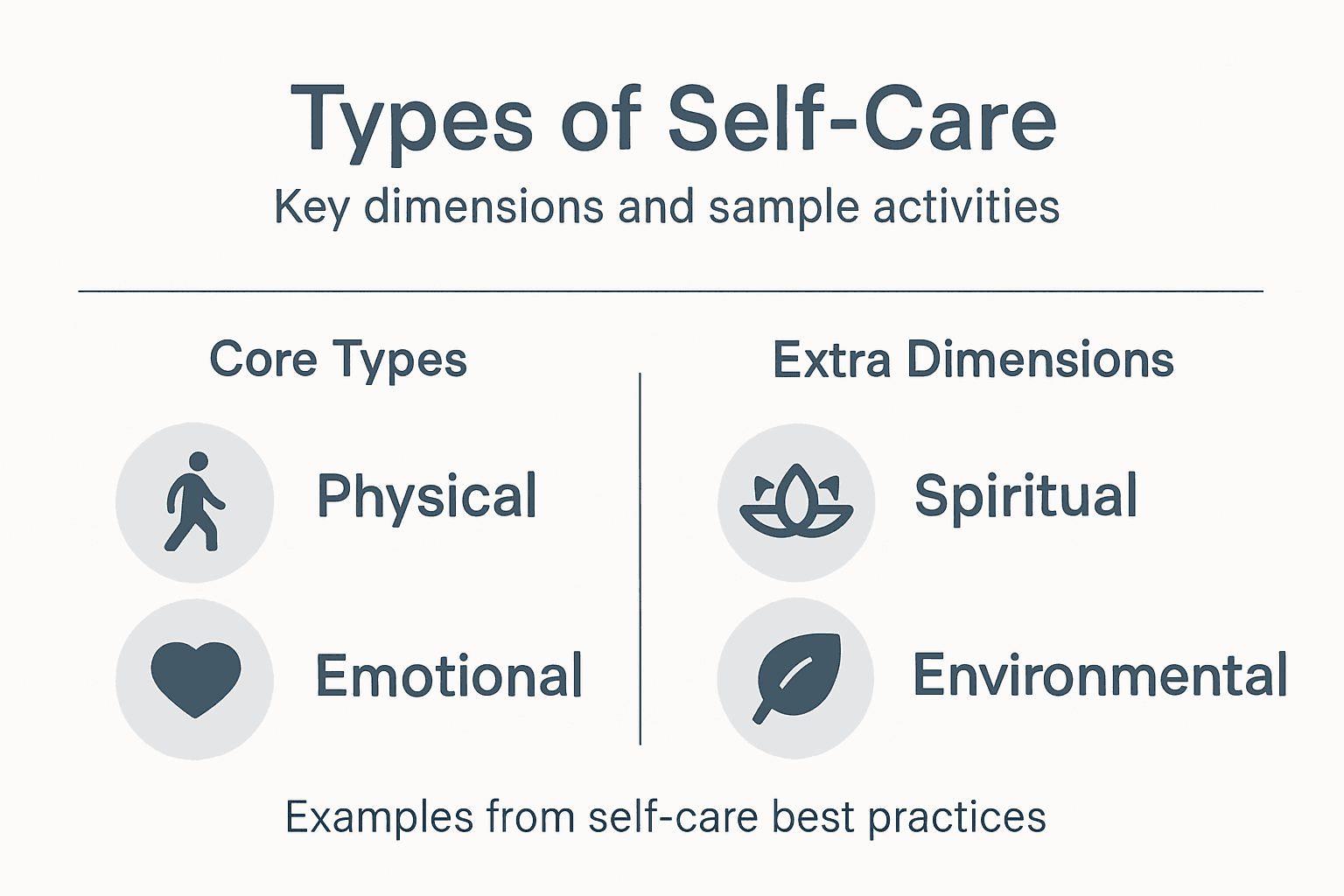
Beyond these core categories, different dimensions of self-care also include environmental and spiritual components. Your environment matters more than you might realize. Having a clean, organized, safe space to live and work reduces stress and makes it easier to implement other self-care practices. Spiritual self-care doesn’t necessarily mean religion. It means connecting with something bigger than yourself, whether that’s time in nature, creative pursuits, meditation, or activities that align with your values. Managing stress through exercise, healthy eating, and sleep routines creates a foundation that supports all these dimensions working together. When you neglect one area, the others suffer. Poor sleep affects your mood and makes healthy eating harder. Stress makes it difficult to maintain social connections. That’s why a well-rounded self-care routine addresses multiple dimensions rather than just focusing on one.
The beauty of understanding these different types is that you can tailor your self-care to what you actually need right now. Some weeks you might prioritize physical health because you’re feeling sluggish. Other times, emotional or social self-care takes priority because you’re working through something challenging. Building sustainable practices in all these areas means you’re not just treating symptoms of stress or burnout. You’re building genuine resilience and creating conditions where you can thrive, not just survive.
Pro tip: Audit each self-care category this week by asking yourself what’s working and what’s missing, then add just one small practice to your weakest area before expanding to others.
Here’s a look at how different dimensions of self-care uniquely support well-being:
| Dimension | Core Focus | Direct Benefits | Sample Activity |
|---|---|---|---|
| Physical | Body maintenance and energy | Improved sleep, vitality | Daily brisk walk |
| Emotional | Stress and mood management | Greater resilience | Journaling feelings |
| Social | Positive relationships | Stronger support network | Weekly friend check-in |
| Environmental | Creating supportive surroundings | Lowered daily stress | Decluttering workspace |
| Spiritual | Meaning and interconnectedness | Enhanced purpose | Mindful meditation |
Core Elements of an Effective Routine
Not all self-care routines work equally. The difference between a routine that transforms your life and one that fizzles out usually comes down to a few core elements. Consistency tops the list. A 10-minute daily habit beats a sporadic 2-hour session every few weeks. Your brain and body thrive on predictability. When you do something at the same time each day, it requires less willpower and becomes automatic over time. This is why morning routines tend to stick better than evening ones. You have fresh energy and fewer decisions to make. Intentionality matters just as much. Your routine should address what actually matters to you right now, not what you think should matter. If you hate running, don’t force it into your routine just because it’s trendy. If skincare brings you joy, make it a priority. The activities you choose must align with your real life and values.
Planning and prioritization form the foundation of sustainability. Deliberate self-care actions that enhance well-being require intentional design. You can’t just hope it happens. Block time on your calendar. Identify what you’re trying to address, whether that’s low energy, stress, poor sleep, or disconnection from yourself. Then select specific activities that target those issues. A person struggling with anxiety needs different practices than someone dealing with low confidence. Someone juggling work and family needs a realistic routine that takes 15 minutes, not an hour. The key is choosing activities that work within your actual life, not the life you wish you had.
Another critical element is building practices at multiple timescales. Evidence-based self-care combines temporary stress relief with long-term wellness strategies.pdf). This means having quick practices for moments when stress hits hard. A 5-minute breathing exercise, a cold shower, or a few minutes of journaling can reset your nervous system in the moment. Alongside this, develop longer-term habits like weekly meal prep, monthly reflection sessions, or regular skincare rituals that build resilience over time. The combination of both creates a balanced approach that keeps you grounded daily while building strength for bigger challenges.
Pro tip: Start with just three core elements: one physical practice (like a morning skincare routine or a 20-minute walk), one stress-relief practice (like deep breathing or journaling), and one joy-bringing practice (something you actually enjoy), then stack them together in a simple sequence.
Choosing Products for Sustainable Self Care
What you put on your body and into your routine matters as much as what you do. When you’re building a self-care routine, the products you choose shape your experience and impact. Sustainable self-care products minimize environmental damage throughout their entire life cycle while supporting ethical labor practices. This means looking beyond marketing claims and actually understanding what goes into the items you use daily. A product that feels luxurious but comes in excessive plastic packaging or contains harmful chemicals isn’t truly serving your wellness. Real self-care includes caring about the planet and the people who make your products.
Start by checking for credible ecolabels and verified sustainability standards when selecting products. Look for certifications from recognized agencies that confirm lower emissions, reduced toxicity, and resource conservation. Cruelty-free and vegan certifications tell you about ethical practices. Organic labels verify that ingredients were grown without synthetic pesticides. Recyclable or compostable packaging matters because it affects what happens after you finish using the product. Pay attention to ingredient lists. Natural ingredients sourced sustainably beat synthetic chemicals every time. If you can’t pronounce an ingredient or don’t know what it does, that’s a sign to research before buying. Brands that prioritize transparency make this easy by explaining their sourcing, manufacturing, and packaging choices.
Choosing products made with recyclable, biodegradable materials designed for longevity transforms your self-care into a force for good. This doesn’t mean spending more money necessarily. It means being intentional about quality over quantity. One excellent skincare product that lasts longer and works better beats buying cheap products constantly. Consider your actual needs. Do you need 20 different products or five really good ones that address your specific concerns? A minimalist approach often costs less while reducing waste. Think about the entire self-care experience. Using products that feel good, smell amazing, and actually work creates a ritual that you’ll stick with. Sustainable products from brands committed to natural beauty and wellness tend to be more effective because they’re formulated thoughtfully instead of just chasing trends.
Pro tip: When evaluating a new product, check three things: the ingredient list for anything you want to avoid, the packaging material to ensure it’s recyclable or compostable, and whether the brand transparently shares sourcing and manufacturing practices before making your purchase.
Mistakes to Avoid When Creating Routines
Building a self-care routine sounds simple, but most people derail themselves by making preventable mistakes. The biggest one is going too big too fast. You see someone else’s polished routine online and decide you’re going to do all of it starting Monday. Skincare, meditation, journaling, exercise, meal prep, cold showers. Everything at once. By Wednesday, you’re exhausted and frustrated. Then you quit entirely. This happens because unrealistic expectations set you up for failure. Instead, start with one or two small practices you can actually maintain. Add more only after those become automatic.
Another common trap is neglecting the fundamentals. Skipping sleep, healthy eating, and physical activity undermines self-care efforts, no matter what else you do. You cannot supplement bad sleep with expensive skincare products or meditation. You cannot out-routine a poor diet. These basics form the foundation. Without them, everything else crumbles. If you’re running on fumes, no self-care ritual will fix that. Get serious about sleep first. Eat actual food. Move your body. Then layer in the other practices. This order matters.
Boundary-setting is where most people stumble hard. Avoid ignoring emotional needs and failing to protect time for self-care activities by learning to say no to draining commitments. Your self-care time is not flexible. It’s not something you skip when life gets busy. It’s actually when you need it most. If you don’t protect this time fiercely, your routine evaporates under the weight of everyone else’s demands. You have to actually schedule it and treat it like a non-negotiable appointment. Tell people you’re unavailable during those hours. Turn off your phone. Set clear boundaries. This feels selfish at first, but it’s the opposite. You’re protecting your ability to show up as your best self for everyone around you.
Also avoid the trap of ignoring what your body and mind actually need. Just because meditation is trendy doesn’t mean it’s what you need right now. Maybe you need to move your body more. Maybe you need social connection. Maybe you need quiet time alone. Pay attention to what makes you feel genuinely better, not what you think should make you feel better. And if self-care alone isn’t cutting it, get professional support. There’s no shame in that.
The table below summarizes some common pitfalls and solutions for building a lasting self-care routine:
| Mistake | Impact on Routine | Simple Fix |
|---|---|---|
| Doing too much at once | Quick burnout, frustration | Start with one small habit |
| Ignoring basics | Undermines all progress | Prioritize sleep, nutrition first |
| Poor boundaries | Inconsistent practice | Schedule and protect your time |
| Following trends blindly | Lack of personal benefit | Tailor practices to your needs |
Pro tip: Write down three habits you currently skip or neglect, identify which one affects you most, and commit to improving just that one for two weeks before adding anything new to your routine.
Build Your Personalized Self-Care Routine with Confidence
The journey to a balanced self-care routine starts with addressing the fundamentals highlighted in the article—consistency, intentionality, and sustainable choices. If you struggle with finding high-quality, eco-conscious products that support your physical, emotional, and spiritual well-being, GNS Beauty & Personal Care offers a curated collection designed to fit your unique lifestyle. Whether you are focusing on your skincare ritual, seeking nourishing haircare, or adding wellness essentials, you can trust our carefully selected range to enhance your daily habits without compromising on sustainability or effectiveness.
Take control of your wellness today by exploring products that align with your real needs and values. Visit GNS Beauty & Personal Care to discover premium solutions for that consistent, intentional self-care routine you deserve. Start small, shop smart, and transform your daily practices into rituals that nourish your mind, body, and soul. Don’t wait to prioritize yourself—your best self awaits.
Frequently Asked Questions
What is a self-care routine?
Self-care routine consists of deliberate activities aimed at promoting wellness across physical, emotional, psychological, and spiritual health. It includes daily habits like nutrition, exercise, sleep, and stress management, tailored to individual needs.
Why is having a self-care routine important?
A self-care routine is essential because it helps manage stress, prevent burnout, and improve overall quality of life. Regular self-care practices enable you to show up more fully for yourself and others, fostering resilience and well-being.
How can I start a self-care routine?
Start by identifying three non-negotiable daily habits that make you feel better, such as staying hydrated, exercising, or maintaining a consistent sleep schedule. Gradually incorporate more activities that align with your values and needs.
What are the different types of self-care?
Self-care breaks into several categories, including physical, emotional, social, environmental, and spiritual self-care. Each type focuses on a specific aspect of well-being, helping create a balanced and comprehensive self-care routine.







Hinterlasse einen Kommentar
Alle Kommentare werden vor der Veröffentlichung geprüft.
Diese Website ist durch hCaptcha geschützt und es gelten die allgemeinen Geschäftsbedingungen und Datenschutzbestimmungen von hCaptcha.